
At a Glance
- Inner ball roller machines deliver compressive microvibration — a combination of oscillating spherical pressure and mechanical vibration — that addresses the three structural drivers of cellulite: impaired lymphatic drainage, fibrous septal tethering, and subcutaneous fat lobule expansion.
- Cellulite severity is clinically classified using the Nürnberger-Müller 4-grade scale; inner ball roller protocols should be adapted by grade, with Grade 1–2 presenting the strongest single-modality response and Grade 3–4 requiring combination approaches for optimal outcomes.
- Standard inner ball roller cellulite treatment courses consist of 8–12 sessions, administered 2–3 times per week, with measurable improvements in skin texture and thigh circumference typically visible from session 4–6 onward.
- Treatment parameters — roller head diameter, pressure setting, session duration, and technique — vary by body zone and cellulite grade; standardised protocol design is the primary determinant of consistent clinical outcomes across practitioners.
- The combination of inner ball roller with lymphatic drainage massage or EMS (electrical muscle stimulation) at the same session produces significantly stronger results for Grade 2–3 cellulite than single-modality treatment alone.
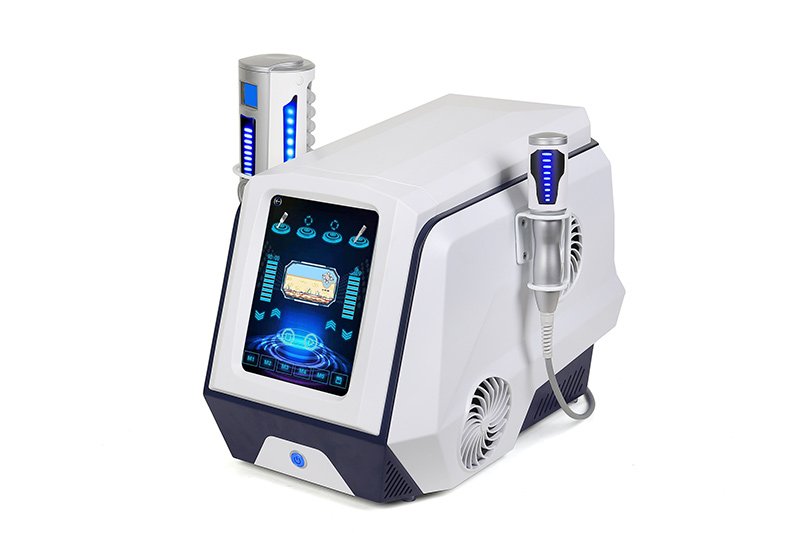
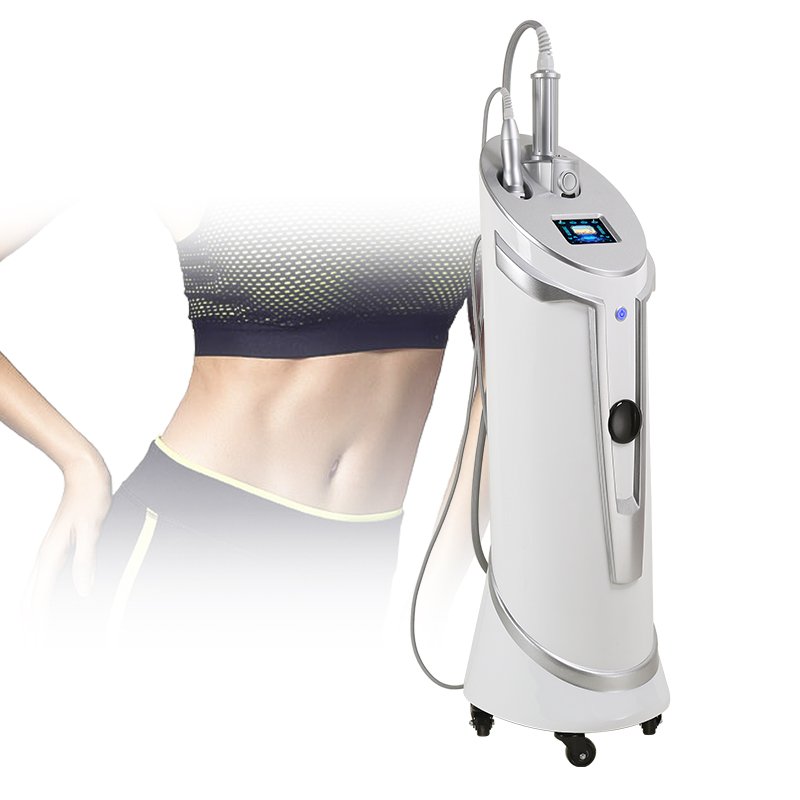
- MNLT Laser manufactures inner ball roller machines with 3 roller handle sizes (small/medium/large) + 1 EMS handle, CE/FDA/MDR/ISO 13485 certification, and 19 years of aesthetic device manufacturing experience.
Cellulite affects an estimated 85–90% of post-pubertal women and is consistently among the top three body concerns presented at aesthetic clinics and wellness centres globally. Despite the prevalence, clinical outcomes for cellulite treatment remain highly variable — not because effective modalities do not exist, but because treatment protocols are frequently under-designed. Inner ball roller compressive microvibration is one of the most evidence-supported non-invasive cellulite treatment modalities available, but its results are protocol-dependent. This guide gives clinic practitioners and aesthetic device purchasers the clinical framework to deliver consistent, documentable outcomes: from correct cellulite grade assessment through treatment parameter selection to session design and patient expectation management.
Understanding Cellulite: The Structural Problem Inner Ball Roller Addresses
Cellulite is not a fat distribution problem in isolation — it is a structural problem involving three interconnected tissue changes in the subcutaneous layer:
1. Fibrous septal tethering
Fibrous connective tissue bands (fibrous septa) extend from the dermis down to the underlying fascia, tethering the skin surface. As these bands thicken and contract, they pull the overlying skin downward while fat lobules expand upward between them, creating the characteristic dimpled surface appearance.
2. Lymphatic and microcirculatory impairment
Reduced lymphatic drainage and compromised capillary microcirculation increase interstitial fluid accumulation in the subcutaneous layer, accelerating fat lobule expansion and worsening the tethering effect.
3. Subcutaneous fat lobule expansion
In areas of poor microcirculation and lymphatic stasis, fat lobules expand against the fibrous septa, increasing the vertical pressure on the dermis and accentuating surface irregularity.
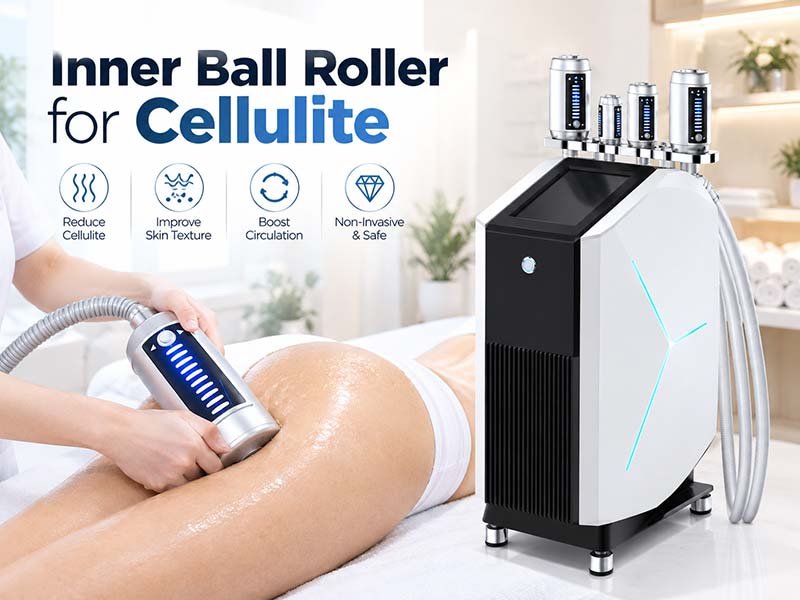
Compressive microvibration — the mechanism delivered by inner ball roller technology — acts on all three simultaneously. The oscillating spherical pressure mechanically disrupts fibrous septal adhesions, stimulates lymphatic vessel contractions to restore drainage, and improves local microcirculation through repeated mechanical compression of the capillary bed. This multi-target mechanism is what distinguishes inner ball roller from purely thermal (RF, laser) or purely draining (manual lymphatic massage) modalities.
For a detailed technical explanation of how the inner ball roller’s compressive microvibration mechanism works at the tissue level, see our inner ball roller compressive microvibration technical guide.
Cellulite Grade Assessment: The Nürnberger-Müller Scale
Accurate pre-treatment grading is the foundation of protocol design. The Nürnberger-Müller classification (Grade 1–4) remains the standard clinical assessment tool for cellulite severity and directly determines treatment intensity, session frequency, and realistic outcome expectations.
| Grade | Clinical Presentation | Skin Test Findings | Inner Ball Roller Response |
|---|---|---|---|
| Grade 1 | No visible cellulite at rest or standing; dimpling only visible under manual compression (pinch test) | Pinch test reveals orange-peel texture; skin surface smooth at rest | Excellent; 6–8 sessions typically produces complete grade resolution |
| Grade 2 | Dimpling visible spontaneously when standing; disappears on lying down | Orange-peel texture visible without compression; mattress sign absent on lying | Good; 8–10 sessions produces significant improvement; combination with EMS recommended |
| Grade 3 | Dimpling visible both standing and lying down; visible nodular texture | Raised nodular texture visible at rest; skin may feel thickened | Moderate; 10–12 sessions + combination protocols (EMS, lymphatic drainage); realistic expectation is 1-grade improvement |
| Grade 4 | Deep dimpling, pronounced nodularity, and skin may have visible hanging appearance; fibrous septa palpable | Firm fibrous bands palpable; marked skin thickening | Supportive/maintenance role; inner ball roller most effective combined with RF or other deep tissue modalities; expectation management critical |
Assessment protocol for new clients
Conduct cellulite grade assessment in a standardised standing position under consistent lighting. Document grade bilaterally for major treatment zones (thighs — anterior, posterior, and lateral; gluteal; abdomen). Photograph at intake, session 6, and course completion using consistent positioning, lighting, and camera distance. Grade documentation supports clinical governance and provides the evidence base for client review conversations.
Treatment Parameters by Zone and Grade
Treatment parameter selection — roller head size, session duration, pressure application, and technique pattern — should be adapted to the treatment zone and cellulite grade, not applied uniformly across all clients and sessions.
Roller Head Selection by Zone
| Body Zone | Recommended Roller Head | Rationale |
|---|---|---|
| Anterior thigh | Medium (100–120mm) | Large surface area, accessible anatomy |
| Posterior thigh | Medium to Large (100–180mm) | Larger muscle bulk, high cellulite prevalence |
| Lateral thigh | Medium (100–120mm) | Curved anatomy, common fibrous septal zone |
| Gluteal | Large (140–180mm) | Largest treatment surface, high tissue density |
| Abdominal | Medium (100–120mm) | Softer tissue; avoid bony structures |
| Inner thigh | Small to Medium (60–120mm) | Sensitive area, medial lymphatic pathways |
| Calf / lower leg | Small (60–80mm) | Precision access, lymphatic endpoints |
Parameter Guide by Cellulite Grade
| Grade | Pressure Setting | Session Duration | Technique Speed | EMS Add-On |
|---|---|---|---|---|
| Grade 1 | Low–Medium | 20–30 min | Slow–medium circles | Optional |
| Grade 2 | Medium | 30–40 min | Medium circles + linear drainage | Recommended |
| Grade 3 | Medium–High | 40–50 min | Deep pressure + drainage finish | Required for best results |
| Grade 4 | Medium (avoid high on fibrous zones) | 40–50 min | Slow, sustained pressure on septal bands + drainage | Required; consider RF combination |
Technique principles:
- Begin every session with 5 minutes of light, sweeping lymphatic warm-up strokes to activate drainage pathways before applying therapeutic pressure
- Work from distal to proximal (feet toward lymph node clusters) in drainage phases
- For Grade 3–4 fibrous nodules, apply sustained slow pressure to nodular areas rather than fast oscillation; the goal is mechanical disruption of fibrous adhesions, not surface stimulation
- End every session with 5–10 minutes of light drainage strokes toward inguinal (inner thigh/abdomen) or popliteal (calf) lymph node clusters
Standard Treatment Course Design
Consistency of treatment frequency is one of the strongest predictors of clinical outcome for compressive microvibration cellulite treatment. The following course structures represent evidence-aligned standards:
Intensive Induction Course (Recommended for Grades 2–3)
Consistency of treatment frequency is one of the strongest predictors of clinical outcome for compressive microvibration cellulite treatment. The following course structures represent evidence-aligned standards:
| Phase | Frequency | Sessions | Total Duration | Expected Outcome |
|---|---|---|---|---|
| Induction | 3×/week | 9 sessions | 3 weeks | Measurable texture improvement; lymphatic activation established |
| Consolidation | 2×/week | 6 sessions | 3 weeks | Grade improvement; circumference reduction visible |
| Maintenance | 1×/week | 4–8 sessions | 1–2 months | Result stabilisation; sustained drainage and tone |
Total standard course: 19–23 sessions over 7–8 weeks
Moderate Course (Grades 1–2, or clients with scheduling constraints)
| Phase | Frequency | Sessions | Total Duration |
|---|---|---|---|
| Induction + Consolidation combined | 2×/week | 12 sessions | 6 weeks |
| Maintenance | 1×/week | 4 sessions | 1 month |
Total moderate course: 16 sessions over 10 weeks
Combination Protocol (Grades 3–4 with EMS)
For Grade 3–4 clients or for clinics maximising per-session revenue, the combination of inner ball roller (compressive microvibration) + EMS handle (electrical muscle stimulation) within the same session delivers measurably stronger results than either modality alone:
- Inner ball roller phase: 30–40 minutes compressive microvibration (as above)
- EMS phase: 15–20 minutes targeted muscle stimulation to improve local vascular return and metabolic activity in treated zones
- Drainage finish: 5–10 minutes light roller strokes to lymph node clusters
This combination protocol converts a standard single-modality session into a premium service that justifies higher pricing — typically 150–150–250 per combination session versus 80–80–130 for single-modality — without extending total session time beyond 60–70 minutes.
For a clinical overview of the full indication range that inner ball roller technology addresses beyond cellulite — including lymphoedema management, post-surgical recovery, and sports rehabilitation — see our inner ball roller machine clinical applications guide.
Managing Clinical Expectations by Grade
Realistic expectation-setting before treatment begins is the most important factor in client satisfaction at course completion — and the most common source of post-treatment dissatisfaction when managed poorly.
Grade 1–2: Realistic expectation is visible and measurable improvement in skin texture, reduction in dimpling visible at rest, and documented circumference reduction (typically 1–3cm at the thigh) by session 8–10. High client satisfaction rates when expectations are set accurately.
Grade 3: Realistic expectation is grade improvement (Grade 3 to Grade 2) by course completion, with residual dimpling remaining in the most fibrous zones. Clients should understand before treatment begins that complete resolution is not achievable in a single course without combination modalities.
Grade 4: Inner ball roller is most appropriately positioned as a supportive and maintenance modality for Grade 4 clients — improving microcirculation, softening fibrous bands over repeated sessions, and maintaining lymphatic function — rather than a primary resculpting intervention. Combination with RF or other deep tissue modalities is required for meaningful structural change at this grade.
Documentation protocol: take circumference measurements (thigh at mid-point, gluteal at maximum circumference) at baseline, session 6, and course completion. Before-and-after photography under standardised conditions. Client self-assessment questionnaire at baseline and completion. This documentation framework supports clinical quality improvement and provides evidence for marketing purposes with client consent.
MNLT Inner Ball Roller: The Clinical Configuration for Cellulite Protocols
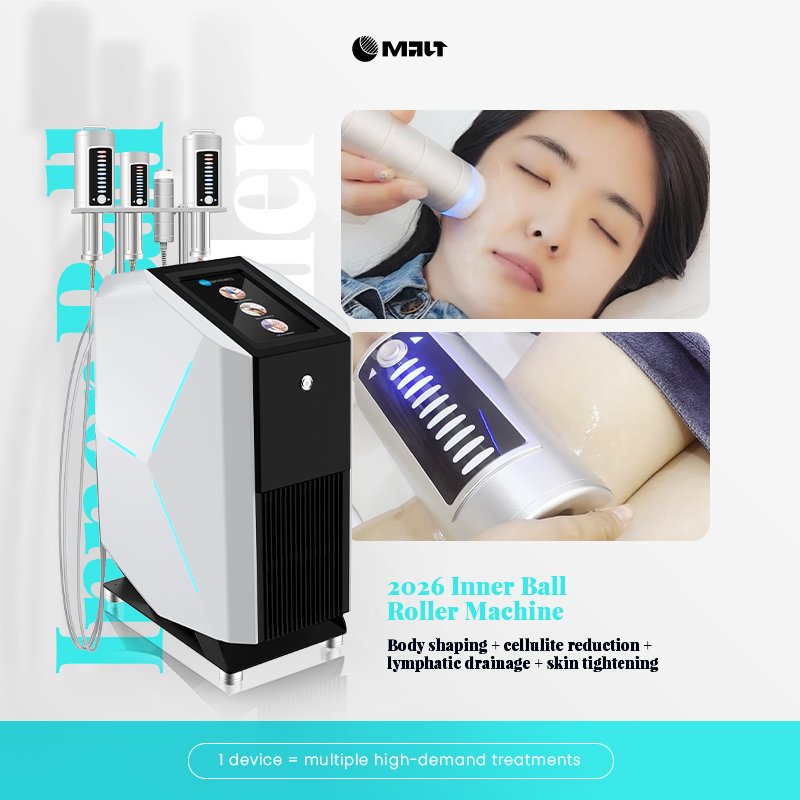
MNLT Laser (Shandong Moonlight Electronics Tech Co., Ltd.) manufactures professional inner ball roller machines with the full configuration required for cellulite treatment protocols across all four Nürnberger-Müller grades:
- 3 roller handles (small 60–80mm, medium 100–120mm, large 140–180mm): covers all body zones from medial thigh precision work to gluteal large-area protocols
- 1 EMS handle: enables single-session combination protocols for Grade 2–4 cellulite without additional equipment investment
- 360° rotation mechanism: full directional coverage for circular and linear drainage technique patterns
- Real-time pressure sensor: ensures consistent therapeutic pressure across different practitioners and session volumes
- CE / FDA / MDR / ISO 13485 certified: regulatory compliance for clinical deployment in EU and North American markets
- 19 years manufacturing experience: 20,000+ clinic installations, 120+ countries
Explore the full MNLT inner ball roller range and configuration options on the inner ball roller machine product category page.
Inquire Now
Fill out the form for more information, and an MNLT product manager will contact you shortly!
FAQ: Inner Ball Roller Machine for Cellulite Treatment
How many sessions does it take to see results for cellulite with an inner ball roller machine?
Most clients with Grade 1–2 cellulite begin to notice measurable improvement in skin texture and reduction in visible dimpling from sessions 4–6 of a standard course. Circumference measurements typically show quantifiable reduction (1–3cm at the mid-thigh) by session 8–10. A complete induction course of 8–12 sessions delivered at 2–3 sessions per week is the minimum for achieving sustained results. Grade 3–4 clients require longer courses (10–15 sessions) with combination protocols (EMS, lymphatic drainage) and should have realistic expectations of grade improvement rather than complete resolution within a single course.
What is the Nürnberger-Müller scale and why does it matter for treatment planning?
The Nürnberger-Müller scale classifies cellulite severity into four grades based on clinical presentation: Grade 1 (dimpling only visible under manual pinch test), Grade 2 (dimpling visible standing, disappears lying down), Grade 3 (dimpling visible both standing and lying), and Grade 4 (deep dimpling with nodularity and possible hanging skin appearance). Grade assessment determines treatment intensity, session frequency, combination protocol requirements, and realistic outcome expectations before treatment begins. Setting expectations based on grade — and documenting grade at intake — is the single most important factor in managing client satisfaction at course completion.
Can inner ball roller machines treat Grade 3 or Grade 4 cellulite?
Yes, but with adapted protocols and realistic expectations. Grade 3 cellulite responds to inner ball roller with combination EMS protocols over 10–12 sessions, with a realistic outcome of grade improvement (3→2) rather than complete resolution. Grade 4 cellulite — characterised by deep fibrous septal tethering and marked tissue thickening — benefits most from inner ball roller as a supportive modality combined with RF or other deep tissue technologies; inner ball roller alone is unlikely to produce significant structural change at Grade 4. For all Grade 3–4 clients, thorough expectation-setting before the first session is essential to client retention and satisfaction.
How often should clients receive inner ball roller cellulite treatments?
The evidence-aligned standard for an intensive induction course is 3 sessions per week for the first 3 weeks (9 sessions), followed by 2 sessions per week for a consolidation phase (6 sessions), then weekly maintenance. A moderate course protocol of 2 sessions per week for 6 weeks (12 sessions) is appropriate for Grade 1–2 clients or those with scheduling constraints. The minimum effective frequency is 2 sessions per week during the active treatment phase — weekly-only treatment during induction produces significantly weaker results because the cumulative lymphatic and microcirculatory stimulation is insufficient to maintain momentum between sessions.
Which roller head size should be used for different body zones?
Roller head selection should match the treatment zone anatomy and tissue density. Large heads (140–180mm) are appropriate for the gluteal region and posterior thighs — high tissue density, large surface area. Medium heads (100–120mm) suit the anterior and lateral thighs, abdomen, and inner thigh. Small heads (60–80mm) are appropriate for the medial thigh, calf, and any precision drainage work around bony structures. A clinical inner ball roller machine should include all three sizes as standard — a system offering only one roller diameter cannot deliver optimised protocols across the full body treatment menu. MNLT machines include small, medium, and large rollers plus an EMS handle in the standard clinical configuration.
Is inner ball roller treatment for cellulite painful?
Inner ball roller compressive microvibration is generally well-tolerated by clients. At low-to-medium pressure settings (Grade 1–2 protocols), the sensation is typically described as a firm deep-tissue massage — comfortable to slightly intense, not painful. At medium-to-high pressure settings used for Grade 3 cellulite and fibrous nodule work, some clients report temporary discomfort during direct pressure on fibrous bands — this typically subsides within seconds of sustained application and resolves completely within a few sessions as tissue softens. No anaesthesia or numbing preparation is required. Clients with active inflammatory skin conditions, recent deep vein thrombosis, or active infections should not receive treatment — a standard contraindications screening should be conducted at intake.
How do clinics document and measure cellulite treatment outcomes?
A robust cellulite outcome documentation protocol includes: Nürnberger-Müller grade assessment at intake and course completion, circumference measurements (thigh at mid-point, gluteal at maximum) at intake, session 6, and course completion, standardised before-and-after photography (consistent position, lighting, camera distance), and client self-assessment questionnaire at intake and completion. Circumference reduction of 1–3cm at the mid-thigh is a typical quantifiable outcome for Grade 1–2 courses; grade change (e.g., 3→2) is the primary metric for Grade 3 clients. Consistent documentation supports clinical quality improvement, provides evidence for marketing with client consent, and builds the case for repeat and maintenance course bookings.
Reviewed by David Ma
CTO & Chief Engineer, MNLT Laser (Shandong Moonlight Electronics Tech Co., Ltd.)
19 years in aesthetic device manufacturing. David leads MNLT's R&D team across the full professional aesthetic device portfolio, ensuring all technical content meets the highest standards of accuracy and clinical safety.