
Inner ball roller therapy is one of the fastest-growing non-invasive body contouring modalities in EU and North American clinic markets in 2026 — and one of the most underserved from a content and sourcing perspective. If you are a clinic or salon owner evaluating this technology, this guide covers everything you need to make a confident decision: how the machine works, what it delivers clinically, which client profiles benefit most, and how to source a certified device without overpaying through a branded intermediary.
What Is an Inner Ball Roller Machine?
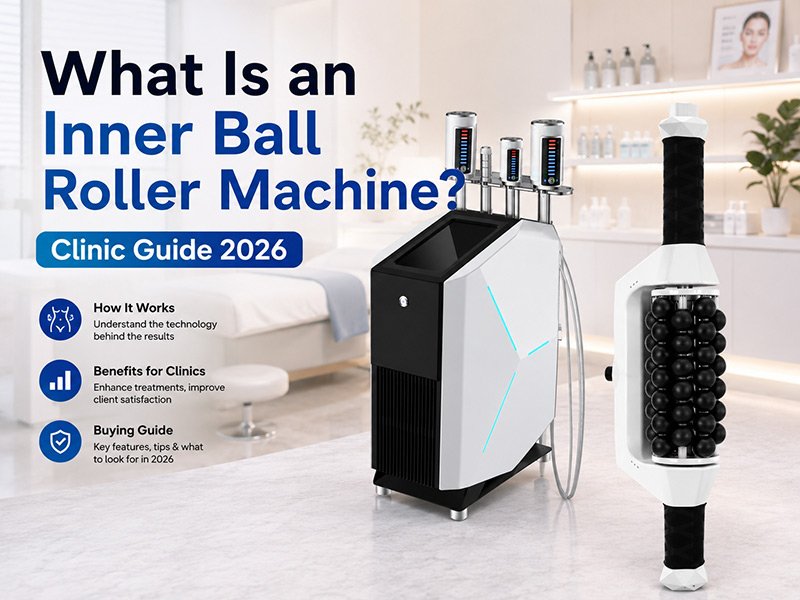
An inner ball roller machine — also known in the market as an endosphere machine or compressive microvibration therapy device — is a non-invasive body and facial treatment device that uses a rotating sphere mechanism to deliver simultaneous mechanical compression, vibration, and rolling stimulation to soft tissue.
The device consists of a handpiece containing a sphere (typically 40–60mm diameter for body applications, smaller for facial variants) that rotates in multiple axes at controlled speeds. As the handpiece is moved across the skin surface, the rotating ball creates a compressive microvibration effect — a rhythmic, multi-directional mechanical stimulus that penetrates the superficial fascia, subcutaneous fat layer, and lymphatic vessels beneath the skin.
The term “endosphere” appears in some market contexts as a brand or category descriptor for this technology. Inner ball roller machines operating on the same compressive microvibration principle are available from multiple manufacturers and are the clinical-grade equivalent of this approach — without the brand licensing costs associated with proprietary names.
How Does It Work?
The mechanism behind inner ball roller therapy is rooted in mechanotransduction — the process by which mechanical forces applied to tissue trigger biological responses at the cellular level.
The Rotating Sphere Mechanism
The inner rotating sphere creates three simultaneous mechanical effects:
- Compressive force: direct pressure applied perpendicular to the skin surface, stimulating the fascial layer and underlying connective tissue
- Shear force: the rolling motion creates a tangential force component that mobilises adhesions in the fibrous septa — the connective tissue bands responsible for the dimpled appearance of cellulite
- Vibration: high-frequency oscillation at the sphere surface stimulates mechanoreceptors in the skin and subcutaneous tissue, promoting lymphatic contraction and circulatory response
Lymphatic and Circulatory Effects
The rhythmic compressive pressure of the inner ball roller directly stimulates the lymphatic capillaries in the superficial tissue. Lymphatic vessels have no intrinsic pump mechanism — they rely on external pressure (muscle movement, manual massage, or mechanical stimulation) to move lymphatic fluid. The rolling compression of the inner ball roller provides this stimulus in a controlled, reproducible manner, supporting lymphatic drainage across the treated area.
Enhanced lymphatic flow reduces localised fluid retention, supports the clearance of metabolic waste products from the interstitial space, and contributes to the visible reduction in puffiness and tissue congestion that clients notice after the first 2–3 sessions.
Collagen and Fascia Response
Sustained mechanical stimulation of the dermis and superficial fascia activates fibroblast activity — the cells responsible for collagen and elastin synthesis. Regular inner ball roller treatment is associated with progressive improvement in skin texture, firmness, and elasticity, particularly in areas with visible laxity or cellulite-related surface irregularity.
Key Treatment Benefits
Inner ball roller therapy addresses a wider range of client concerns than many single-modality body contouring devices. The principal treatment benefits that clinics should communicate to prospective clients:
1. Cellulite Reduction
The fibrous septa disruption mechanism is the most clinically documented application of compressive microvibration therapy. By mechanically mobilising the connective tissue bands that tether skin to deeper fascia (creating the dimpled appearance of cellulite), repeated inner ball roller sessions progressively smooth the skin surface and reduce the grade of visible cellulite.
2. Body Contouring and Inch Loss
Improved lymphatic drainage reduces subcutaneous fluid retention, contributing to visible circumference reduction — particularly in areas prone to lymphatic congestion (inner thighs, abdomen, upper arms). This is not fat cell destruction (as with cryolipolysis or thermal shock), but genuine tissue decompression and realignment.
3. Lymphatic Drainage Support
For clients with persistent fluid retention, post-surgical lymphoedema management needs, or sluggish lymphatic circulation, the inner ball roller delivers targeted manual-equivalent lymphatic stimulation at a pace and coverage rate that is difficult to replicate with traditional manual lymphatic drainage massage.
4. Skin Tightening and Firmness
Progressive fibroblast stimulation and collagen synthesis activity improves dermal density and skin firmness over a treatment course. Clients with mild-to-moderate skin laxity on the abdomen, thighs, or upper arms typically report measurable improvement in skin texture after 6–10 sessions.
5. Post-Pregnancy Body Recovery
Inner ball roller therapy is a non-invasive, zero-downtime option for post-partum clients seeking to address abdominal tissue laxity, residual fluid retention, and mild diastasis-related contour concerns. The absence of thermal energy or suction makes it appropriate for clients who are not candidates for more aggressive body contouring technologies.
6. Pain-Free, Zero-Downtime Treatment
Unlike radiofrequency, HIFU, or cryolipolysis, inner ball roller therapy produces no thermal stress, no suction trauma, and no recovery period. Clients can resume normal activity immediately. This makes it a viable option for clients who cannot tolerate downtime or thermal discomfort, and an effective add-on service for clients completing a primary slimming course on other modalities.
What Conditions Can Inner Ball Roller Machines Address?
| Application | Mechanism | Sessions Typically Needed |
|---|---|---|
| Cellulite (Grade I–III) | Fibrous septa mobilisation | 8–12 |
| Fluid retention / oedema | Lymphatic drainage stimulation | 4–8 |
| Post-pregnancy contour recovery | Tissue decompression + firmness | 6–10 |
| Skin laxity (mild–moderate) | Collagen stimulation | 8–12 |
| Upper arm and inner thigh toning | Compressive microvibration + drainage | 6–10 |
| Abdominal contouring (post-slimming maintenance) | Lymphatic clearance + firmness | 4–6 |
| Facial lifting and depuffing (facial head) | Microvibration + drainage | 4–8 |
| Post-surgical recovery support | Lymphatic drainage | Per practitioner protocol |
Session counts are reference ranges. Individual response varies; treatment plans should be established by the practitioner based on the client’s presentation and session-by-session progress.
Important compliance note: Inner ball roller therapy is positioned as a non-medical wellness and aesthetic treatment. Claims about addressing specific medical conditions, diagnosing or treating disease, or providing therapeutic outcomes equivalent to medical intervention are not supported by this content and should not be made in clinic marketing materials without appropriate regulatory clearance in your jurisdiction.
Inner Ball Roller vs Other Body Contouring Technologies
For clinic managers evaluating where inner ball roller fits within a broader technology mix, the comparison with adjacent modalities clarifies its unique role:
| Technology | Primary Mechanism | Depth | Downtime | Pain Level | Cellulite Effect | Lymphatic Effect |
|---|---|---|---|---|---|---|
| Inner Ball Roller | Compressive microvibration | Fascia / subcutis | None | None | ★★★★☆ | ★★★★★ |
| Radiofrequency (RF) | Thermal energy (dermal heating) | Dermis | Minimal | Mild warmth | ★★★☆☆ | ★★☆☆☆ |
| HIFU / Focused Ultrasound | Thermal coagulation (SMAS/fascia) | SMAS | Low | Moderate | ★★☆☆☆ | ★☆☆☆☆ |
| Cryoskin Thermal Shock | Heat + cold alternation | Fat + dermis | None | Mild cold | ★★★☆☆ | ★★★☆☆ |
| Manual Lymphatic Drainage | Practitioner hand pressure | Superficial lymph | None | None | ★★☆☆☆ | ★★★★☆ |
| Cryolipolysis | Static fat freezing | Subcutaneous fat | Low | Cold discomfort | ★★☆☆☆ | ★☆☆☆☆ |
Key positioning insight: The inner ball roller does not compete with thermal or fat-destruction technologies — it complements them. The most effective multi-technology clinic protocols pair a primary slimming modality (Cryoskin, cryolipolysis, or HIFU body) with inner ball roller sessions as a lymphatic clearance and skin-quality maintenance component. This combination increases treatment efficacy, extends client lifetime value, and creates a natural upsell pathway from the primary slimming course into ongoing maintenance bookings.
How to Choose an Inner Ball Roller Machine for Your Clinic
Selecting the right inner ball roller device for your clinic involves more than choosing the lowest price point. These are the five evaluation criteria that matter:
1. Sphere Size and Configuration Options
Professional inner ball roller machines offer interchangeable sphere heads — typically a larger body sphere (50–60mm) and a smaller facial sphere (30–40mm). A device with only a single fixed sphere limits your treatment menu and client coverage. Confirm the full head configuration before purchasing.
2. Rotation Speed Control
Effective compressive microvibration requires adjustable rotation speed — slower speeds for sensitive areas and facial protocols, higher speeds for dense tissue applications (thighs, abdomen, gluteal area). A device without variable speed control forces operators into a one-size-fits-all approach that compromises both comfort and clinical outcome.
3. Pressure and Vibration Frequency Settings
The therapeutic effect of inner ball roller therapy depends on the combination of compressive pressure and vibration frequency. Professional devices allow independent adjustment of these parameters — enabling the operator to customise the protocol to the client’s tissue density, sensitivity, and treatment goal.
4. Certification for Your Market
CE marking (EU), FDA clearance (US), and ISO 13485 (Quality Management System) are the baseline certifications for professional aesthetic devices in regulated markets. Request the certificate number for each and verify it through the issuing body’s public database — not just from the manufacturer’s marketing materials.
5. After-Sales Support and Training Documentation
Inner ball roller technique — movement patterns, pressure calibration, protocol sequencing for different applications — requires structured operator training. A manufacturer who delivers a device without protocol documentation, contraindications guidance, and technical support access is leaving your clinic to figure out the clinical operation independently. Confirm the training package before placing an order.
Explore the MNLT inner ball roller machine for full technical specifications, sphere configuration details, and certification documentation.
Why MNLT for Your Inner Ball Roller Machine?
MNLT Laser (Shandong Moonlight Electronics Tech Co., Ltd.) has been manufacturing professional aesthetic devices for 19 years, supplying clinics, salons, and distributors across 120+ countries. The inner ball roller range is produced in an ISO 13485-certified facility with CE, FDA, and MDR compliance — the certification baseline required for professional clinical deployment in EU and North American markets.
What MNLT offers inner ball roller buyers:
- Full accessory range: body sphere, facial sphere, and interchangeable head configurations available as standard — not as costly add-ons
- CE / FDA / MDR / ISO 13485 certified: traceable certification documentation provided for all devices, verifiable through the issuing body’s public registry
- OEM/ODM capability: custom branding on device chassis, packaging, interface, and documentation — available for clinics building a proprietary service identity or distributors establishing a private label
- 24/7 technical support: global after-sales coverage, remote diagnostics, and spare parts logistics
- Protocol documentation: comprehensive operator training materials, treatment protocol cards, and contraindications guidance included with every order
Proven distribution partner track record:
The MNLT manufacturing and support infrastructure is trusted by clinics and distributors worldwide — including a U.S.-based aesthetic equipment company that audited MNLT’s Shandong facility in person before committing to a recurring monthly order of approximately $80,000 USD across MNLT’s device portfolio. This relationship reflects the factory-to-partner model MNLT offers to every serious distribution and clinic partner. Read the full U.S. distributor partnership story.
FAQ: Inner Ball Roller Machine for Clinics
What is an inner ball roller machine and how is it different from a regular massage device?
An inner ball roller machine — also known as an endosphere machine or compressive microvibration device — uses a motorised rotating sphere to deliver simultaneous compression, rolling pressure, and mechanical vibration to soft tissue. Unlike a standard massage device that applies surface pressure, the inner ball roller's rotating sphere creates a multi-directional compressive microvibration effect that reaches the fascial layer and lymphatic vessels beneath the skin. This mechanical stimulus mobilises fibrous septa (the connective tissue bands responsible for cellulite), stimulates lymphatic drainage, and activates fibroblast collagen production — outcomes that surface-level massage tools cannot replicate.
How many inner ball roller sessions does a client need to see results?
Most clients notice initial improvements in tissue congestion and skin smoothness within 3–4 sessions. Meaningful cellulite reduction and skin tightening results typically require a course of 8–12 sessions, spaced 3–7 days apart. For lymphatic drainage applications — post-surgical recovery support or fluid retention — results are often visible after 4–6 sessions. Following an initial course, monthly maintenance sessions are recommended to sustain results. Individual response varies based on the client's tissue density, lifestyle factors, and specific treatment area.
Who is inner ball roller treatment suitable for?
Inner ball roller therapy is suitable for a wide client demographic: adults seeking cellulite reduction, body contouring, or lymphatic drainage support; post-pregnancy clients addressing tissue laxity and residual fluid retention; clients with mild-to-moderate skin laxity on the abdomen, thighs, or upper arms; and clients who are not candidates for thermal or invasive body contouring treatments due to sensitivity, medical history, or lifestyle constraints. The treatment is contraindicated for clients with active infections or open wounds in the treatment area, known lymphatic or vascular conditions requiring medical management, pregnancy, and active malignancy. A full contraindications screening should be conducted before every client's first session.
Are there any side effects from inner ball roller treatment?
Inner ball roller therapy is one of the lowest-risk body contouring modalities available in a clinical setting. There are no thermal effects, no suction trauma, and no recovery period. The most commonly reported post-treatment responses are temporary mild redness at the treated area (typically resolving within 30–60 minutes) and occasional mild muscle soreness in densely treated areas, similar to post-massage response. These are normal mechanically-induced tissue responses, not adverse events. Practitioners should document any atypical responses and follow up with the client at their next session. No anaesthesia is required, and clients can return to normal activity immediately after treatment.
How much does an inner ball roller machine cost for a clinic?
Professional inner ball roller machines from certified factory-direct manufacturers are typically priced in the $2,500–$5,000 range for clinic-grade configurations with multiple sphere heads (body and facial), adjustable speed and pressure settings, and CE/FDA/ISO 13485 certification. Branded endosphere systems from licensed Western brands carry significantly higher retail pricing — often $15,000–$40,000 — due to brand licensing, regional distributor margins, and mandatory service contracts. Factory-direct sourcing from certified manufacturers like MNLT provides the same clinical functionality and regulatory compliance at a fraction of the branded cost, with OEM customisation available for clinics or distributors building a private-label service identity. Contact MNLT for current pricing specific to your configuration and order volume.
Reviewed by David Ma
CTO & Chief Engineer, MNLT Laser (Shandong Moonlight Electronics Tech Co., Ltd.) — 19 years in aesthetic device manufacturing. David leads MNLT's R&D team across the full professional aesthetic device portfolio, ensuring all technical content meets the highest standards of accuracy and clinical safety.