
The non-invasive body contouring industry is one of the fastest-growing segments of the global aesthetics market. Valued at over $9 billion in 2024 and projected to exceed $15 billion by 2030, demand is being driven by a global shift toward non-surgical alternatives, shorter recovery times, and the growing accessibility of professional-grade devices at factory-direct price points. For entrepreneurs, clinic owners, and distributors evaluating where to invest in 2026, body contouring represents a high-margin, repeat-revenue service category with relatively low regulatory barriers compared to surgical alternatives.
This guide is written for practitioners and business owners who are ready to move from research to action — covering equipment selection, realistic startup cost modelling, ROI projection, and the supplier evaluation criteria that separate sustainable businesses from under-equipped studios that fail within 12 months.
5 Things to Know Before You Start
- The global non-invasive body contouring market is projected to grow at a CAGR of 8–10% through 2030, making 2026 an optimal entry point before market saturation increases competitive pressure
- A single mid-range body contouring machine running 5 sessions/day at $150 generates approximately $16,500/month gross — most factory-direct systems break even within 30–60 days
- Startup costs for a single-treatment studio range from $8,000–$25,000 (equipment + fit-out + initial marketing); a multi-technology clinic suite runs $30,000–$80,000
- The most profitable entry-point devices in 2026 combine zero consumable costs with multi-mode capability (slimming + toning + facial) — eliminating per-session material overhead
- Supplier selection is the single highest-risk variable: CE/FDA/MDR certification, verified cooling precision, and a documented after-sales training programme separate clinical-grade manufacturers from grey-market resellers
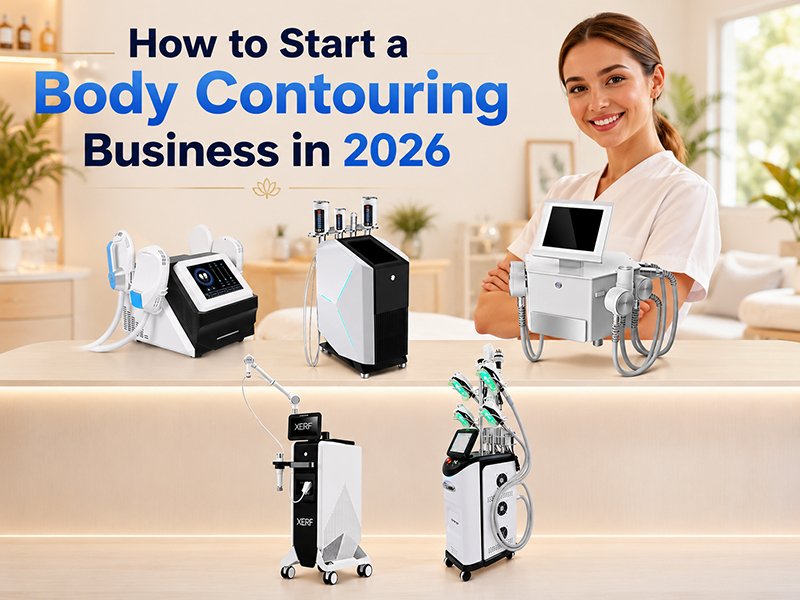
Why 2026 Is a Strategic Entry Point for Body Contouring
Two converging trends make 2026 a particularly strong year to launch or expand a body contouring business.
First, consumer demand is maturing beyond major cities. Non-invasive fat reduction, skin tightening, and body sculpting treatments have migrated from premium medical spas in capital cities to mid-market clinics in second and third-tier cities across Europe, North America, the Middle East, and Southeast Asia. Clients in these markets are informed, budget-conscious, and comparison-shopping — which favours new entrants who can offer competitive pricing without the brand premium of established chains.
Second, the technology cost curve has inverted. Factory-direct procurement channels have made clinical-grade body contouring equipment accessible at price points that previously only large chains could justify. A device that would have cost $40,000 through a branded distributor in 2019 is now available at $4,000–$8,000 through a verified manufacturer — with equivalent clinical specifications and full CE/FDA certification. This compression in equipment cost is the foundational change that has opened the market to independent clinic entrepreneurs.
Step 1: Choose Your Business Model
Before selecting equipment, define which business model fits your market, capital, and operational capacity.
Model A: Single-Technology Boutique Studio
Best for: First-time entrants, wellness studios adding a revenue stream, home-based practitioners.
Typical setup: One primary device (e.g. Cryoskin or HIFU), 2–3 treatment rooms, 1–2 operators.
Advantage: Low capital requirement, simple staff training, clear marketing message.
Limitation: Lower upsell capacity; client churn once treatment course is complete.
Model B: Multi-Technology Aesthetic Clinic
Best for: Experienced practitioners, existing salons expanding services, investors building a scalable business.
Typical setup: 3–4 technologies (e.g. HIFEM + Cryoskin + HIFU + compressive microvibration), 3–5 treatment rooms, 3–6 staff.
Advantage: Higher client lifetime value, ability to serve all body contouring goals from one location, upsell and maintenance programme revenue.
Limitation: Higher initial investment, more complex staff training and scheduling.
Model C: Mobile / Home Visit Service
Best for: Markets where clinical premises costs are prohibitive; rural or suburban practitioners.
Typical setup: 1–2 portable devices, no fixed premises cost.
Advantage: Near-zero overhead, flexible scheduling.
Limitation: Limited to portable-grade equipment; restricted treatment menu.
Step 2: Select the Right Body Contouring Equipment
The equipment decision is the single most consequential choice you will make. The right device combination determines your treatment menu, your client profile, your pricing ceiling, and your total cost of ownership. The wrong combination — particularly devices with high consumable costs or narrow treatment scope — can make a technically profitable service model financially unviable.
Core Technologies to Consider in 2026
| Technology | Primary Mechanism | Key Client Goal | Zero Consumable? | Session Duration |
|---|---|---|---|---|
| Cryoskin (Thermal Shock) | Alternating heat/cold (−10°C to 43°C) | Fat reduction, skin tightening, facial lifting | ✅ | 20–40 min |
| HIFEM (Electromagnetic) | Supramaximal muscle contraction | Muscle definition + fat reduction | ✅ | 30 min |
| HIFU (Focused Ultrasound) | Collagen stimulation at tissue depth | Face lifting, skin tightening, body firming | ✅ | 60–90 min |
| Compressive Microvibration | 360° rotating roller pressure | Lymphatic drainage, cellulite, maintenance | ✅ | 40–60 min |
| Cryolipolysis | Static fat freezing (−11°C) | Localised fat reduction | ✅* | 35–60 min |
| RF (Radiofrequency) | Resistive heating to dermis | Skin tightening, mild fat reduction | ✅ | 30–45 min |
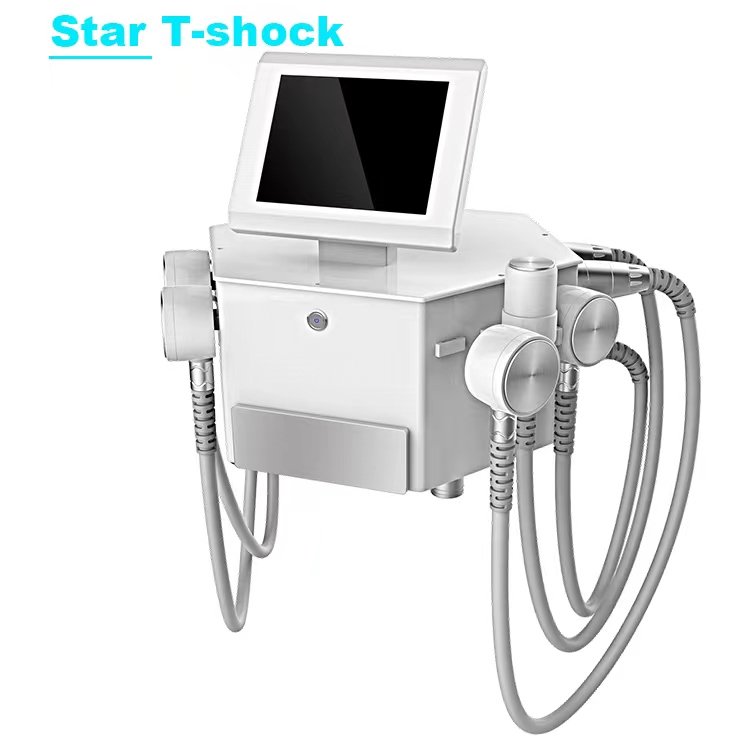
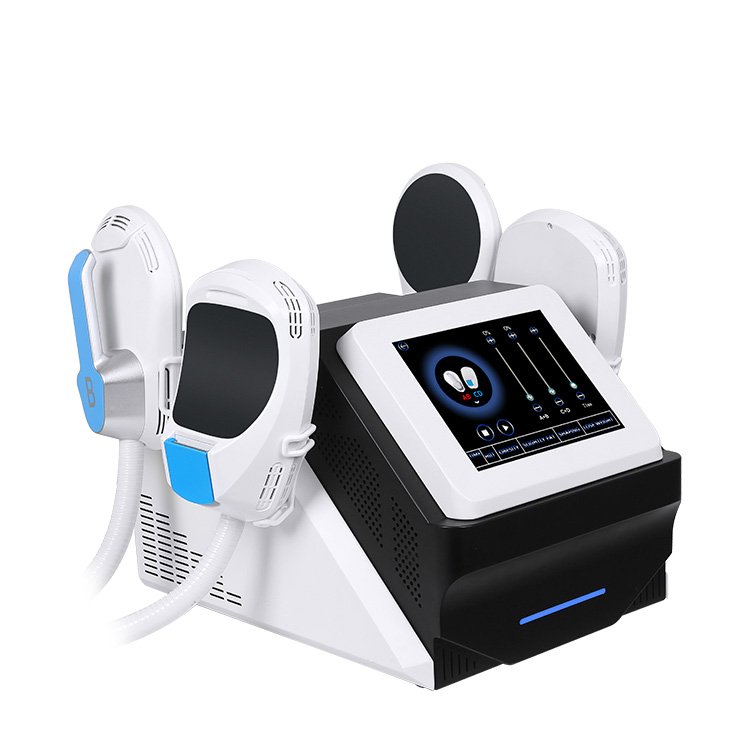
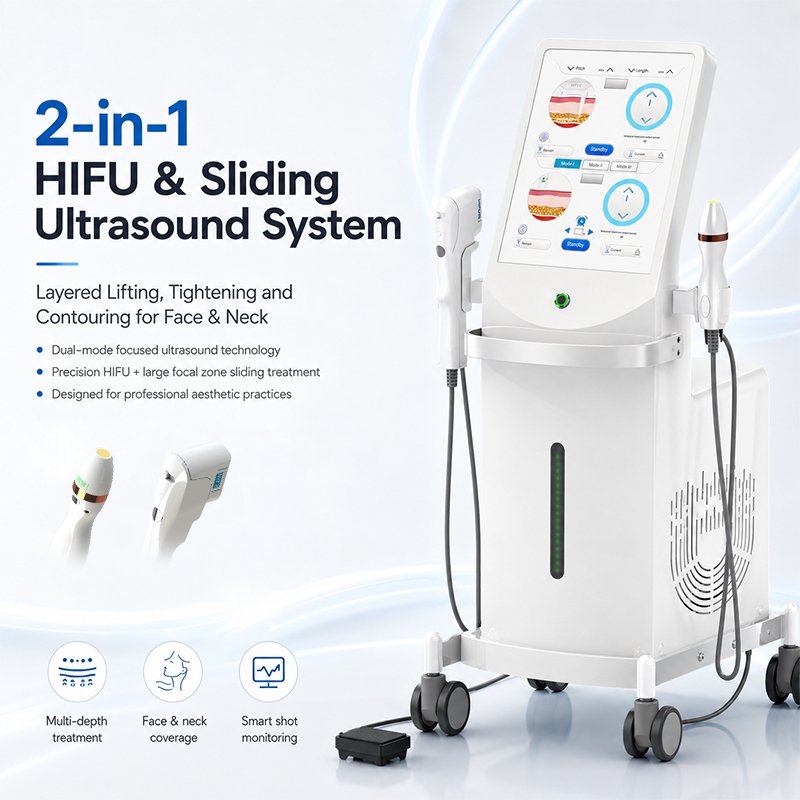

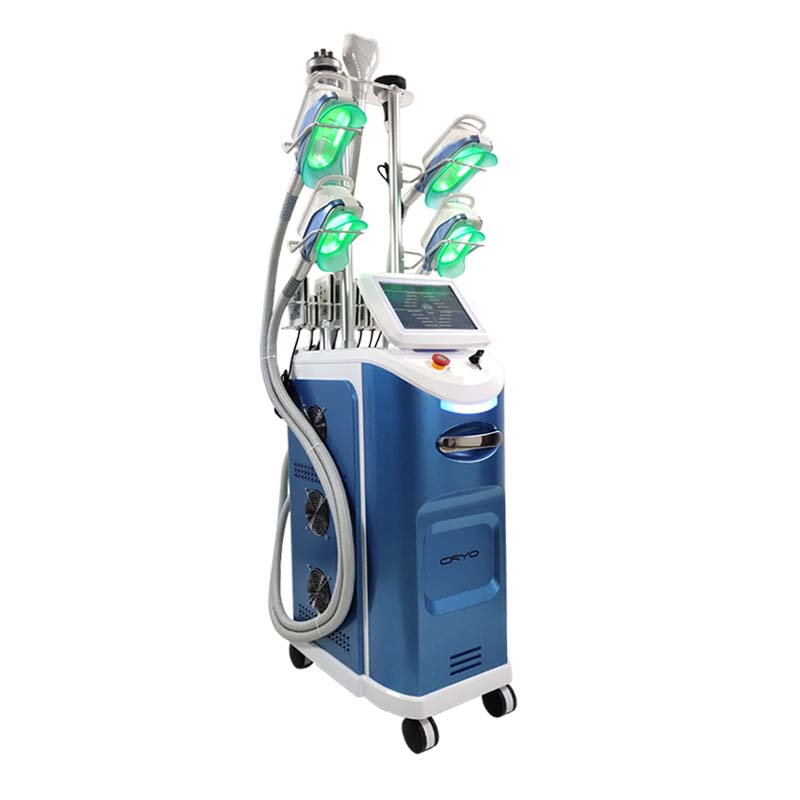
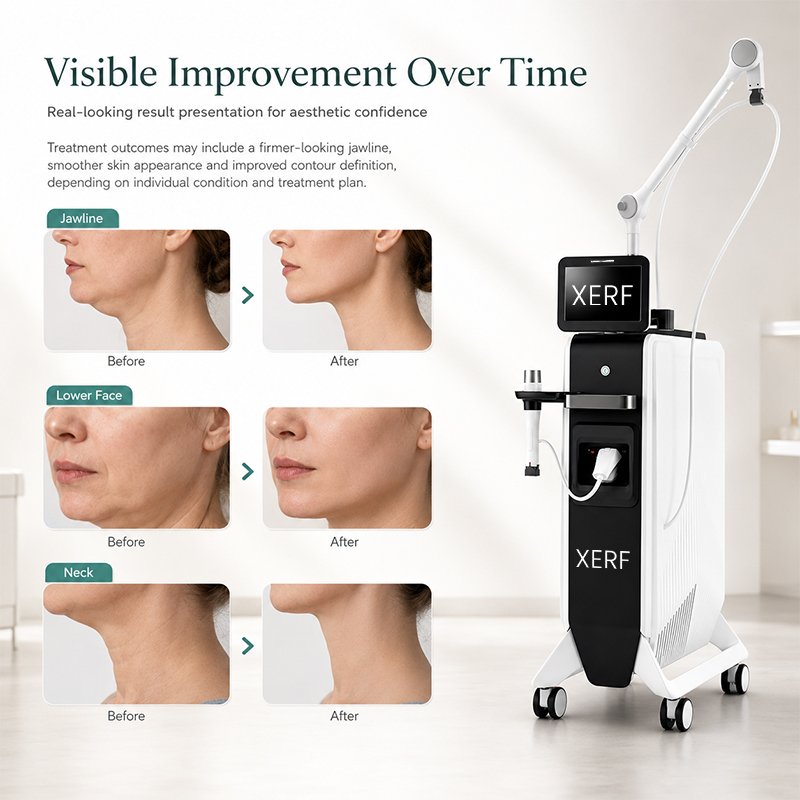
Factory-direct cryolipolysis units avoid branded licensing fees — only applies to non-proprietary systems.
For a comprehensive comparison of these technologies and guidance on which combination suits different clinic sizes, see our body contouring machine for clinics guide.
Recommended starting combination for Model B clinics: Cryoskin + HIFU. These two technologies are clinically complementary (active fat reduction + collagen lifting), serve different client goals, and share zero consumable costs. Both can be supported with a compressive microvibration machine added as a maintenance and drainage modality in year two. For HIFU selection criteria and cartridge specifications, see our HIFU machine for clinics guide.
Browse the full MNLT slimming machine range for configurations across all body contouring technology categories.
Step 3: Model Your Startup Costs Realistically
The following cost model covers a mid-market Model B clinic launch in Western Europe or North America. Adjust for your local market conditions.
Startup Cost Estimate — Multi-Technology Body Contouring Clinic
| Cost Category | Item | Estimated Range |
|---|---|---|
| Equipment | Primary device (e.g. Cryoskin machine) | $4,000–$6,000 |
| Secondary device (e.g. HIFU 7D system) | $4,000–$8,000 | |
| Optional 3rd device (compressive microvibration) | $3,000–$5,000 | |
| Premises | Lease deposit + first month (3 rooms) | $3,000–$8,000 |
| Fit-out / treatment room furnishing | $5,000–$15,000 | |
| Marketing | Website, local SEO, social media launch | $1,500–$4,000 |
| Paid advertising (first 3 months) | $1,500–$3,000 | |
| Operations | Insurance, registration, certification | $500–$1,500 |
| Consumables (gel, linen, PPE, 3 months) | $500–$1,000 | |
| Staff training (manufacturer-provided) | $0–$500 | |
| Working Capital | 3-month operating reserve | $5,000–$10,000 |
| TOTAL | $28,000–$62,000 |
Disclaimer: These figures are illustrative estimates based on 2026 market benchmarks for Western Europe and North America. Actual costs vary significantly by location, lease terms, and equipment configuration.
Step 4: Calculate Your ROI Before You Buy
Every equipment purchase decision should be validated against a three-scenario ROI model. The following example uses a single Cryoskin machine at a $5,000 factory-direct purchase price.
Single-Machine ROI Projection — Cryoskin Thermal Shock
| Scenario | Sessions/Day | Operating Days/Month | Price/Session | Monthly Gross | Monthly Net* | Break-Even |
|---|---|---|---|---|---|---|
| Conservative | 3 | 20 | $150 | $9,000 | $6,300 | ~24 days |
| Standard | 5 | 22 | $160 | $17,600 | $12,320 | ~14 days |
| Optimised | 7 | 25 | $180 | $31,500 | $22,050 | ~8 days |
Estimated net after 30% operating costs (staff, premises allocation, consumables). Equipment cost excluded from monthly net.
Package revenue accelerator: Selling 10-session packages at $1,200 (vs. $1,600 at single-session pricing) improves upfront cash flow and reduces no-show rate. A clinic converting 60% of clients to packages generates a predictable monthly base before any walk-in bookings.
Step 5: Vet Your Equipment Supplier With These 5 Criteria
The equipment supplier decision is as important as the technology decision. A device purchased from an unverified source — without traceability of certifications, without after-sales infrastructure, without documented clinical protocols — will cause operational problems within 6–18 months that a lower price cannot compensate for.
1. Verify certifications by certificate number, not by label. CE, FDA 510(k), MDR (EU Medical Device Regulation), and ISO 13485 are the minimum for clinical-grade body contouring devices. Request the certificate number for each and verify it independently through the issuing body’s public database. A certificate that cannot be traced to a registered number should immediately disqualify a supplier.
2. Request factory evidence, not just marketing materials. A genuine manufacturer can provide: production facility address (independently verifiable), factory audit reports, and production capacity documentation. Ask for a live video call showing the production floor before any payment. Traders reselling third-party equipment cannot provide this.
3. Confirm cooling precision in writing for any thermal device. For Cryoskin, cryolipolysis, and diode laser systems, the cooling specification directly determines clinical safety and client outcome consistency. A system with ±2°C drift is unsuitable for consistent clinical use. Request the temperature stability specification as a written warranty term.
4. Establish the after-sales support structure before purchase. Confirm: 24/7 technical support availability; remote video troubleshooting; spare parts lead time; operator training programme (video + live session); warranty terms in writing covering both parts and labour. A supplier who cannot describe their after-sales process in specific terms before the sale will not improve after.
5. Evaluate OEM/ODM capability if you are building a brand. For distributors and branded clinic chains, white-label customisation (logo, colour scheme, interface language) is a commercial differentiator that justifies price premium with end clients. Confirm minimum order quantities, production timeline for branded units, and what post-branding certification coverage applies.
FAQ: What Clinic Owners Ask Before Starting a Body Contouring Business
How much money do I need to start a body contouring business?
A single-technology boutique studio can be launched for $8,000–$20,000 in a sub-lease or shared clinic environment. A standalone multi-technology clinic typically requires $30,000–$65,000 in total startup capital including equipment, premises, marketing, and 3-month working capital reserve.
Do I need a medical licence to operate body contouring equipment?
In most EU markets and the majority of Asia, non-medical aesthetic practitioners can legally operate non-invasive body contouring machines without a medical licence, provided the device carries CE and safety certification and the operator has completed manufacturer training. Always verify the regulatory requirements in your specific jurisdiction.
Which body contouring machine is best for a first-time clinic owner?
A Cryoskin thermal shock machine with multiple treatment modes (slimming, toning, lifting, facial) offers the most practical entry point: zero consumable costs, 4 distinct service types from one device, and manufacturer training that brings new operators to clinical competence within 1–2 days.
How long does it take to break even on body contouring equipment?
At standard EU/North American session pricing and moderate utilisation (5 sessions/day), most factory-direct body contouring machines achieve full cost recovery within 15–35 business days. The primary risk is under-utilisation in the first 30–60 days while client bookings build.
What body contouring services generate the highest profit margin?
Services with zero per-session consumable cost generate the best margins: Cryoskin slimming ($150–$250, $0 consumables), HIFU facial lifting ($350–$600, $0 consumables beyond cartridge amortisation), and compressive microvibration drainage ($80–$150, $0 consumables).
Reviewed by David Ma
CTO & Chief Engineer, MNLT Laser (Shandong Moonlight Electronics Tech Co., Ltd.) — 19 years in aesthetic device manufacturing. David leads MNLT's R&D team across the full professional aesthetic device portfolio, ensuring all technical content meets the highest standards of accuracy and clinical safety.