
At a Glance
- Cryoskin facial treatments use a controlled thermal cycle — warming the dermis to 39–41°C followed by cooling to +5°C to −5°C — to simultaneously stimulate collagen neosynthesis, improve local microcirculation, and induce selective adipocyte apoptosis in facial fat compartments such as the submental zone.
- Cryoskin facial protocols divide into two clinically distinct modalities: CryoFacial (toning and lifting, no fat reduction) and CryoSlimming facial (submental contouring and double-chin reduction); correct modality selection based on client anatomy and treatment goal is the most critical clinical decision in facial Cryoskin practice.
- The facial application requires modified technique versus body protocols — reduced probe pressure, shorter thermal cycles, zone-specific temperature limits, and mandatory contraindication screening for vascular conditions, Raynaud's phenomenon, and recent facial procedures.
- Standard CryoFacial programmes consist of 5 sessions at 2-week intervals (intensive phase) followed by monthly maintenance; visible lifting and tone improvement is typically reportable after sessions 2–3.
- Compared to RF, HIFU, and microneedling in the tightening and rejuvenation category, Cryoskin facial is the only modality that delivers simultaneous thermal stimulation and cryogenic cooling in a single session, with zero downtime and no consumables beyond conductive gel.
- MNLT Cryoskin machines deliver ±0.1°C temperature control precision via Japanese-imported compression refrigeration systems — the parameter accuracy required for consistent and safe facial protocol delivery.
- This guide is written for clinic practitioners and device buyers; for patient-facing results content, see the Cryoskin facial before and after results and Cryoskin facial patient reviews.
Cryoskin facial treatments represent one of the highest-margin, lowest-consumable-cost facial service categories available to clinics and aesthetic centres in 2026 — yet the clinical literature on technique, protocol, and contraindication management for the facial application specifically remains fragmented and inconsistent. Most Cryoskin training materials focus on body slimming protocols; facial application requires different technique, different temperature parameters, different probe handling, and a more careful contraindication screening approach. This guide gives practitioners and clinic managers the complete clinical framework for delivering effective, safe Cryoskin facial treatments across the full range of facial indications — from collagen stimulation and skin tightening to submental contouring.
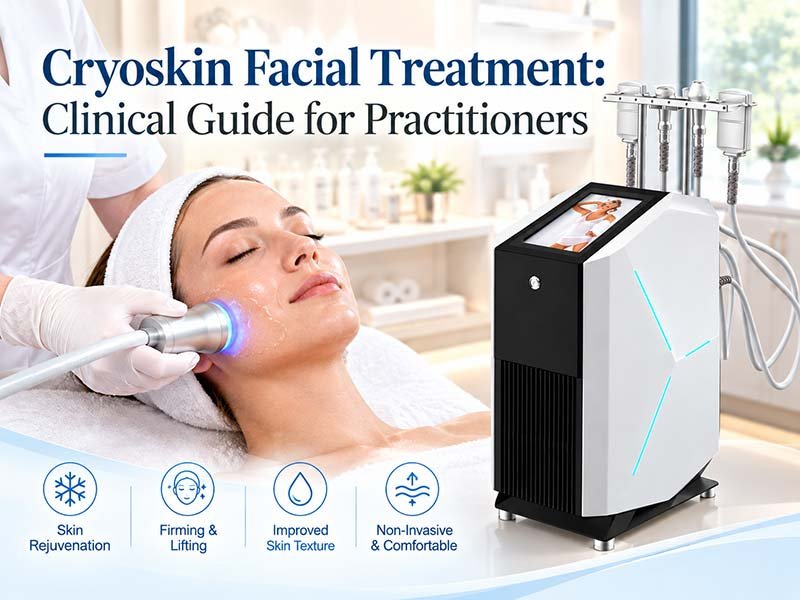
Understanding the Cryoskin Facial Mechanism: Thermal Cycling in Delicate Tissue
The Cryoskin system’s core mechanism — controlled sequential thermal cycling — works differently on facial tissue than on body zones, and understanding these differences is fundamental to safe protocol design.
The Thermal Cycling Mechanism
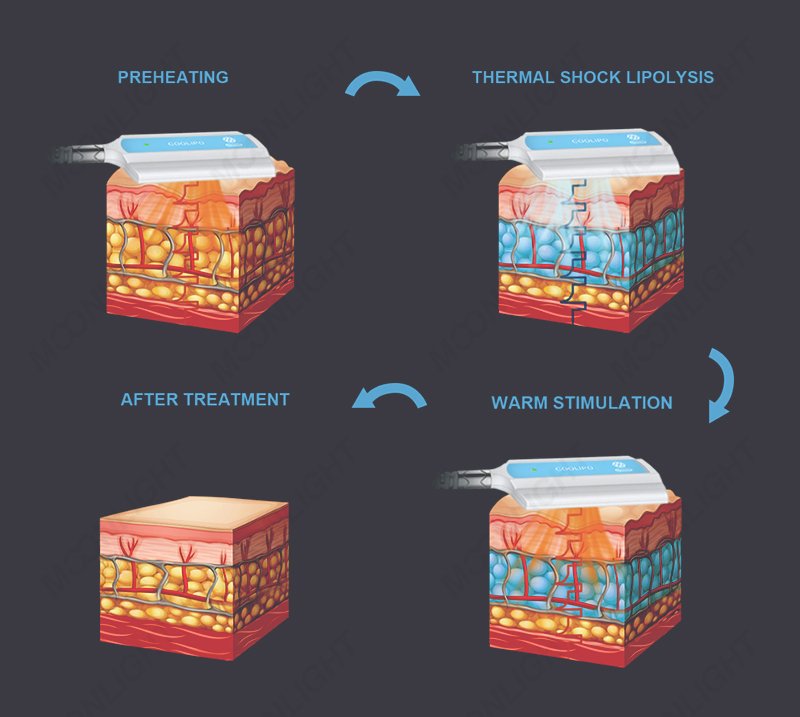
Cryoskin devices generate a programmed sequence of thermal events applied via a probe to the treatment surface:
Phase 1 — Warming (39–41°C): Controlled superficial heating increases local blood flow, temporarily dilates capillaries, and begins a mild heat shock response in dermal fibroblasts. In the facial context, this warming phase must be carefully modulated — facial skin is significantly thinner than body skin (1–2mm dermis versus 2–4mm on the trunk), and probe temperature must be monitored to avoid thermal discomfort or superficial burns on bony prominences.
Phase 2 — Cooling (+5°C to −5°C for facial zones): Rapid controlled cooling creates a thermal gradient across the dermal-hypodermal interface. At the cellular level, this produces three simultaneous effects:
Collagen stimulation (CryoFacial): The thermal shock — warm-to-cold gradient — triggers fibroblast heat shock protein response and upregulates collagen neosynthesis pathways. The result over a multi-session programme is measurably increased dermal density, improved skin tone, and reduction in fine lines in the treated zones.
Microcirculation improvement: The contraction-dilation sequence during thermal cycling stimulates the vascular response, improving microcirculatory perfusion in the superficial dermis and contributing to the post-treatment “glow” effect and longer-term reduction in periorbital puffiness.
Selective adipocyte apoptosis (CryoSlimming facial): At temperatures below +4°C in adequately insulated fatty tissue, the lipid-rich cytoplasm of adipocytes crystallises while surrounding vascular and neural tissue remains undamaged — the principle of cryolipolysis. In the submental zone, where a defined fat compartment is accessible with appropriate probe technique, this produces measurable volume reduction over 4–8 weeks post-treatment as the body clears the apoptotic adipocytes through lymphatic drainage.
Critically, Phase 3 (selective adipocyte apoptosis) applies only to the CryoSlimming facial protocol targeting the submental fat compartment. CryoFacial toning protocols on the cheeks, forehead, and periorbital zone operate at temperatures that stimulate collagen and circulation without reaching the adipocyte crystallisation threshold — and should not be applied at slimming temperatures to these zones.
Facial Indications and Modality Selection
Correct identification of the appropriate Cryoskin facial modality for each client is the most important clinical decision point. Applying slimming temperatures to non-adipose facial zones, or applying toning parameters to a client seeking submental reduction, produces suboptimal outcomes.
CryoFacial — Toning, Lifting, Rejuvenation
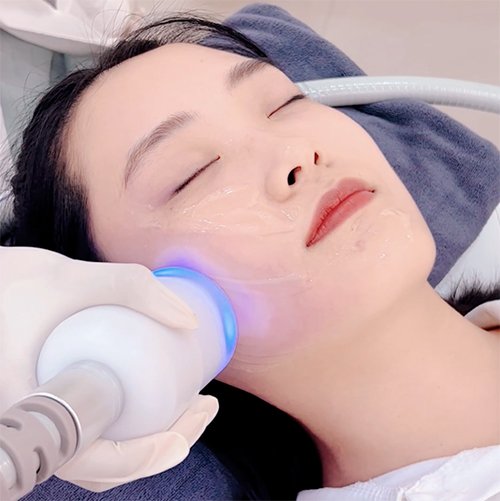
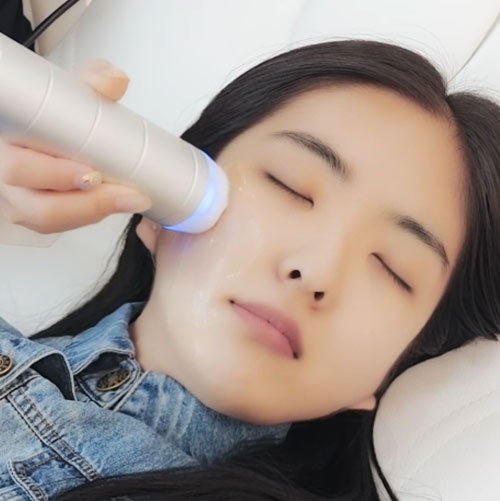
Indication profile: Clients seeking improvement in skin tone, facial contour definition, fine line reduction, post-procedural recovery support, or general rejuvenation without fat reduction.
Suitable zones: Full face (forehead, cheeks, jawline, neck), periorbital area (with modified technique), décolleté.
Client profile: All Fitzpatrick skin types, ages 25+, clients with loss of facial tone, mild-to-moderate laxity, dull complexion, or fine lines. Also effective as a recovery adjunct following other facial procedures (laser, chemical peel) once acute healing is complete.
CryoSlimming Facial — Submental Contouring (Double Chin)
Indication profile: Clients with a defined submental fat compartment — a pinchable, isolated fat deposit under the chin — seeking non-surgical volume reduction. Requires a demonstrable fat compartment; if the double-chin appearance is primarily laxity/skin redundancy rather than fat, CryoFacial toning is the appropriate modality.
Suitable zones: Submental zone specifically; lower jowl area where a distinct fat compartment is present.
Client profile: Clients with BMI <30 and isolated submental fat deposit. Not appropriate for generalised facial adiposity or loose skin without significant fat compartment.
Periorbital and Neck Applications
Periorbital (under-eye): Modified CryoFacial protocol at reduced temperature and minimal probe pressure, targeting periorbital puffiness (lymphatic drainage stimulation) and fine line reduction. Requires specific technique training — probe pressure on the periorbital bone must be avoided.
Neck and décolleté: CryoFacial toning parameters applied with large-area technique, addressing skin laxity, fine lines, and tone on the neck and upper chest. Commonly combined with facial sessions for a full rejuvenation programme.
For patient-facing outcome expectations and real-world results from these indication categories, the Cryoskin facial reviews before and after gallery provides extensive photographic documentation.
Contraindications and Pre-Treatment Facial Assessment
Facial Cryoskin treatment has a more detailed contraindication profile than body protocols due to the proximity of vascular, neural, and glandular structures.
Absolute contraindications (do not treat):
- Raynaud’s phenomenon or cold urticaria — cold-induced vasospasm risk is acute on facial vascular structures
- Active rosacea or acne vulgaris (Grade 3–4) in the treatment zone — thermal cycling exacerbates active inflammation
- Facial nerve damage or loss of sensation — cold sensation is the primary safety feedback mechanism; absent sensation removes this safeguard
- Recent facial surgery or injectable treatments within 4 weeks — including fillers, botulinum toxin, thread lift, surgical incisions
- Open wounds, active herpes labialis lesions, or active skin infection in the treatment zone
- Known cryoglobulinaemia or cold agglutinin disease
- Implanted electronic devices in the face or neck (pacemaker-adjacent concerns for CryoSlimming facial only)
Relative contraindications (proceed with caution and documented informed consent):
- Mild-moderate rosacea (Grade 1–2) in remission — use CryoFacial only at conservative temperatures
- Dental implants or facial metallic prostheses — avoid prolonged cooling directly over metal implants
- Highly sensitive skin or reactive Fitzpatrick Type I — lower temperature settings, shorter exposure
- Pregnancy — no safety data; avoid on principle
- Recent Profhilo or polynucleotide injection (within 3 weeks) — allow full integration before thermal cycling
Pre-treatment assessment checklist:
- Medical history: Raynaud’s, cold-related conditions, autoimmune, vascular disease
- Medications: anticoagulants (bruising risk at probe contact), corticosteroids (skin thinning)
- Recent procedures: injections, laser, peel, surgical — timeline confirmation
- Skin condition: active acne, rosacea grade, herpes history (consider antiviral prophylaxis for cold sore-prone clients)
- Anatomy assessment: fat compartment presence for CryoSlimming; skin thickness and quality; bony prominence mapping
Treatment Parameters by Zone and Modality
The following parameters are for clinical-grade Cryoskin devices with ±0.1°C precision control. Devices without precise temperature management cannot safely deliver facial protocols.
| Zone | Modality | Warming Temp | Cooling Temp | Session Duration | Probe Pressure | Technique Notes |
|---|---|---|---|---|---|---|
| Full face (cheeks, forehead, jawline) | CryoFacial | 39°C | +5°C to +2°C | 20–30 min | Light — circular | Continuous movement; avoid bony prominence hold |
| Periorbital / under-eye | CryoFacial | 38°C | +8°C to +5°C | 5–8 min per side | Feather-light | Crescent strokes; never static on orbital bone |
| Neck and décolleté | CryoFacial | 39°C | +5°C to +2°C | 10–15 min | Light–Medium | Long sweeping strokes, proximal drainage direction |
| Submental (CryoSlimming) | CryoSlimming | 39°C | +4°C to −2°C | 15–20 min | Medium — sustained | Sustained contact on fat compartment; constant motion on periphery |
| Jowl / lower face contouring | CryoSlimming | 39°C | +5°C to 0°C | 10–12 min per side | Light–Medium | Defines mandibular border; avoid submandibular gland |
Key parameter principles for facial application:
- Always warm first — cold-only facial application without the warming phase produces a significantly reduced collagen stimulation response and increases client discomfort.
- Never hold static on bony prominences — zygomatic arch, orbital rim, mandibular angle — continuous probe movement is mandatory.
- Submental CryoSlimming temperatures should never be applied to cheeks or periorbital zone — the dermis in these zones is too thin for adipocyte crystallisation temperatures without risk of superficial tissue damage.
- Temperature endpoints are zone-dependent — periorbital protocol must stay above +5°C; submental CryoSlimming can descend to −2°C on adequate fat compartment.
Standard Cryoskin Facial Treatment Programme Design
Single Session Structure (CryoFacial — 45–60 minutes total)
| Phase | Duration | Content |
|---|---|---|
| Consultation & assessment | 5 min | Goals, contraindication screen, modality selection |
| Skin preparation | 5 min | Cleanse, apply conductive gel |
| Warming phase | 3–5 min | Probe at 39°C, full face primer |
| Primary cooling treatment | 20–30 min | Zone-by-zone CryoFacial protocol per parameter table |
| Periorbital (if included) | 10 min | Modified technique, upper and lower periorbital |
| Recovery and homecare | 5 min | Remove gel, SPF application, post-care instructions |
Intensive Programme (CryoFacial Toning — Standard Course)
| Phase | Sessions | Frequency | Goal |
|---|---|---|---|
| Intensive | 5 sessions | Every 2 weeks | Establish collagen stimulation cascade; tone improvement |
| Consolidation | 3 sessions | Every 3–4 weeks | Reinforce and deepen results |
| Maintenance | Ongoing | Monthly | Sustain long-term tone and rejuvenation |
CryoSlimming Facial Programme (Submental Contouring)
| Phase | Sessions | Frequency | Goal |
|---|---|---|---|
| Slimming intensive | 3–5 sessions | Minimum 2 weeks apart | Adipocyte apoptosis cycle; allow lymphatic clearance between sessions |
| Assessment | After session 3 | Photography, pinch test | Evaluate fat compartment response |
| Maintenance | 1–2 per year | As needed | Sustain volume reduction |
Critical scheduling rule for CryoSlimming facial: Sessions must be a minimum of 2 weeks apart to allow the lymphatic clearance of apoptotic adipocytes from the previous session. Booking submental CryoSlimming more frequently than 2 weeks produces diminishing returns and may cause temporary increased puffiness from incomplete lymphatic clearance.
For a comparison of Cryoskin’s position versus CoolSculpting from a clinical outcomes and profitability perspective, see our Cryoskin vs CoolSculpting comparison guide.
Cryoskin Facial vs Other Facial Treatment Modalities
Clinics evaluating Cryoskin for facial services need a clear framework for understanding how it competes or complements other facial modalities:
| Dimension | Cryoskin Facial | RF (Radiofrequency) | HIFU | Microneedling | Filler / Botox |
|---|---|---|---|---|---|
| Primary mechanism | Thermal cycling (warm + cryo) | Resistive/capacitive heating | Ultrasound coagulation | Mechanical + growth factor | Volume replacement / neurotoxin |
| Collagen stimulation | Yes — heat shock + cold shock | Yes — heating | Yes — focal coagulation points | Yes — wound healing response | Minimal |
| Fat reduction | Yes (submental CryoSlimming) | Mild (some RF devices) | Minimal | No | No |
| Downtime | Zero | Minimal | Minimal | 24–48h | Minimal–moderate (bruising) |
| Consumables per session | Gel only (1–1–3) | Gel or single-use tips (5–5–30) | Cartridges (30–30–80) | Needles + numbing (15–15–30) | Product per syringe (50–50–200+) |
| Pain level | Low | Low–Moderate | Moderate | Moderate (with numbing) | Variable |
| Treatment depth | Dermal–hypodermal | Dermal–hypodermal | SMAS layer (deep) | Dermal | Subcutaneous / muscle |
| Regulatory level | CE/FDA (clinical grade) | CE/FDA (varies by device) | CE/FDA | CE/FDA | Prescription medicine |
| Session price range | 100–100–250 | 80–80–300 | 300–300–800 | 150–150–400 | 300–300–1,000+ |
| Suitability: all skin types | Yes | Yes (most devices) | Yes | Yes (with care on darker skin) | Yes |
The strategic positioning for clinics: Cryoskin facial is a zero-downtime, zero-consumable-cost complement to higher-intensity procedures (HIFU, microneedling) that require recovery time. Clients who are not ready for injectables, or who want maintenance between HIFU sessions, are natural Cryoskin facial candidates. The combination of CryoFacial for toning maintenance and CryoSlimming for submental contouring gives clinics a complete facial architecture without prescription medicines or high-cost cartridge systems.
MNLT Cryoskin Machine: The Clinical Configuration for Facial Protocols
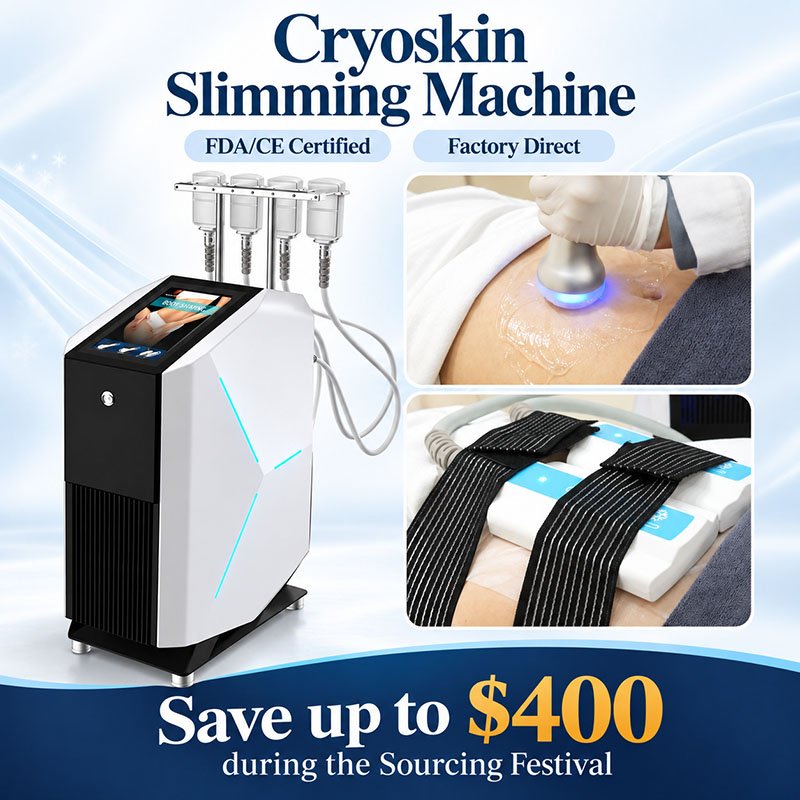
MNLT Laser manufactures Cryoskin technology to the precision specification required for safe facial treatment delivery:
- ±0.1°C temperature control precision: Japanese-imported compression refrigeration system — the parameter accuracy required for facial zone protocols where 1–2°C deviation can affect outcomes or safety margins
- Smooth probe design: facial-appropriate contact surface for continuous-movement technique without skin drag
- Real-time temperature display: practitioner visibility of probe temperature throughout the session
- CE / FDA / MDR / ISO 13485: full regulatory certification for clinical deployment
- 19 years manufacturing experience: 20,000+ clinic installations including dedicated facial aesthetic practices
- Zero per-session consumable cost: gel only — no cartridges, no single-use tips, no cartridge waste
Browse the full MNLT Cryoskin machine range on the Cryoskin machine product category page.

Inquire Now
Fill out the form for more information, and an MNLT product manager will contact you shortly!
FAQ: Cryoskin Facial Treatment for Practitioners
What is the difference between CryoFacial and CryoSlimming facial protocols?
CryoFacial and CryoSlimming facial are two distinct Cryoskin modalities with different temperature parameters, anatomical targets, and clinical outcomes. CryoFacial operates at temperatures of +5°C to +2°C (after warming), stimulating collagen neosynthesis and improving microcirculation across the full face — delivering toning, lifting, and rejuvenation without fat reduction. CryoSlimming facial targets the submental fat compartment at temperatures reaching 0°C to −2°C, inducing selective adipocyte apoptosis to reduce double-chin volume over 4–8 weeks post-treatment. Submental CryoSlimming temperatures should never be applied to cheeks, periorbital zones, or other facial areas without adequate subcutaneous fat depth — the thinner dermal zones of the face require CryoFacial parameters only. Client anatomy assessment to confirm the presence of a distinct fat compartment is mandatory before selecting CryoSlimming facial protocol.
How many Cryoskin facial sessions are needed to see results?
For CryoFacial toning and rejuvenation, clients typically report visible improvement in skin tone, luminosity, and puffiness reduction after the first session. Measurable lifting and fine line improvement is typically established by sessions 3–4 of a standard 5-session intensive programme (sessions every 2 weeks). Collagen remodelling continues for 4–8 weeks after the programme completion, with peak results visible at the 8-week post-programme assessment. Monthly maintenance sessions sustain the improvement long-term. For CryoSlimming facial (submental contouring), results develop progressively over 4–8 weeks post-session as the body clears apoptotic adipocytes through lymphatic drainage — visible submental volume reduction is typically measurable by 4 weeks post-session 2. A standard programme of 3–5 sessions at minimum 2-week intervals produces the most consistent outcomes.
What are the key contraindications specific to Cryoskin facial treatment?
The most important contraindications specific to the facial application are: Raynaud's phenomenon and cold urticaria (cold-induced vasospasm is a significant risk on facial vascular structures); active rosacea Grade 3–4 or active acne in the treatment zone; facial nerve damage or loss of sensation (cold sensation feedback is the primary safety mechanism); recent facial injectables, fillers, or thread lift within 4 weeks; recent facial surgery within 4 weeks; and active herpes labialis lesions. Clients with mild-moderate rosacea in remission can be treated with conservative CryoFacial parameters and documented informed consent. The facial contraindication profile is meaningfully more detailed than body Cryoskin protocols — a structured intake form specific to facial treatment is strongly recommended for all Cryoskin facial clients.
How does Cryoskin facial compare to HIFU for skin tightening?
Cryoskin facial and HIFU target different tissue layers and serve different clinical roles in a facial programme. HIFU (High-Intensity Focused Ultrasound) creates focal coagulation points at the SMAS layer (4.5mm depth) and mid-dermis (3mm depth), producing a stronger single-session tissue lifting response through deep thermal coagulation — but with moderate treatment discomfort, a 2–4 week optimal result window, and per-session cartridge costs of $30–$80. Cryoskin facial operates at the dermal-hypodermal interface (1–3mm depth), delivering zero-downtime collagen stimulation and microcirculation improvement with no consumable cost beyond gel. In clinical practice, Cryoskin facial and HIFU are highly complementary: HIFU for annual deep structural lifting, Cryoskin facial monthly for maintenance and surface tone — a combination that serves clients across the full facial ageing management spectrum at different price points.
What temperature precision does the Cryoskin machine need for facial protocols?
Facial Cryoskin protocols require a minimum of ±0.5°C temperature control accuracy, with ±0.1°C representing the clinical-grade standard. The facial application operates within narrow temperature windows — particularly for periorbital treatment (must stay above +5°C) and for the boundary between CryoFacial toning and CryoSlimming (adipocyte crystallisation begins below +4°C). A device with ±2°C or greater temperature variance cannot reliably maintain the clinical separation between these protocols, creating safety risk on zones with thin dermis. MNLT Cryoskin machines use Japanese-imported compression refrigeration achieving ±0.1°C control precision. When evaluating Cryoskin equipment for facial practice, always request documented temperature accuracy specifications and independent calibration test reports — temperature range claims alone are insufficient without accuracy data.
What is the recommended session interval for CryoSlimming facial (submental)?
CryoSlimming facial sessions targeting the submental zone must be scheduled a minimum of 2 weeks apart. This interval is not a guideline — it is a physiological requirement. After each CryoSlimming session, the apoptotic adipocytes triggered by the cryogenic temperature require 2–4 weeks for the body to clear them through lymphatic drainage and macrophage processing. Scheduling sessions more frequently than 2 weeks does not accelerate results; it applies a second cryogenic stimulus to tissue still in the clearance phase, which can cause increased temporary puffiness and reduced overall outcome. For a typical 3–5 session submental programme, the minimum programme duration is 6–10 weeks. Clear scheduling explanation to clients at intake prevents the most common source of dissatisfaction in CryoSlimming facial programmes.
What certifications should a Cryoskin machine have for facial aesthetic clinic use?
For clinical deployment in facial aesthetic practice, Cryoskin machines should carry CE marking (EU), FDA clearance (US), MDR compliance (EU Medical Device Regulation), and ISO 13485 Quality Management System certification. For facial applications specifically, MDR compliance is particularly important — the EU Medical Device Regulation sets enhanced safety and performance evidence requirements for devices used in facial clinical procedures that the earlier MDD standard did not mandate. Always request traceable certificate numbers and verify through EU EUDAMED or FDA 510(k) public registries before purchase. Certificate images on product pages or marketing materials are not verification — the certificate number must be traceable to a current, active registration in the relevant public database. MNLT Cryoskin machines carry all four certifications with verifiable certificate numbers.
Reviewed by David Ma
CTO & Chief Engineer, MNLT Laser (Shandong Moonlight Electronics Tech Co., Ltd.)
19 years in aesthetic device manufacturing. David leads MNLT's R&D team across the full professional aesthetic device portfolio, ensuring all technical content meets the highest standards of accuracy and clinical safety.