
At a Glance
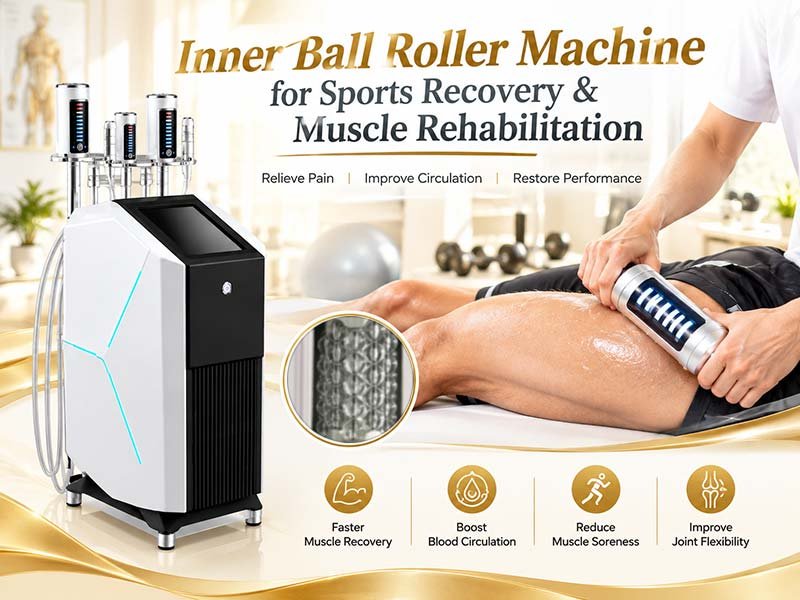
- Inner ball roller compressive microvibration accelerates sports recovery by improving local microcirculation, stimulating lactate and metabolic byproduct clearance, and mechanically releasing myofascial adhesions — addressing three of the primary drivers of delayed onset muscle soreness (DOMS) and post-exertion fatigue simultaneously.
- Clinical applications span four distinct sports recovery contexts: acute post-exertion fatigue (same-day), DOMS management (24–72 hours post-exercise), chronic muscle tension and fascial restriction, and adjunct rehabilitation for soft tissue sports injuries.
- Inner ball roller machines with three roller sizes (60–80mm, 100–120mm, 140–180mm) provide full-body coverage from precision small-muscle work (calves, forearms) to large-group protocols (quadriceps, hamstrings, back) that single-head devices cannot achieve in a single session.
- Compared to foam rollers, massage guns, and compression boots, inner ball roller compressive microvibration offers the only combination of zone-specific adjustable pressure, 360° rotational tissue mobilisation, and optional EMS integration in a single clinical device.
- Standard sports recovery protocols range from 10–15 minute pre-event activation sessions to 30–45 minute post-event deep recovery sessions; the EMS handle extends capability to active muscle stimulation for neuromuscular recovery that no passive modality can replicate.
- MNLT inner ball roller machines carry CE/FDA/MDR/ISO 13485 certification with 19 years of manufacturing experience and 20,000+ clinic installations globally — including sports medicine, physiotherapy, and elite athletic performance contexts.
Recovery is no longer the passive rest interval between training sessions — it is an active clinical discipline that directly determines training adaptation, injury resistance, and athletic performance ceiling. Sports medicine clinics, physiotherapy practices, and high-performance athletic facilities that deploy structured mechanical recovery protocols consistently outperform those relying on passive rest and self-managed foam rolling. Inner ball roller compressive microvibration has established itself as one of the most clinically versatile mechanical recovery modalities available: it addresses multiple recovery mechanisms simultaneously, scales across a full athlete population from recreational to elite, and integrates naturally into both post-event and between-session recovery programmes. This guide gives sports medicine practitioners, physiotherapy clinic managers, and performance centre equipment buyers the clinical framework for deploying inner ball roller technology in a sports recovery context.
The Physiology of Sports Recovery: What Compressive Microvibration Addresses
Effective mechanical intervention for sports recovery requires understanding the three primary physiological processes that determine recovery speed and completeness:
1. Metabolic Byproduct Clearance
Intense exercise generates lactate, hydrogen ions, reactive oxygen species, and inflammatory cytokines in working muscle tissue. The rate at which these metabolites are cleared from the intramuscular environment determines how quickly force-generating capacity is restored. Local microcirculatory flow — capillary blood flow within the muscle — is the primary transport mechanism for this clearance.
Compressive microvibration improves local microcirculatory flow through rhythmic mechanical compression of the capillary bed: each compression cycle increases local blood flow velocity, and the compression-release pattern creates a mechanical pump effect that accelerates metabolite efflux from the muscle interstitium into the venous circulation.
2. Fascial Mobilisation and Myofascial Release
Repeated eccentric muscle contractions (particularly in resistance training and running) generate micro-structural disruption in the endomysium and perimysium — the connective tissue layers surrounding individual muscle fibres and fibre bundles. As repair progresses over 24–72 hours, localised adhesion formation in the fascial matrix increases inter-fibre friction, reducing muscle extensibility and contributing to the stiffness and restricted range of motion characteristic of DOMS.
The rotational oscillation of the inner ball roller generates tangential shear forces in the superficial and deep fascial layers that mechanically mobilise these adhesions, restoring fascial glide and reducing the mechanical impedance that limits muscle extensibility and power output during the recovery window.
3. Lymphatic and Venous Return Enhancement
Post-exercise oedema — the mild tissue swelling that accompanies intense training — results from increased capillary permeability and lymphatic transport lag. The same compressive microvibration mechanism that makes inner ball roller effective for lymphedema management also accelerates post-exercise oedema resolution: rhythmic spherical compression stimulates lymphangion contraction, improving lymphatic clearance of excess interstitial fluid from trained tissue.
For a detailed explanation of the compressive microvibration mechanism at the cellular and tissue level, see our inner ball roller compressive microvibration technical guide.
Sports Recovery Application Scenarios
Inner ball roller protocols differ meaningfully across four distinct sports recovery contexts. Each requires different parameter settings, session timing, and technique:
Scenario 1 — Acute Post-Exertion Fatigue (0–4 hours post-event)
Clinical context: Immediate post-competition or post-training recovery. Muscle temperature is elevated, local inflammation is in early phase, and the priority is accelerating metabolic clearance and reducing acute inflammatory response.
Protocol approach: Light-to-medium pressure, medium roller speed, working proximally toward lymph node clusters. Avoid high pressure in this window — the muscle tissue is in an acute inflammatory state and excessive mechanical load can exacerbate rather than resolve early inflammatory signalling.
Session duration: 15–25 minutes per major muscle group. Priority zones determined by training load of the session.
Scenario 2 — DOMS Management (24–72 hours post-event)
Clinical context: The primary window of delayed onset muscle soreness, characterised by peak pain, reduced range of motion, and force production deficit. This is the highest-value recovery window for mechanical intervention.
Protocol approach: Medium pressure on large muscle groups, slow to medium roller speed, sustained pressure on high-tension areas, finish with drainage strokes. The goal is fascial adhesion disruption, circulation improvement, and local hyperalgesia reduction through mechanical desensitisation.
Session duration: 25–40 minutes. Two sessions in the 24–72 hour window produces measurably better outcomes than a single session.
Scenario 3 — Chronic Muscle Tension and Fascial Restriction
Clinical context: Athletes or active clients with persistent regional muscle tightness, reduced flexibility, and recurrent minor strains in the same anatomical zone — often the result of cumulative fascial remodelling from high training volumes without adequate recovery intervention.
Protocol approach: Sustained medium-to-high pressure on trigger point areas, slow roller speed, combined with passive and active stretching protocols. The mechanical desensitisation and fascial release achieved over a course of 6–8 sessions can produce lasting improvements in tissue quality that passive stretching alone cannot achieve.
Session duration: 30–45 minutes. One to two sessions per week within a structured flexibility programme.
Scenario 4 — Soft Tissue Sports Injury Adjunct Rehabilitation
Clinical context: Grade 1 muscle strains, tendinopathy, fascial tears, and contusions in the subacute to chronic phase (>72 hours post-injury, inflammation resolved). Inner ball roller is contraindicated in the acute inflammatory phase of injury.
Protocol approach: Light pressure working around (not directly over) the injured zone in early subacute phase, progressing to direct low-medium pressure on the healing tissue once pain-free range of motion is established. Follow the treating physiotherapist’s protocol — inner ball roller is an adjunct to structured rehabilitation, not a replacement for it.
For a detailed overview of the lymphatic drainage mechanisms that also support post-injury tissue healing, see our inner ball roller lymphedema and tissue drainage guide.
Treatment Parameters by Scenario and Body Zone
| Recovery Scenario | Roller Head | Pressure | Speed | Duration | Frequency |
|---|---|---|---|---|---|
| Acute post-exertion (0–4h) | Medium/Large | Light | Medium | 15–25 min | Once, same day |
| DOMS management (24–72h) | Medium | Medium | Slow–Medium | 25–40 min | 2× in 72h window |
| Chronic tension / fascial | Medium/Small | Medium–High | Slow | 30–45 min | 1–2×/week |
| Injury rehab (subacute) | Small/Medium | Light–Medium | Slow | 20–30 min | 2–3×/week with physio |
| Pre-event activation | Medium | Light | Medium–Fast | 10–15 min | Session morning |
| Body Zone | Recommended Head | Key Muscle Groups |
|---|---|---|
| Quadriceps (anterior thigh) | Large (140–180mm) | Vastus lateralis, rectus femoris |
| Hamstrings (posterior thigh) | Large (140–180mm) | Biceps femoris, semimembranosus |
| Calves / gastrocnemius | Small–Medium (60–120mm) | Gastrocnemius, soleus, peroneal group |
| Gluteal / hip rotators | Large (140–180mm) | Gluteus maximus, piriformis, IT band |
| Lower back / thoracolumbar | Large (140–180mm) | Erector spinae, quadratus lumborum |
| Shoulder / upper trapezius | Medium (100–120mm) | Trapezius, deltoid, rotator cuff |
| Forearm / wrist extensors | Small (60–80mm) | Extensor carpi group, brachioradialis |
Inner Ball Roller vs Other Sports Recovery Modalities
Sports recovery equipment is a crowded category. The following comparison positions inner ball roller against the four most commonly used alternatives in clinical and high-performance settings:
| Dimension | Inner Ball Roller | Foam Roller | Massage Gun | NormaTec Compression Boot | Manual Sports Massage |
|---|---|---|---|---|---|
| Mechanism | Compressive microvibration + rotation + optional EMS | Self-applied body weight compression | Percussive vibration | Sequential pneumatic compression | Manual soft tissue manipulation |
| Tissue depth | Capillary/fascial (0.5–3mm) | Surface-superficial | Percussive (variable depth) | Venous / lymphatic | Full depth (practitioner-dependent) |
| Operator control | Practitioner-controlled, zone-specific | Self-administered, inconsistent | Self or practitioner | Automated programme | Full practitioner control |
| Pressure consistency | High (sensor feedback) | Low (body weight variable) | Medium | High (programmable) | Variable |
| Fascial mobilisation | Strong — rotational shear | Moderate | Moderate — percussive | Weak | Strong |
| Microcirculation | Strong | Moderate | Moderate | Moderate — compression-dependent | Strong |
| EMS integration | Yes (combined handle) | No | No | No | No |
| Full-body coverage | Yes (3 head sizes) | Partial | Partial | Legs only | Yes (practitioner time) |
| Session scalability | High — one practitioner supports multiple patients | Self-service | Self-service | High — multiple units possible | Low (1:1 only) |
| Equipment cost | 6,500–6,500–9,500 (full clinical suite) | 20–20–80 | 100–100–600 | 1,500–1,500–4,000 | Labour cost only |
| Certification level | CE/FDA/MDR/ISO 13485 | Consumer product | Consumer product | CE/FDA (medical grade models) | N/A |
The critical differentiator is the combination of practitioner-controlled zone-specific pressure, rotational fascial mobilisation, and EMS integration — no other single device in this comparison delivers all three. Foam rollers and massage guns are self-administered tools with inherently variable pressure and no rotation mechanism. NormaTec compression boots are excellent for venous return and lymphatic drainage but apply uniform segmental pressure without fascial mobilisation capability and are limited to the lower limbs. Manual sports massage delivers the strongest single-session outcomes but is constrained by 1:1 practitioner-to-patient ratio, limiting throughput in high-volume clinic or sports centre contexts.
Inner ball roller occupies the clinical-grade mechanical space between manual therapy and self-care tools — providing practitioner-grade precision and tissue response at machine-assisted session throughput.
Standard Sports Recovery Programme Design
1. Competition Day Recovery Protocol (Single-Session)
For elite or competitive athletes requiring immediate post-event recovery support:
| Phase | Duration | Technique | Goal |
|---|---|---|---|
| Warm-up drainage | 5 min | Light strokes, proximal direction | Activate lymphatic pathways |
| Primary recovery zones | 15–20 min | Medium pressure, slow strokes on major loaded groups | Metabolite clearance |
| Trigger point work | 5–8 min | Sustained pressure, high-tension areas | Fascial release |
| Drainage finish | 5 min | Light proximal strokes | Lymphatic completion |
Total session: 30–38 minutes. Priority zones determined by sport-specific loading pattern (e.g., legs + lower back for runners; shoulders + upper back for swimmers; full body for CrossFit/team sports).
2. Weekly Recovery Programme (Recreational and Club Athletes)
| Day | Session Type | Duration | Modality |
|---|---|---|---|
| Day after training | DOMS management | 35 min | Inner ball roller, medium pressure |
| 2 days after training | Deep fascial recovery | 40 min | Inner ball roller + EMS |
| Pre-next-session | Activation | 12 min | Inner ball roller, light pressure |
3. Multi-Week Performance Maintenance Block
For sports facilities or physiotherapy practices supporting an athlete through a training block (4–8 weeks):
- Week 1–2: 3 sessions/week (Day-after + midweek + pre-training activation)
- Week 3–4: 2 sessions/week (post-training + pre-competition)
- Week 5–8 (competition phase): 1 session/week maintenance + competition-day recovery on demand
For the full clinical scope of inner ball roller applications — including the lymphatic and post-surgical recovery contexts that frequently co-present with sports injuries — see our inner ball roller machine clinical applications overview.
EMS Integration: Extending Beyond Passive Recovery
The EMS (electrical muscle stimulation) handle included in MNLT’s inner ball roller clinical suite adds an active neuromuscular dimension that no passive recovery modality can replicate:
Active recovery mode: Low-intensity EMS (submaximal contraction at 4–8 Hz) during or immediately after compressive microvibration stimulates active muscle pump function — significantly enhancing venous return and metabolite clearance beyond what passive roller work alone achieves. This is the primary EMS application for post-event recovery.
Neuromuscular facilitation: During injury rehabilitation, EMS at 30–50 Hz targets motor unit recruitment in inhibited muscles — a common consequence of joint pain or post-surgical immobilisation where voluntary activation is reduced. Combined with inner ball roller tissue preparation, EMS facilitates re-engagement of inhibited motor patterns.
Muscle activation before training: Pre-event EMS (10–15 minutes, medium intensity) produces a post-activation potentiation (PAP) effect that increases power output in the subsequent training session. Combined with the light activation roller protocol, this creates a complete neuromuscular warm-up and priming session.
No dedicated EMS device plus a separate massage tool achieves this combination as efficiently as MNLT’s integrated clinical suite — and separate device costs (2,000–2,000–6,000 for clinical EMS + roller) significantly exceed the integrated system price.
MNLT Inner Ball Roller: The Clinical Configuration for Sports Recovery Programmes
MNLT Laser has been manufacturing professional aesthetic and body treatment devices for 19 years, with 20,000+ clinic installations in 120+ countries including sports medicine, rehabilitation, and elite performance contexts.
The MNLT clinical suite for sports recovery:
- 3 roller handles (small 60–80mm, medium 100–120mm, large 140–180mm): full-body coverage from calf precision work to gluteal large-area recovery
- EMS handle: active recovery, neuromuscular facilitation, and pre-event activation in one device
- 360° rotation: full directional fascial shear for myofascial adhesion release — not achievable with linear-only devices
- Real-time pressure sensor: ensures consistent therapeutic pressure across practitioners and session volumes
- CE / FDA / MDR / ISO 13485: certified for clinical sports medicine and physiotherapy deployment
- No per-session consumable cost: gel only (1–1–3) — no cartridges, no pads, no disposables
Browse the full MNLT inner ball roller range on the inner ball roller machine product category page.
Inquire Now
Fill out the form for more information, and an MNLT product manager will contact you shortly!
FAQ: Inner Ball Roller Machine for Sports Recovery
How does inner ball roller compressive microvibration help with DOMS?
Delayed onset muscle soreness (DOMS) is caused by a combination of micro-structural muscle damage, localised inflammatory response, and fascial adhesion formation in the 24–72 hours following intense eccentric exercise. Inner ball roller compressive microvibration addresses all three simultaneously: rhythmic spherical compression improves local microcirculation and accelerates clearance of inflammatory mediators; rotational shear forces mechanically mobilise fascial adhesions that contribute to restricted range of motion and stiffness; and improved lymphatic drainage reduces post-exercise tissue oedema. Two inner ball roller sessions within the 24–72 hour DOMS window consistently produce faster resolution of soreness and earlier return to full range of motion than passive rest alone.
When should inner ball roller sessions be scheduled relative to training?
Three timing windows produce different clinical outcomes. Post-event (within 4 hours): light-to-medium pressure sessions targeting the major loaded muscle groups; focus is metabolite clearance and acute inflammatory modulation — avoid high pressure in this window. DOMS window (24–72 hours post-training): medium pressure sessions for fascial release and circulation; the most impactful recovery window. Pre-training activation (60–90 minutes before exercise): light pressure, medium roller speed, 10–15 minutes on key muscle groups to increase local blood flow and facilitate neuromuscular readiness — enhanced when combined with EMS pre-activation. For competition-day programmes, post-event is the priority; for training block management, DOMS window sessions deliver the greatest adaptation support.
How does inner ball roller compare to massage guns for sports recovery?
Massage guns and inner ball roller machines both generate mechanical stimulation for sports recovery, but with different mechanisms and clinical capabilities. Massage guns deliver percussive vibration — rapid linear impacts that stimulate neurological desensitisation and superficial tissue movement. Inner ball roller delivers compressive microvibration with 360° rotation — generating rotational shear forces that mechanically mobilise fascial adhesions in a way percussive tools cannot replicate. Inner ball roller also offers: practitioner-controlled zone-specific pressure with sensor feedback (versus self-applied variable pressure from massage guns), optional EMS integration, and a CE/FDA/MDR clinical certification level that consumer massage guns do not carry. For professional clinical deployment, inner ball roller is categorically a different class of equipment.
Can inner ball roller machines be used for sports injury rehabilitation?
Yes, as an adjunct in the subacute and chronic phases of soft tissue sports injury rehabilitation. Inner ball roller is contraindicated in the acute inflammatory phase (first 72 hours post-injury) — mechanical compression should not be applied to acutely inflamed tissue. In the subacute phase (72 hours+, once active inflammation has resolved), light-pressure compressive microvibration around the injury zone supports lymphatic drainage, reduces post-injury tissue oedema, and maintains microcirculatory flow in perilesional tissue. As rehabilitation progresses, direct application over the healing tissue (light-to-medium pressure) supports fascial remodelling and prevents excessive scar tissue adhesion formation. Always coordinate with the treating physiotherapist's protocol — inner ball roller is an adjunct to structured rehabilitation, not a replacement for it.
What is the advantage of the EMS handle for sports recovery?
The EMS handle included in MNLT's inner ball roller suite adds active neuromuscular stimulation to the recovery toolkit. In active recovery mode (low-frequency EMS, 4–8 Hz), it stimulates rhythmic muscle contractions that significantly enhance venous return and metabolite clearance — producing a clinically meaningful improvement over passive compressive microvibration alone for post-event recovery. For injury rehabilitation, mid-frequency EMS (30–50 Hz) facilitates motor unit recruitment in inhibited muscles, accelerating neuromuscular return to function. For pre-event preparation, EMS post-activation potentiation primes motor units for higher force output. No passive recovery device — foam rollers, compression boots, or massage guns — can replicate active neuromuscular facilitation; the EMS integration is what makes MNLT's suite uniquely comprehensive for clinical sports recovery programmes.
How many inner ball roller sessions per week are recommended for athletes?
Session frequency depends on training load and recovery context. During high-volume training blocks: 3 sessions per week (day-after training recovery + midweek deep recovery + pre-next-session activation) provides comprehensive mechanical recovery support without over-stimulating tissue that needs structural repair time. During competition phases: 1–2 sessions per week (post-competition recovery + one maintenance session) supports performance continuity. For recreational athletes: 2 sessions per week consistently produces measurable improvements in recovery speed, flexibility, and reported muscle readiness compared to no mechanical recovery intervention. The minimum effective frequency for a training-block programme is 2 sessions per week — weekly-only sessions during active training blocks do not maintain sufficient cumulative recovery momentum.
What certifications does an inner ball roller machine need for sports medicine clinic use?
For clinical deployment in sports medicine, physiotherapy, or rehabilitation settings in regulated markets, inner ball roller machines should carry CE marking (EU), FDA clearance (US), MDR compliance (EU Medical Device Regulation), and ISO 13485 Quality Management System certification. In sports medicine contexts where the device is used alongside physician-supervised rehabilitation programmes, the full four-credential regulatory baseline protects the clinic's professional liability position and supports insurance coverage for the device's use in patient treatment. Always request traceable certificate numbers and verify through public registries before purchase — not from certificate images on product pages or marketing materials.
Reviewed by David Ma
CTO & Chief Engineer, MNLT Laser (Shandong Moonlight Electronics Tech Co., Ltd.)
19 years in aesthetic device manufacturing. David leads MNLT's R&D team across the full professional aesthetic device portfolio, ensuring all technical content meets the highest standards of accuracy and clinical safety.