
At a Glance
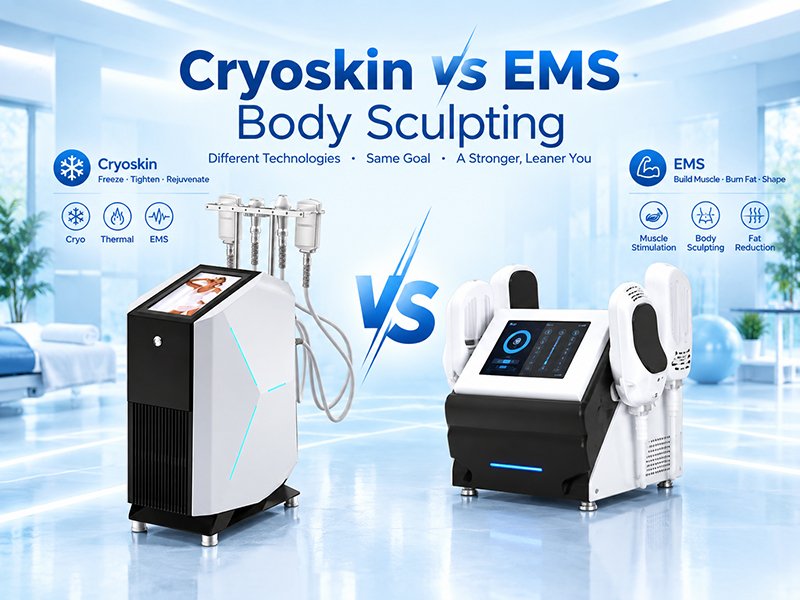
- Cryoskin targets subcutaneous adipose tissue via controlled thermal shock (sequential warming and cooling from 41°C to −2°C), inducing permanent adipocyte apoptosis, while EMS body sculpting focuses on motor neurons to elicit supramaximal muscle contractions, driving myofibrillar hypertrophy and muscle hyperplasia.
- The primary clinical outcome of Cryoskin is localized fat pocket reduction and skin toning with zero consumables beyond conductive gel, whereas EMS delivers visible muscular definition, core strengthening, and gluteal lifting with zero consumables.
- From an equipment procurement perspective, factory-direct pricing for clinical-grade Cryoskin systems ranges between $6,000 and $9,500, while multi-handle EMS body sculpting devices average $6,500 to $11,000, both achieving full capital amortisation within 3 to 6 weeks at standard patient throughput.
- Aesthetic clinics and medical spas achieve the highest patient lifetime value and retention by combining modalities into phased protocols: initiating with Cryoskin to eliminate insulating subcutaneous fat layers, followed by EMS sculpting to build underlying muscular architecture.
- Both modalities represent zero-downtime, non-invasive procedures that do not require licensed physicians for operation in most jurisdictions, offering substantial operational leverage for expanding medspas.
- MNLT Laser manufactures high-precision Cryoskin (featuring ±0.1°C thermal accuracy via imported compression refrigeration) and multi-handle EMS systems holding CE, FDA, EU MDR, and ISO 13485 medical-grade certifications backed by 19 years of engineering expertise across 20,000+ clinic installations worldwide.
Non-invasive body contouring remains one of the fastest-growing revenue engines in modern medical aesthetics, with market projections consistently demonstrating robust annual double-digit growth through 2030. However, clinic owners, medical directors, and aesthetic entrepreneurs evaluating capital investments frequently encounter a critical strategic dilemma: should they invest in fat-reducing cryotherapy technology like Cryoskin, or focus on muscle-stimulating electromagnetic devices such as EMS Body Sculpting? While marketing campaigns often frame these two modalities as competitors, their biological mechanisms, targeted anatomical layers, and clinical endpoints are fundamentally different. Understanding these differences—and knowing how to integrate both systems into synergistic, high-ticket clinical packages—is the key to maximizing patient satisfaction and clinic profitability in 2026. This comprehensive buyer’s guide breaks down the core mechanisms, treatment protocols, operational costs, financial ROI models, and clinical integration strategies for both modalities.
Core Mechanism Comparison: Adipocyte Apoptosis vs. Supramaximal Muscle Contraction
To make an informed capital acquisition, clinic leadership must first understand the tissue-level biology of each modality. Conflating fat reduction with muscle stimulation is the most common pitfall leading to mismatched patient expectations and sub-optimal retention rates.
How Cryoskin Operates: Contrast Thermal Shock Lipolysis
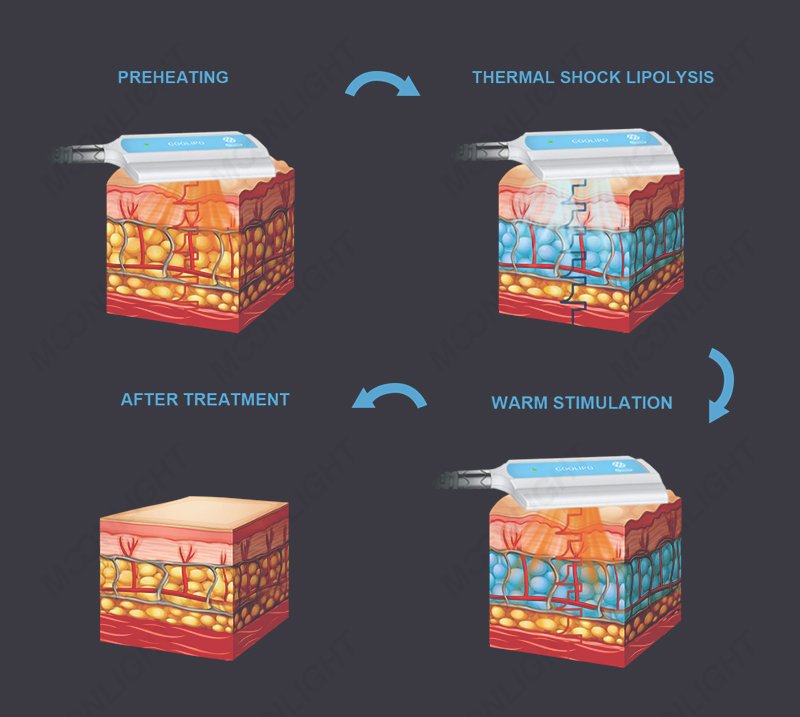
Cryoskin technology relies on the physiological principle of thermal contrast lipolysis—commonly termed thermal shock. Unlike static cryogenic devices that maintain a single freezing temperature throughout the cycle, Cryoskin applies a programmed sequence of rapid thermal variation:
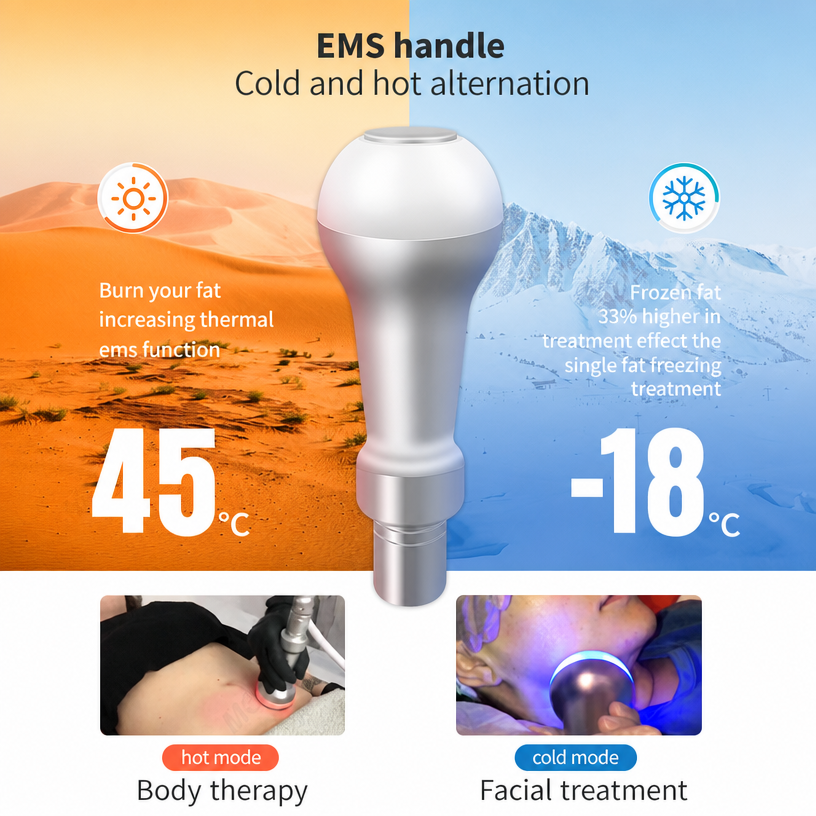
- Pre-Warming Phase (39°C to 41°C): The treatment begins with gentle superficial heating. This initial hyperthermic phase induces localized vasodilation, increases capillary blood velocity, and softens the structural integrity of the subcutaneous adipose matrix, increasing its vulnerability to sudden temperature drops.
- Rapid Cryogenic Shock (+4°C to −2°C): The applicator rapidly transitions to sub-zero temperatures. Because human lipid cells (adipocytes) crystallize and undergo cellular phase shifts at significantly higher temperatures than water-rich surrounding tissues (dermal fibroblasts, peripheral nerve fibers, vascular endothelium, and skeletal muscle), this rapid cooling initiates selective adipocyte apoptosis without injuring surrounding skin or deeper tissues.
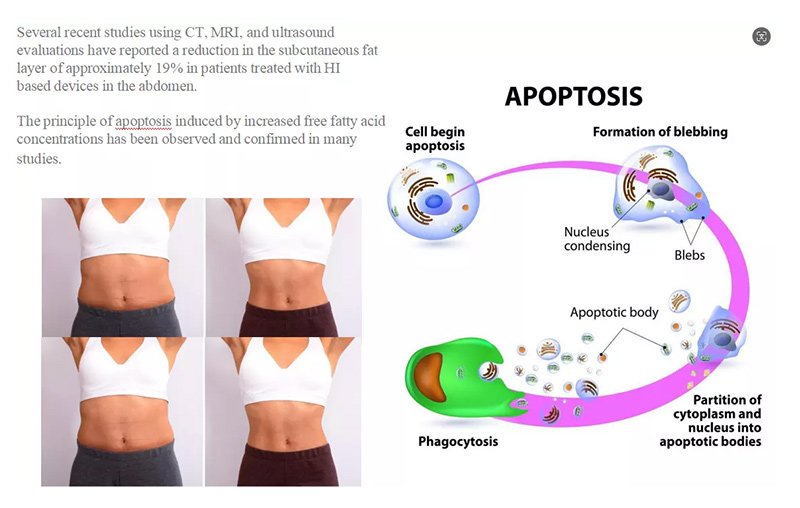
- Apoptotic Clearance Window: Over the 2 to 4 weeks following treatment, the crystallized, damaged adipocytes trigger a benign, non-necrotic macrophage response. Phagocytes engulf the apoptotic lipid fragments, which are gradually cleared through the venous and lymphatic circulation and metabolized by the liver.
Crucially, Cryoskin delivers two distinct operational modes: CryoSlimming (which reaches sub-zero temperatures to destroy localized fat) and CryoToning (which operates at mild positive cooling temperatures between +2°C and +5°C to induce cutaneous vasoconstriction followed by reflex vasodilation, dramatically boosting microcirculation, collagen synthesis, and dermal elasticity).
For a detailed analysis of how contrast thermal cryolipolysis compares to traditional vacuum-cup cooling systems in clinical settings, explore our clinical evaluation of Cryoskin vs CoolSculpting for results, comfort, and profitability.
How EMS Body Sculpting Operates: High-Intensity Electromagnetic Myostimulation
In stark contrast to Cryoskin’s focus on the hypodermal adipose layer, EMS Body Sculpting targets motor neuron pathways within skeletal muscle groups. Clinical-grade EMS systems deliver high-intensity focused electromagnetic pulses (or coordinated neuromuscular electrical stimulation) directly into deep muscle tissue:
- Depolarization of Motor Neurons: The pulsed electromagnetic field penetrates non-invasively through cutaneous and subcutaneous layers (reaching up to 7 cm in depth), bypassing skin resistance to depolarize somatic motor axons.
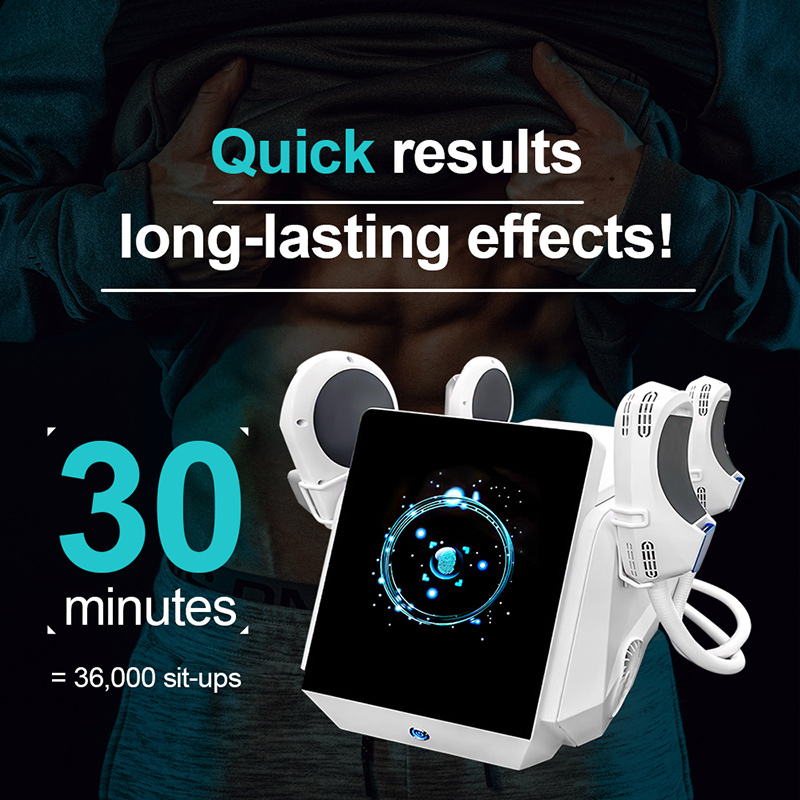
- Supramaximal Contractions: Under physiological conditions, voluntary muscular effort recruits only approximately 30% to 40% of available motor units, with alternating contraction-relaxation cycles to prevent total metabolic depletion. EMS bypasses central nervous system inhibitory feedback, forcing 100% of the muscle fibers within the magnetic field into simultaneous, prolonged “supramaximal” contractions. A standard 30-minute clinical session can elicit the metabolic equivalent of over 20,000 complete abdominal crunches or squats.
- Hypertrophy, Hyperplasia, and Epiphenomenal Lipolysis: Subjected to these extreme mechanical loads, myofibrils undergo adaptive microscopic micro-tearing. During recovery, the muscle tissue responds with profound structural remodeling: increasing myofibrillar diameter (hypertrophy) and generating new myofibers (hyperplasia). Additionally, the extreme localized energy crisis stimulates intense epinephrine cascades, triggering a secondary metabolic lipolysis in the immediate vicinity of the working muscle beds.
Head-to-Head Specification & Operational Comparison
Choosing between these devices requires examining their practical day-to-day workflow, treatment ergonomics, operator dependency, and physical infrastructure requirements.
| Operational Dimension | Cryoskin Technology | EMS Body Sculpting |
|---|---|---|
| Primary Anatomical Target | Subcutaneous adipose tissue & superficial dermis | Deep skeletal muscle architecture & local metabolic fat |
| Clinical Endpoint | Adipocyte apoptosis, circumference reduction, skin tightening | Muscle hypertrophy, muscle hyperplasia, postural toning |
| Primary Body Zones | Abdomen, flanks, thighs, bra fat, submental chin, neck | Abdomen (rectus/obliques), buttocks, biceps/triceps, calves |
| Operator Dependency | Hands-on (therapist actively guides thermal probe) | Hands-free (strapped-on applicators; set-and-walk-away) |
| Treatment Duration | 28–44 minutes depending on area and protocol | 30 minutes per muscle group |
| Recommended Protocol | 5 sessions spaced every 14 days (fat clearance cycle) | 4–6 sessions spaced every 2–4 days (twice weekly) |
| Consumables Required | Conductive thermal gel ($1–$3 per treatment) | Zero (dry contact applicators secured with velcro belts) |
| Sensory Experience | Warm initial glide followed by intense, numbing cold massage | Rhythmic involuntary muscle contractions and tapping pulses |
| Downtime / Recovery | None; transient erythema resolving in 1–2 hours | None; mild DOMS (muscle soreness) similar to heavy workout |
| Average Factory Price | $6,000 – $9,500 (CE/FDA/MDR certified manufacturer) | $6,500 – $11,000 (2 to 4 handles with optional RF) |
Patient Selection & Clinical Indications: Matching the Modality to the Anatomy
A clinic’s clinical efficacy and consultation conversion rate depend on correctly identifying which patient presentations respond best to each technology.
The Ideal Cryoskin Candidate
- Pinchable Subcutaneous Adiposity: Clients with distinct, localized soft fat deposits (at least 1.5 cm to 2.5 cm of pinchable skinfold thickness) that persist despite consistent caloric deficit and cardiovascular training.
- Skin Laxity & Textural Irregularities: Clients seeking simultaneous circumference reduction and dermal smoothing. The contrast thermal shock stimulates neocollagenesis, tightening mildly loose abdominal or arm skin as fat volume decreases.
- Submental Fullness & Facial Contouring: Patients presenting with double chin fullness who are unwilling to undergo Kybella injections or invasive liposuction. Cryoskin facial handles allow precision cooling over mandibular angles and the submental space.
- Cellulite Presentation (Grade 1–2): The CryoToning and micro-drainage settings effectively soften fibrous septae and boost dermal vascular flow, reducing superficial dimpling.
The Ideal EMS Body Sculpting Candidate
- Lean Patients Seeking Muscular Definition: Clients who already maintain relatively low body fat percentages (BMI between 19 and 25) but struggle to achieve sharp abdominal definition, visible rectus abdominis segmentation, or high-positioned gluteal projection.
- Postpartum Diastasis Recti: Post-pregnancy clients suffering from abdominal wall weakness. High-intensity electromagnetic fields have been clinically proven to stimulate lateral connective-tissue contraction, reducing abdominal separation (diastasis recti) by an average of 10% to 14%.
- Non-Surgical Gluteal Augmentation: Clients desiring a lifted, firmer gluteal shape without the severe surgical risks associated with Brazilian Butt Lifts (BBL) or synthetic fillers.
- Sarcopenia & Core Stability Rehabilitation: Older demographic clients requiring non-impact core strengthening to alleviate chronic lower back pain and enhance functional kinetic chain stability.
Financial ROI & Practice Economics: TCO and Break-Even Modeling
Both technologies present exceptionally favorable economic profiles compared to legacy body contouring platforms. Legacy devices typically burden aesthetic clinics with exorbitant upfront capital costs (80,000to80,000to180,000) and expensive proprietary per-card/per-cycle consumable fees (150to150to250 per session), severely eroding operational gross margins.
By contrast, sourcing certified Cryoskin machines and EMS body sculpting machines directly from verified medical device manufacturers like MNLT eliminates mandatory licensing royalties and middleman distributor markups.
| Financial & Metric Factor | Cryoskin Business Model | EMS Body Sculpting Model |
|---|---|---|
| Initial Capital Outlay (Factory Direct) | $7,500 average | $8,500 average (4-handle configuration) |
| Consumable Cost per Treatment | $2.00 (specialized ultrasound contact gel) | $0.00 (zero consumable burden) |
| Average Market Retail Price / Session | $250 – $350 (North America / Western Europe) | $300 – $500 (single muscle group session) |
| Average Package Price (5–6 Sessions) | $1,250 – $1,600 | $1,500 – $2,200 |
| Gross Margin per Treatment | 99.2% (exclusive of practitioner hourly labor) | 100% (exclusive of room occupancy) |
| Labor Structure | Hands-on 30–40 min (esthetician / technician) | Hands-free (5 min strap-in, 5 min detachment) |
| Break-Even Target (Packages Sold) | 5 to 6 complete client packages | 4 to 5 complete client packages |
| Estimated Time to 100% Capital Recovery | 3 to 6 weeks at 2 new packages sold per week | 2 to 4 weeks at 2 new packages sold per week |
Key Takeaway for Clinic Managers
- Cryoskin requires technician engagement during the session, making it a high-touch, sensory luxury service that builds strong patient rapport and allows cross-selling of skincare and home regimens.
- EMS Body Sculpting offers extraordinary operational leverage: because the device runs unattended once applicators are secured, a single practitioner can monitor multiple treatment rooms or perform injectable procedures simultaneously, effectively generating passive treatment revenue.
The Ultimate Practice Protocol: The "Reduce & Sculpt" Combination Model
The most successful body contouring centers in 2026 do not treat Cryoskin and EMS as an “either/or” decision. Instead, they position them as complementary phases of a complete structural transformation program.
Consider the biological reality: if a patient presents with 3 centimeters of subcutaneous adipose tissue overlying their abdominal wall, performing EMS sculpting in isolation will build the underlying rectus muscle. However, that newly defined muscle will remain obscured beneath the insulating blanket of fat, leading to perceived treatment failure and dissatisfied reviews. Conversely, applying Cryoskin alone will remove the fat pocket, but if the underlying muscular tone is flaccid and unconditioned, the client may be left with a flat but undefined contour.
[Phase 1: Debulking & Cellular Apoptosis]
Cryoskin Slimming (Sessions 1 to 4, spaced 14 days apart)
Target: Crystallize and clear dense subcutaneous adipose deposits
│
▼
[Phase 2: Transition & Dermal Toning]
Cryoskin Toning + Introductory EMS Myostimulation
Target: Firm overlying dermal matrix while activating deep core units
│
▼
[Phase 3: Hypertrophy & Muscular Architecture]
EMS Body Sculpting Intensive (4 to 6 sessions, spaced 3 days apart)
Target: Supramaximal contractions to build high-definition muscle definition
Structuring High-Ticket Combination Packages
- “The 360 Core Redefinition” (2,800–2,800–3,800 retail package):
- Weeks 1 to 6: 3 Cryoskin Slimming sessions spaced two weeks apart to debulk the periumbilical fat pad.
- Weeks 5 to 8: 6 high-intensity EMS sessions (twice per week) to build deep rectus and transverse abdominis tone as the fat layer recedes.
- “The Non-Surgical Booty Lift” (2,200–2,200–3,200 retail package):
- Cryoskin Toning performed on the subgluteal fold (banana roll) to tighten loose tissue and eliminate lower gluteal cellulite dimples.
- EMS applicators placed directly over the gluteus maximus and medius to produce muscular hypertrophy and elevate the posterior apex.
By bundling both modalities, clinics elevate their average order value (AOV) from 1,200toover1,200toover3,000 while delivering visual transformations that single-technology clinics cannot replicate.
Practical Checklist: 5 Pitfalls to Avoid When Sourcing Equipment
When acquiring body sculpting technology from international manufacturers, aesthetic practices should perform rigorous due diligence:
- Inaccurate Temperature Stability in Cryo Systems: Ensure the Cryoskin unit utilizes industrial-grade imported compression systems rather than low-cost thermoelectric Peltier chips. Dermal safety requires real-time algorithmic control accurate to ±0.1°C to prevent cold panniculitis or superficial epidermal frostbite.
- Sub-Therapeutic Magnetic Intensity in EMS Devices: Verify that the EMS machine generates authentic clinical magnetic field intensity (at least 7 to 13 Tesla at the applicator surface) with water-cooled handpieces to ensure uninterrupted continuous high-intensity pulsing without thermal shutdown.
- Absence of Verifiable Regulatory Certificates: Reject suppliers who provide unverified image scans. Demand traceable registration numbers for CE, FDA 510(k), and ISO 13485 quality systems that can be cross-checked directly in public registries.
- Mandatory Software Paywalls & Cycle Cards: Some legacy distributors sell equipment at a modest discount but lock the operating software behind proprietary RF cards, charging clinics 50to50to100 every time a button is pressed. Insist on open-platform hardware with lifetime unlocked software.
- Lack of Clinical Training & Technical Support: Ensure your manufacturing partner provides comprehensive clinical operating manuals, contraindication protocols, and direct engineering support with guaranteed rapid-dispatch modular spare parts.
Why Leading Aesthetic Practices Partner with MNLT Laser
For over 19 years, MNLT Laser (Shandong Moonlight Electronic Technology Co., Ltd.) has engineered and manufactured clinical-grade aesthetic medical equipment for over 20,000 clinics across 120 countries.
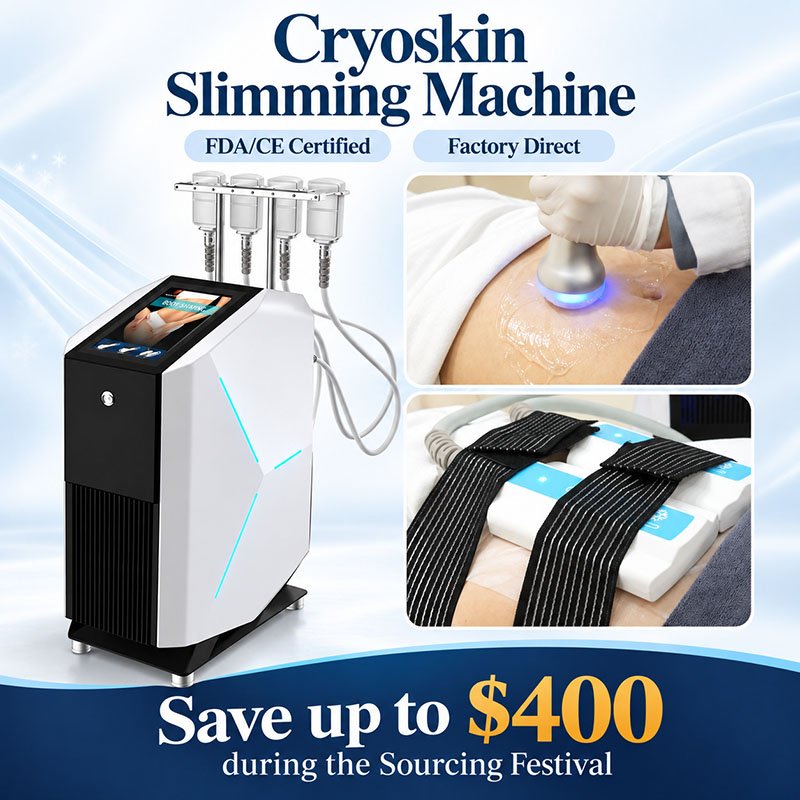
- Precision Thermal Engineering: MNLT Cryoskin platforms integrate imported Japanese compressors, achieving micro-variable temperature modulation between 45°C and −10°C with automated dermal sensor safety cutoffs.
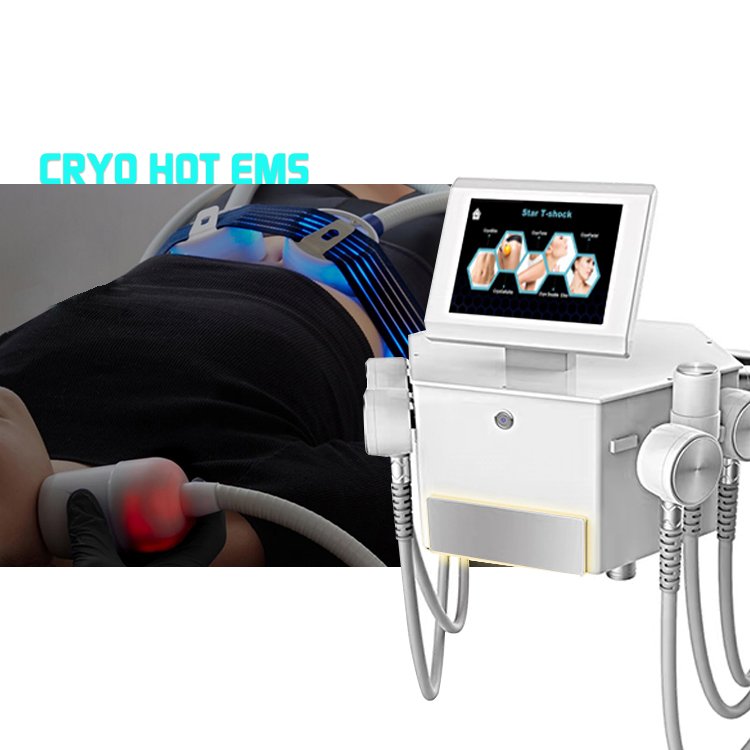
- Extreme-Field EMS Power: MNLT EMS Body Sculpting systems feature dual- and quad-applicator configurations generating up to 13 Tesla of focused electromagnetic energy, supported by closed-loop active liquid cooling for all-day continuous clinic operation.
- Complete Regulatory Assurance: Full compliance with CE, US FDA, EU MDR, and ISO 13485 medical manufacturing standards, guaranteeing patient safety and insurance audit compliance.
- Factory-Direct Value: Direct factory procurement completely bypasses multi-tier distributor margins, unlocking maximum clinic ROI without recurring licensing royalties or per-treatment card fees.
Explore our dedicated body slimming equipment portfolio to review full technical blueprints, or contact MNLT’s medical engineering team today for comprehensive factory pricing and clinical consultation.

Inquire Now
Fill out the form for more information, and an MNLT product manager will contact you shortly!
Frequently Asked Questions
Can an aesthetic clinic replace Cryoskin with EMS body sculpting, or vice versa?
No, one modality cannot directly replace the other because they target fundamentally different anatomical structures. Cryoskin induces adipocyte apoptosis to eliminate pinchable subcutaneous fat and tone cutaneous tissue, but it cannot induce skeletal muscle hypertrophy or build structural muscle mass. Conversely, EMS body sculpting stimulates supramaximal contractions to build muscle volume and dense core architecture, but its localized fat-reducing effect is metabolic and secondary. Clinics serving a diverse demographic achieve significantly higher consultation closing rates and clinical outcomes by offering both modalities as phased combination protocols rather than choosing one exclusively.
How do the per-treatment consumable costs compare between Cryoskin and EMS?
Both modalities offer industry-leading operational margins compared to legacy platforms. Cryoskin requires only standard conductive thermal gel, resulting in an average consumable expense of $1.50 to $3.00 per session. EMS body sculpting systems operate with dry magnetic or electrical contact pads secured by reusable elastic straps, resulting in exactly $0.00 in per-treatment consumable costs. Neither platform requires recurring proprietary software cards, disposable membrane cartridges, or activation royalties when purchased through open-architecture medical manufacturers like MNLT Laser.
Which device offers faster capital return (ROI) for a newly opened medical spa?
Both devices typically achieve 100% capital break-even within 3 to 6 weeks under normal patient booking volume (selling 1 to 2 multi-session packages weekly). However, EMS Body Sculpting often scales operational profit faster because it is a hands-free procedure: once the practitioner secures the applicators and initiates the program, the system runs autonomously for 30 minutes, freeing staff to perform consultations or other treatments. Cryoskin requires continuous hands-on technique from a trained esthetician throughout the session, making it a higher-touch service with slightly higher labor commitment per treatment hour.
What is the clinical rationale for combining Cryoskin and EMS in a single package?
The combination protocol addresses the complete aesthetic anatomy: subcutaneous fat debulking, dermal tightening, and deep muscular definition. In clinical practice, clients presenting with excess subcutaneous fat over their abdominal or gluteal region will not display visible muscular definition from EMS until the overlying adipose layer is reduced. By scheduling Cryoskin Slimming sessions first to debulk localized fat, followed by EMS sculpting sessions to build underlying muscle tone, clinics achieve transformative visual outcomes that neither technology could produce in isolation, while commanding premium package pricing ($2,500 to $4,000).
What are the primary contraindications for EMS body sculpting treatments?
Absolute contraindications for EMS body sculpting include implanted cardiac pacemakers, defibrillators, metallic implants (such as surgical plates, artificial joints, or copper IUDs) located within or adjacent to the treatment zone, active epilepsy, pregnancy, active malignant tumors, and severe muscle tears or acute abdominal hernias. Practitioners must execute a comprehensive medical history intake before initiating electromagnetic therapy.
What are the primary contraindications specific to Cryoskin treatments?
Cryoskin contraindications include Raynaud’s phenomenon, cryoglobulinemia, cold urticaria, severe localized vascular disorders, active bacterial or viral skin infections in the treatment area, active malignant lesions, and pregnancy. CryoSlimming fat reduction is also contraindicated over open surgical scars less than 6 months old or across areas with advanced peripheral neuropathy where sensory temperature perception is impaired.
What regulatory certifications should clinics demand from equipment manufacturers?
Aesthetic clinics operating in regulated markets (US, UK, EU, Australia, Middle East) should mandate CE marking, US FDA clearance, EU MDR compliance, and ISO 13485 Medical Device Quality Management certification. Always require the manufacturer to provide verifiable, traceable certificate numbers that can be independently audited in public notified body registries, ensuring protection against clinical liability and guaranteeing build standards.
Reviewed by David Ma
CTO & Chief Engineer, MNLT Laser (Shandong Moonlight Electronics Tech Co., Ltd.)
19 years in aesthetic device manufacturing. David leads MNLT's R&D team across the full professional aesthetic device portfolio, ensuring all technical content meets the highest standards of accuracy and clinical safety.