
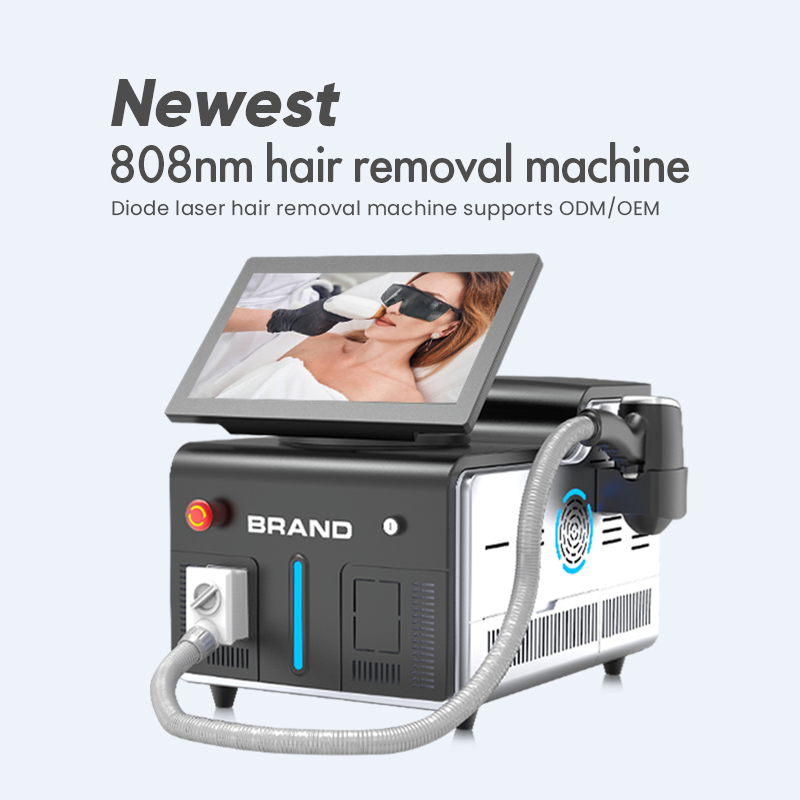
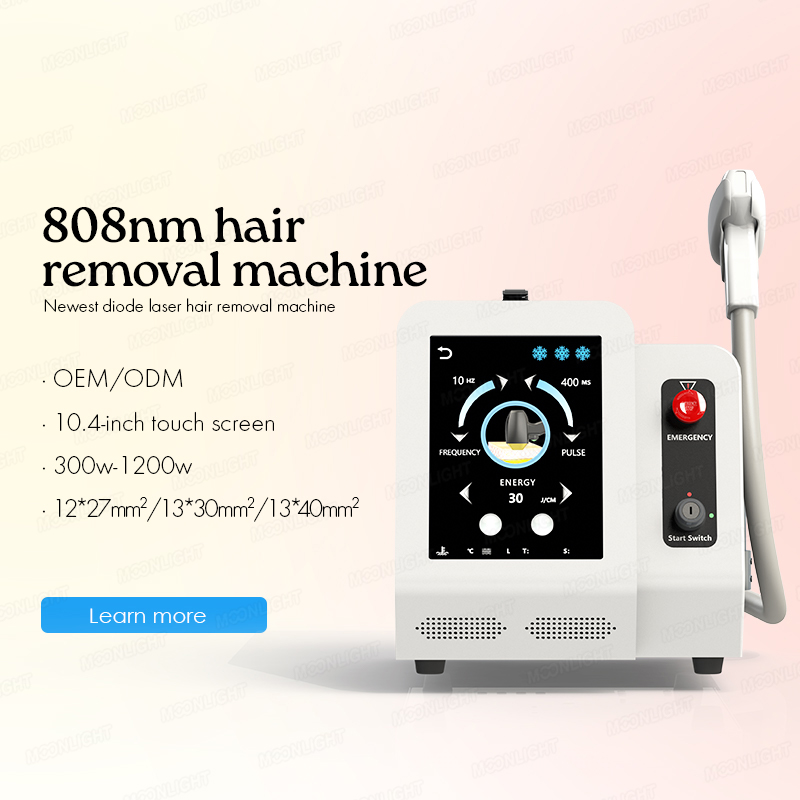
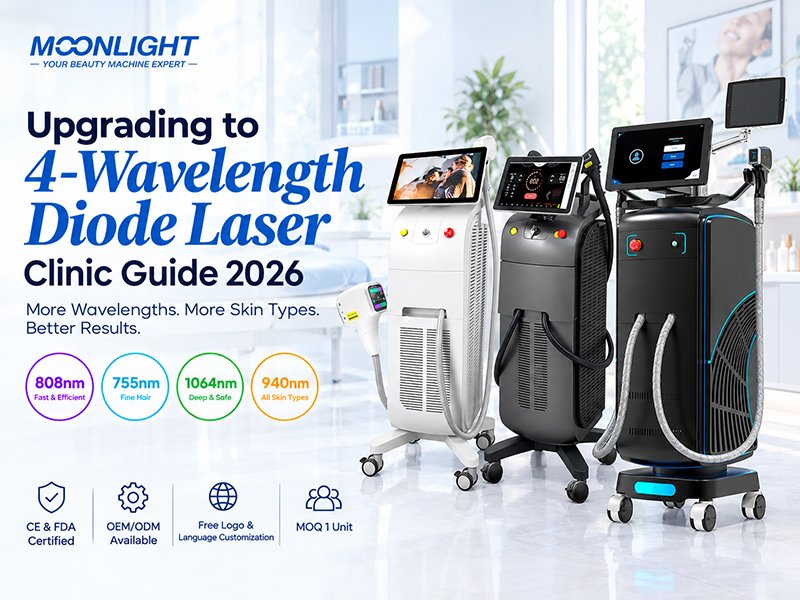
At a Glance: Why Clinics Are Upgrading to 4-Wavelength Systems
- The Client Attrition Trap: Clinics relying strictly on legacy 808nm single-wavelength diode lasers report up to 30% patient drop-off on fine blonde facial vellus hair and darker Fitzpatrick phototypes (V–VI).
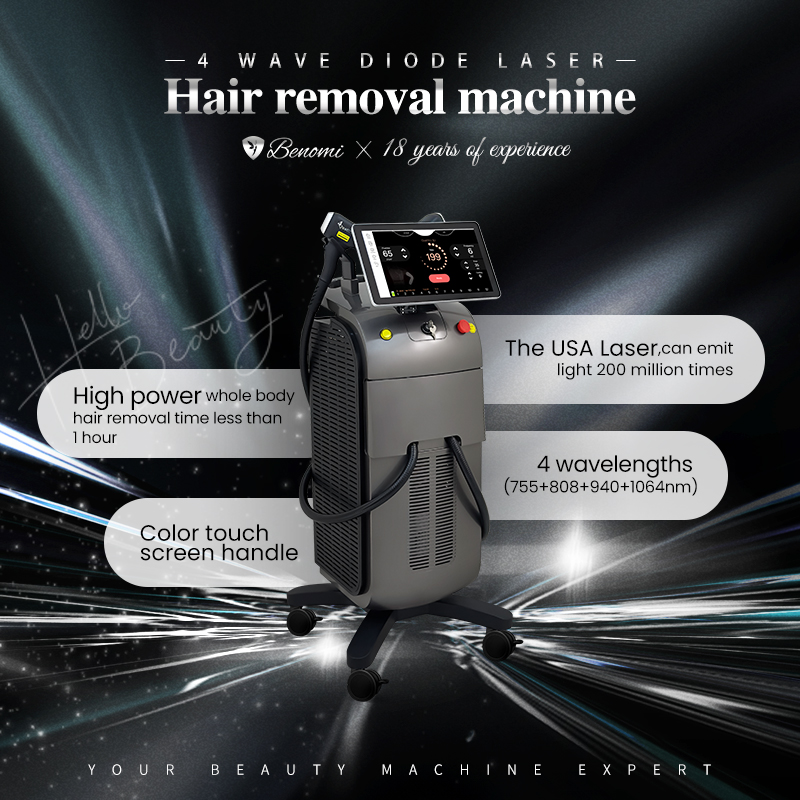
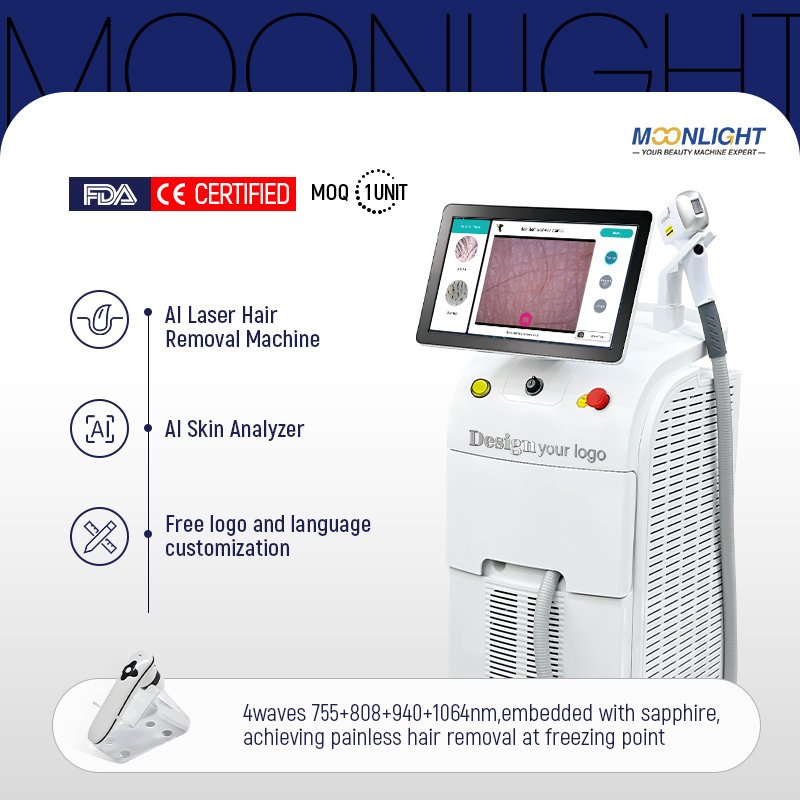
- Synergistic Quad-Matrix Physics: Synchronized delivery of 755nm, 808nm, 940nm, and 1064nm addresses all anatomical hair depths in a single pulse.
- Vascular Starvation via 940nm: The integrated 940nm band selectively targets oxyhemoglobin, coagulating the micro-capillaries feeding the dermal papilla to prevent stubborn follicle regeneration.
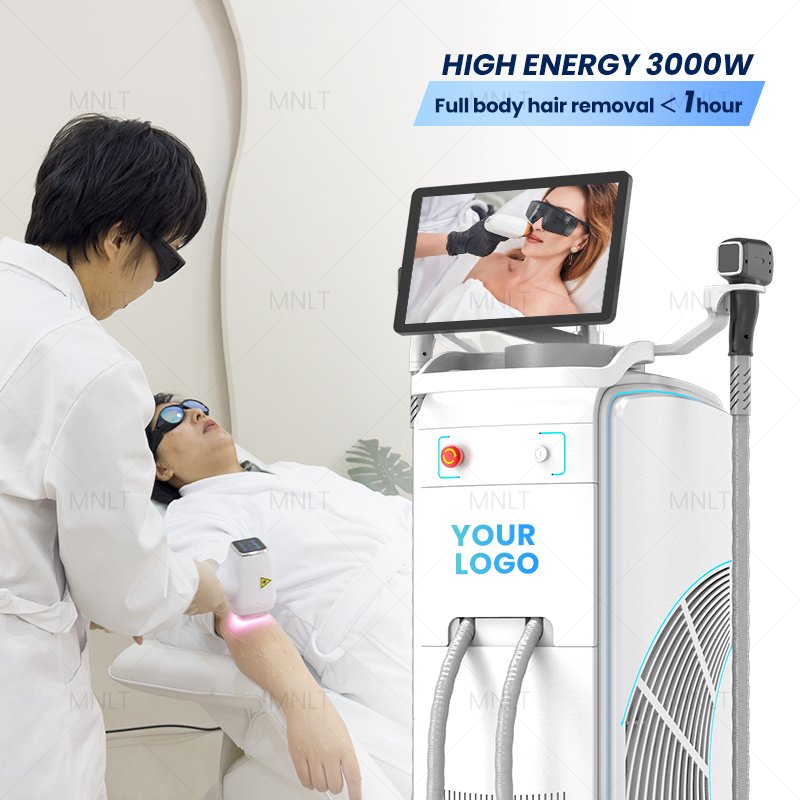
- Quadrupled Throughput & Pain Relief: Powered by USA Coherent AuSn-bonded laser bars (up to 200 million pulses) and Japanese inverter compressor cooling (-5°C to -15°C sapphire tip), full-body treatment time drops from 50 minutes to under 20 minutes.
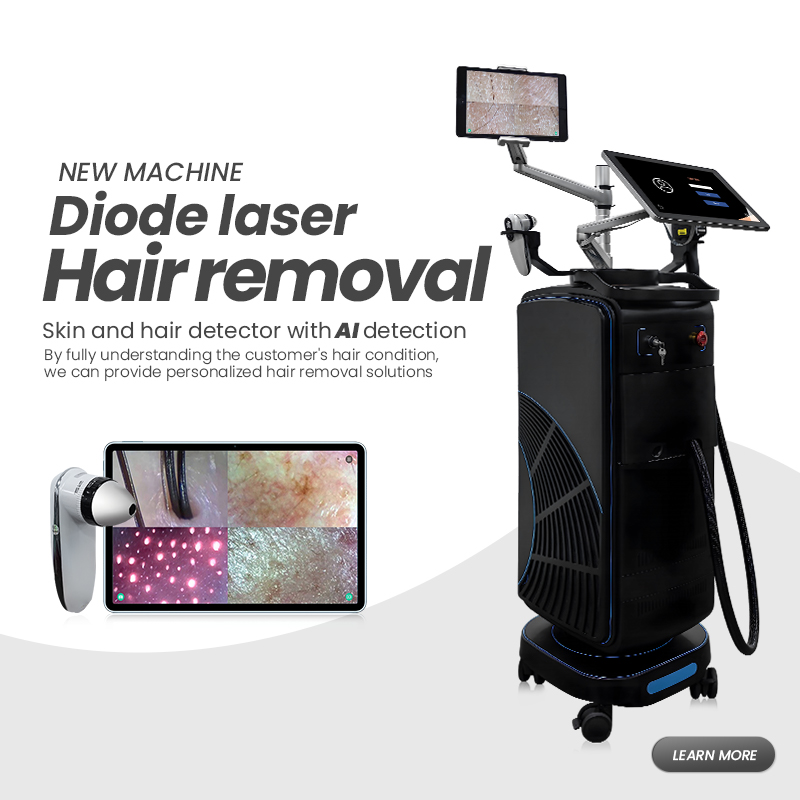
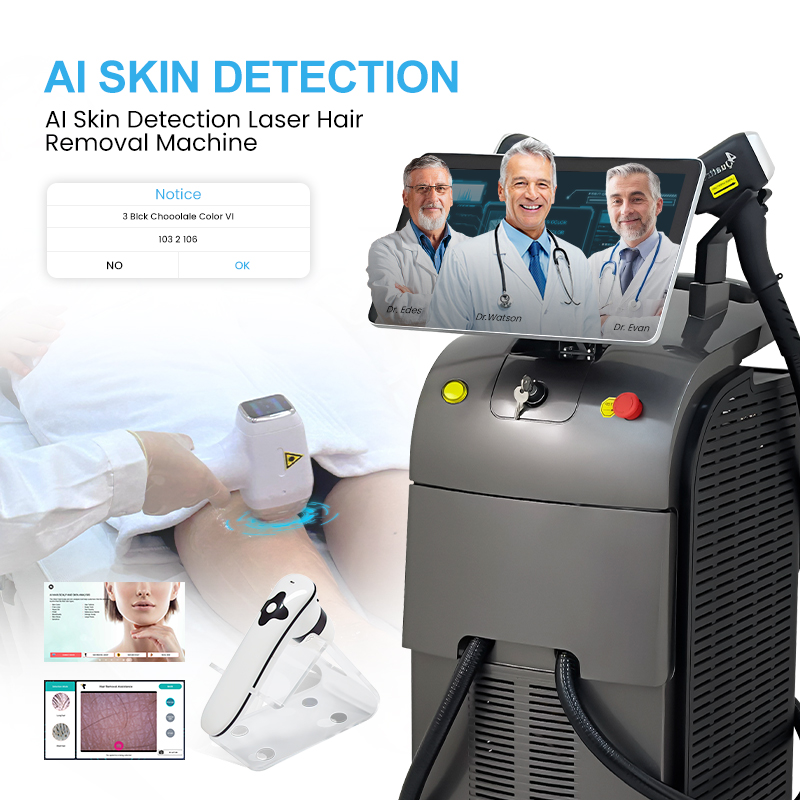
- Built-in AI Skin Diagnostics: Real-time automated skin phototype and melanin impedance detection eliminates operator guesswork, reducing adverse post-inflammatory hyperpigmentation (PIH) to below 2%.
- Compelling Upgrade ROI: Upgrading from an aging 808nm unit to a factory-direct 4-wavelength AI platform ($5,500–$7,800) recovers the capital investment within 45 to 60 operational days.
- 19 Years of Optical Engineering: Manufactured by Shandong Moonlight Electronic Technology Co., Ltd. (MNLT Laser) under ISO 13485 cleanroom standards with international medical CE compliance.
Laser hair removal continues to serve as the economic bedrock of medical spas, dermatology clinics, and aesthetic centers worldwide. Yet, clinic directors and aesthetic practitioners are confronting an uncomfortable commercial reality: patient retention rates are declining, treatment dissatisfaction is creeping up, and prospective clients are walking out the door toward competitors boasting “painless, all-skin-type” multi-wavelength technologies.
For over twenty years, the single-wavelength 808nm diode laser reigned as the uncontested gold standard. However, client demographics have diversified, expectations for virtually painless treatments have soared, and the clinical limitations of single-band optical radiation have become glaring operational bottlenecks.
Is your aesthetic practice quietly losing lucrative repeat clients to practices equipped with modern quad-wavelength technology? This 2026 clinical upgrade guide examines the hidden operational costs of keeping outdated 808nm devices, analyzes the biophysics of 4-wavelength matrix systems, and provides an actionable blueprint for calculating your equipment trade-in ROI.
1. The 4 Hidden Bottlenecks of Outdated 808nm Diode Lasers
Many clinic owners consider their aging 808nm laser a “fully amortized asset that still makes money.” However, evaluating equipment performance requires assessing opportunity cost and client attrition:
Bottleneck 1: High Refusal and Attrition on Fitzpatrick Types V & VI
In single-wavelength 808nm systems, epidermal melanin competes directly with follicular melanin. To treat darker skin (Fitzpatrick V–VI) without causing epidermal blisters, burns, or Post-Inflammatory Hyperpigmentation (PIH), operators are forced to turn down the energy fluence (<18 J/cm²) and widen pulse durations (>100 ms). This underpowered setting yields sub-therapeutic heating, requiring 10 to 14 sessions rather than 6. Frustrated clients often abandon their packages mid-way.
Bottleneck 2: Inability to Clear Fine Facial Hair & Residual Vellus
The 808nm wavelength has a moderate melanin absorption coefficient. While highly effective for coarse dark underarm or leg hair, it fails to deliver sufficient thermal energy to denature the bulb of fine facial vellus hair, upper lip hair, or light brown residual follicles. Clinics relying on 808nm must turn away fair-haired clients or witness patients plateau after session four.
Bottleneck 3: Chronic Treatment Pain Driving Patient Churn
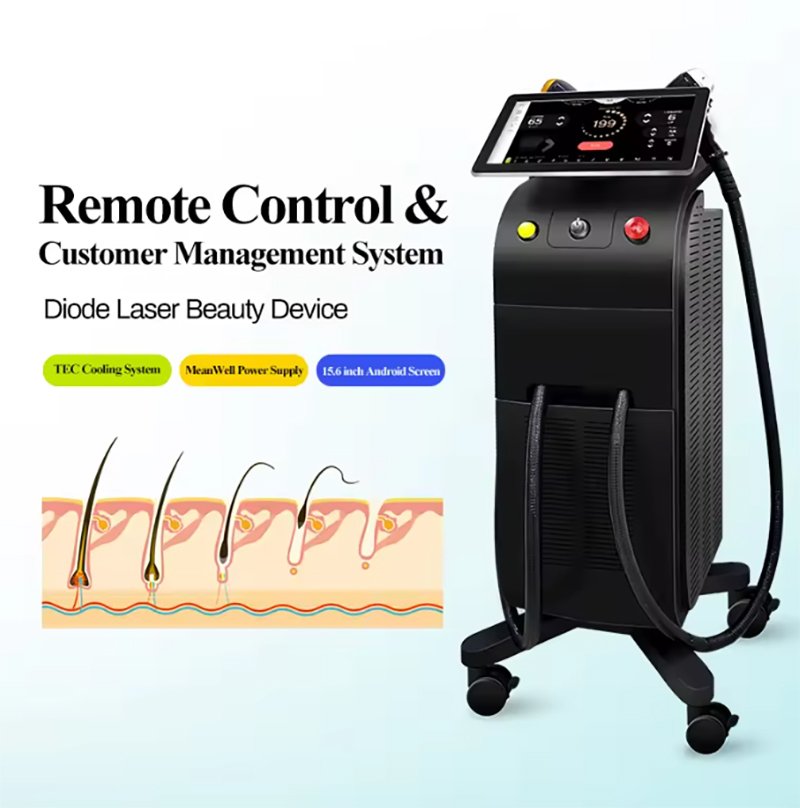
Aging 808nm systems rely on basic thermoelectric cooling (TEC) plates and domestic laser bars that struggle to sustain cold contact temperatures during back-to-back appointments. When the handpiece tip warms above 15°C, patient pain spikes dramatically. In the age of Google Reviews and TikTok, a reputation for “painful laser sessions” cripples local word-of-mouth client acquisition.
Bottleneck 4: Slow Treatment Speeds Capping Daily Clinic Revenue
Traditional 808nm handpieces feature restrictive spot sizes (typically 12×12 mm or 12×16 mm). Treating full legs or a male back requires 45 to 60 exhausting minutes of repetitive stamping. Modern aesthetic clinics cannot scale revenue when an operator is locked into a single treatment room for an hour per patient.
2. Biophysical Breakthrough: How the 4-Wavelength Matrix Resolves the "Impossible Cases"
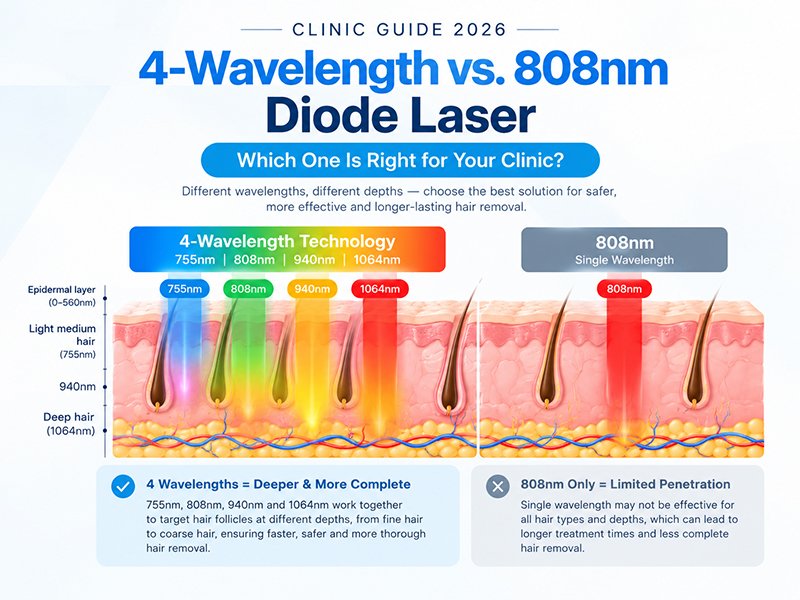
Upgrading to a 4-wavelength platform does not simply add extra numbers to your marketing brochure; it fundamentally alters the biophysics of Selective Photothermolysis by delivering four complementary optical absorption bands simultaneously in every single pulse:
| Wavelength Band | Primary Target (Chromophore) | Anatomical Penetration | Clinical Superpower |
|---|---|---|---|
| 755nm (Alexandrite) | High Eumelanin Peak Absorption | Superficial Dermis (1.5–2.0 mm) | Superior clearance for fine, light, and superficially embedded hair (eyebrows, upper lip, chin). |
| 808nm (Classic Gold Standard) | Balanced Melanin Absorption | Mid Dermis (2.5–3.0 mm) | High-speed bulk thermal destruction for standard terminal hair across arms, legs, and back. |
| 940nm (Vascular Coagulation) | Oxyhemoglobin & Microvascular Walls | Deep Follicular Bulb (3.5–4.0 mm) | Photocoagulates the perifollicular feeder capillaries of the dermal papilla, starving the follicle's blood supply. |
| 1064nm (Nd:YAG Depth) | Water / Deep Papilla Structure | Deep Subcutaneous (4.0–5.0 mm) | Safely bypasses epidermal melanin in Fitzpatrick V & VI, delivering energy deep into pubic, beard, and scalp follicles. |
The "Double-Tap" Destruction: Why 940nm Is the Game Changer
Standard lasers rely solely on heating the hair shaft melanin to conduct heat outward toward the follicular stem cells. However, in low-pigment hair, this heat transfer is insufficient.
By integrating 940nm infrared light, the MNLT quad-wavelength handpiece executes a dual-action mechanism:
- Melanin thermolysis from the 755nm and 808nm photons denatures the germinative matrix.
- Simultaneously, 940nm photons penetrate directly to the micro-vascular capillary plexus supplying the dermal papilla. The targeted photocoagulation of oxyhemoglobin cuts off essential nutrients and oxygen, permanently preventing dormant stem cells from reactivating hair regrowth.
To review our flagship clinical matrix specifications, explore the MNLT 3000W 4-wavelength diode laser.
3. Head-to-Head Specification: Aging 808nm vs. Modern 4-Wavelength AI Machine
Before investing in equipment upgrades, medical spa directors should evaluate how engineering specifications translate directly into day-to-day clinical efficiency:
| Clinical & Engineering Metric | Legacy Single 808nm Laser (2020–2023) | MNLT 4-Wavelength AI Platform (2026) |
|---|---|---|
| Wavelength Output | Single 808nm / 810nm band | Quad Matrix: 755nm + 808nm + 940nm + 1064nm |
| Laser Core Architecture | Standard domestic bars (500W–800W) | USA Coherent Military-grade AuSn bars (1200W–2000W) |
| Certified Shot Lifespan | 15 to 30 Million shots (rapid power decay) | Up to 200 Million shots (zero maintenance downtime) |
| Skin Type Compatibility | Fitzpatrick I–IV (High burn/PIH risk on V–VI) | Universal Fitzpatrick I–VI (Safe 365 days/year) |
| Full-Body Treatment Time | 45 – 60 minutes per patient | 15 – 20 minutes (Large 15x36mm spot + 10Hz) |
| Refrigeration System | Passive TEC cooling (+5°C to 15°C under load) | Japanese Compressor + Sapphire Tip (-5°C to -15°C) |
| Skin Diagnostics | Manual visual guess by technician | AI Optical Melanin & Follicle Auto-Calibration |
| Average Treatment Sessions | 8 – 12 sessions for full clearance | 4 – 6 sessions (approx. 40% faster resolution) |
For clinics exploring AI-assisted automated skin evaluation, consult our clinical breakdown of the AI diode laser hair removal machine.
4. Hardware Longevity: Why USA Coherent Bars & Compressor Cooling Protect Your Margin
When replacing an older machine, the greatest risk is buying a low-cost replacement that breaks down after 6 months. High-traffic practices need industrial reliability:
[USA Coherent AuSn Gold-Tin Bars] ──▶ 200 Million Pulse Durability ──▶ 10x Longer Service Life
│
[Japanese Inverter Compressor] ──▶ Continuous Water Temp at 22°C ──▶ Zero Thermal Shutdowns
│
[True Sapphire Waveguide Tip] ──▶ Steady -15°C Contact Contact ──▶ 100% Pain-Free Experience
- USA Coherent AuSn Eutectic Bonding: Traditional soft-solder diode bars suffer from thermal expansion fatigue. Under high repetition rates (10Hz), solder joints micro-crack, leading to dark emitter failure and rapid energy drop-off. MNLT platforms utilize USA Coherent gold-tin eutectic bonded bars, maintaining clinical fluence stability across 200 million pulses.
- Japanese Inverter Compressor Cooling: Standard TEC chips quickly heat soak in warm treatment rooms, forcing operators to pause treatments while the machine cools down. MNLT integrates a dedicated Japanese compressor refrigeration unit with an oversized 11-liter reservoir, holding internal water loops at 22°C–24°C even during continuous 12-hour shifts.
- Interchangeable Magnetic Light Guides: A single handpiece can treat full backs with a 15×36mm spot, then snap on a 6mm ultra-fine facial applicator within 3 seconds to treat nostrils, earlobes, and glabella without requiring a second expensive handpiece.
5. Economic ROI & Upgrade Model: How Fast Does an Upgrade Pay for Itself?
Upgrading your core revenue engine should be a mathematical certainty, not an emotional gamble. Below is a real-world financial projection for an average medical spa transitioning from a legacy 808nm unit to a factory-direct MNLT 4-wavelength system:
| Financial & Operational Parameter | Retaining Old 808nm Laser | Upgrading to 4-Wavelength AI System |
|---|---|---|
| Factory-Direct Upgrade Capital | $0 (Existing legacy asset) | $6,200 – $7,200 (Door-to-door DDP) |
| Daily Maximum Client Capacity | 6 – 8 clients / day (45-min slots) | 16 – 20 clients / day (20-min slots) |
| Demographic Referral Loss | ~20% (Turn away dark skin & blonde hair) | 0% (Treat all phototypes & hair textures) |
| Average 6-Session Package Price | $650 (Discounted commodity rate) | $1,100 (Premium painless AI positioning) |
| Monthly Package Sales (Conservative) | 10 packages = $6,500/mo | 16 packages = $17,600/mo |
| Incremental Monthly Gross Profit | Baseline | +$11,100 / month |
| Estimated Equipment Payback Window | N/A | 18 to 25 operational days |
The Upgrade Takeaway:
Holding onto an outdated laser does not save money—it costs your clinic thousands of dollars each month in lost booking capacity, lower package pricing, and demographic rejection. A modern 4-wavelength system pays for itself in less than one month of commercial operation.
To explore how top-tier multi-application clinics structure their equipment portfolios, read our complete guide on opening a MedSpa in 2026: equipment checklist and budget.
6. Practical Upgrade Checklist: How to Seamlessly Transition in 4 Weeks
Upgrading your aesthetic laser does not require disrupting your ongoing treatment schedules. Follow this 4-step transition blueprint:
Week 1: Factory Quotation & Customization (Custom Logo & Voltage Specs)
▼
Week 2: Direct Production & Class 10,000 Cleanroom Testing (DDP Shipping)
▼
Week 3: Doorstep Delivery & 1-on-1 Remote Video Clinical Certification
▼
Week 4: Marketing Launch (“Upgrade to Painless 4-Wavelength Laser Hair Removal”)
- Step 1: Audit Current Attrition Data. Check how many clients stopped attending after 3–4 sessions, and calculate how many inquiries for fine facial or dark skin hair removal you turned down last quarter.
- Step 2: Source Factory-Direct to Maximize Equity. Avoid domestic third-party distributor markups of 200%–300%. Sourcing directly from an established ISO 13485 manufacturer like MNLT secures commercial-grade hardware for 5,500–5,500–7,500 with DDP customs clearance handled to your door.
- Step 3: Staff Cross-Training. Modern Android and AI interfaces feature intuitive skin-type presets, allowing estheticians to master parameter setup within a 90-minute virtual clinical training session.
- Step 4: Launch an “Equipment Upgrade” Client Re-Engagement Campaign. Contact all lapsed clients with an exclusive offer: “Experience our new 2026 4-Wavelength Pain-Free Laser—complimentary upgrade on your next treatment.”
To compare all professional models in our clinic collection, visit the diode laser hair removal machine category.
7. The MNLT Manufacturing Difference: 19 Years of Laser Excellence
As a certified medical and aesthetic equipment manufacturer based in Shandong, China, Shandong Moonlight Electronic Technology Co., Ltd. (MNLT Laser) has supported aesthetic practices across 130+ countries for over 19 years:
- Class 10,000 Cleanroom Assembly: Every diode bar stack is packaged in dust-free medical environments to guarantee optical transmission purity.
- Global Medical Regulatory Standards: Full compliance with ISO 13485, CE, TUV, and international medical safety certifications.
- Complete OEM/ODM Brand Customization: Custom machine chassis, bespoke clinic software UI, and screen logo integration provided at zero additional charge.
- 24/7 Global Engineering Dispatch: Direct access to optical engineers, remote video troubleshooting, and express DHL spare parts support worldwide.
Ready to protect your clinic’s patient retention and upgrade to 4-wavelength laser technology? Contact the MNLT engineering team today for a direct factory quotation and live video demonstration.
Inquire Now
Fill out the form for more information, and an MNLT product manager will contact you shortly!
Frequently Asked Questions: Upgrading to 4-Wavelength Diode Lasers
Why is a 4-wavelength laser better than a single 808nm diode for clinic retention?
Single 808nm lasers face biophysical limitations on fine facial vellus hair and carry higher thermal risks on darker skin types (Fitzpatrick V–VI). A 4-wavelength system delivers 755nm, 808nm, 940nm, and 1064nm simultaneously in each pulse. This multi-depth coverage safely clears all skin phototypes and hair diameters, eliminating the 20%–30% patient attrition caused by treatment plateau, pain, or demographic referral loss.
What does the 940nm wavelength do that other lasers cannot?
While 755nm, 808nm, and 1064nm wavelengths target follicular melanin, the 940nm wavelength matches the peak absorption spectrum of oxyhemoglobin. It photocoagulates the micro-capillary feeder vessels supplying the dermal papilla at the base of the follicle. By cutting off this nutrient supply, the follicle cannot regenerate, significantly reducing hair recurrence rates even in fine, low-melanin hair.
Is it difficult for our estheticians to learn how to operate a 4-wavelength AI machine?
On the contrary, operating an MNLT AI platform is significantly simpler and safer than older manual machines. The built-in AI optical skin detection camera analyzes the client's skin phototype, melanin concentration, and hair density in real time, automatically recommending optimal clinical parameters. Operators no longer have to guess energy settings, virtually eliminating the risk of accidental burns.
How long does a USA Coherent laser bar handpiece last?
MNLT 4-wavelength handpieces utilize USA Coherent gold-tin (AuSn) eutectic bonded laser bars rated for up to 200 million clinical shots. For an average aesthetic practice delivering 15 to 20 treatments daily, this equates to 5 to 7 years of heavy commercial service without requiring costly handpiece replacements or experiencing power decay.
How does MNLT handle international shipping, customs, and warranty support?
MNLT Laser provides complete turnkey DDP (Delivered Duty Paid) shipping to North America, Europe, Australia, and worldwide, handling all customs clearance and import duties directly to your clinic door. Every system includes a 2-year factory warranty, 24/7 video engineering support, and express DHL spare parts replacement within 48 to 72 hours.