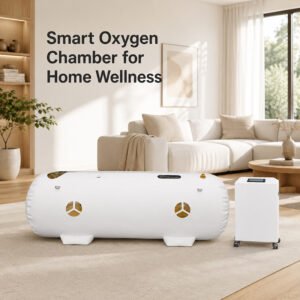
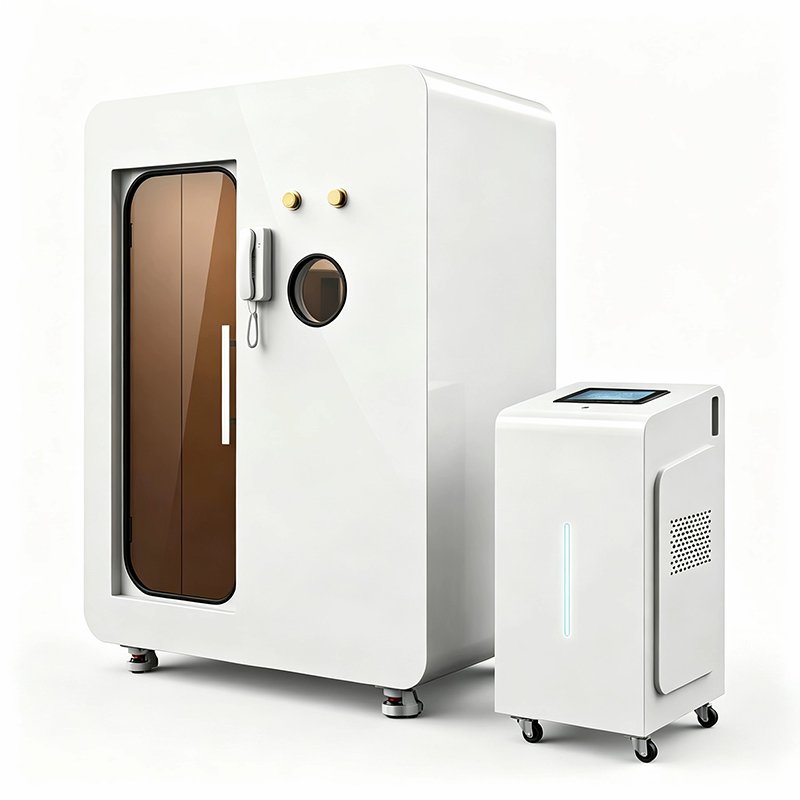
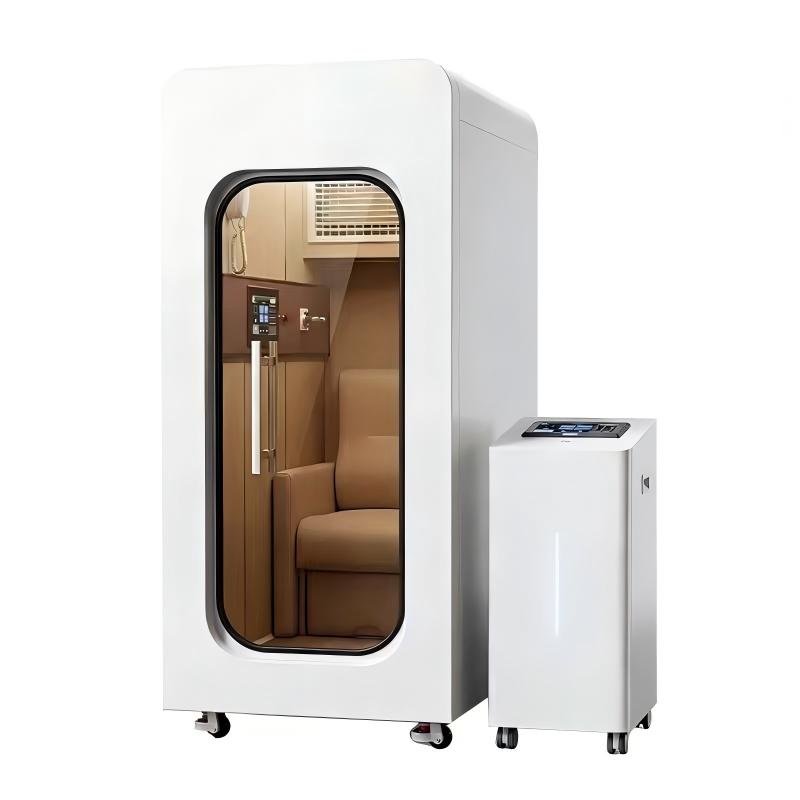
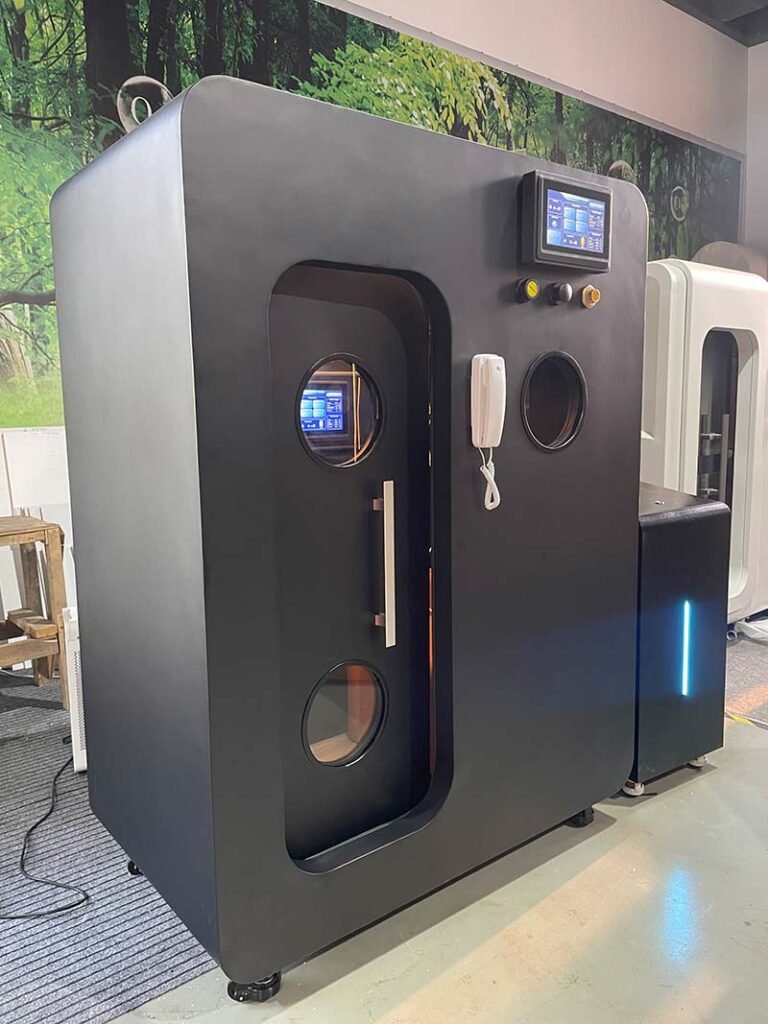
The MNLT 1.3 ATA Single-Person Mini Hyperbaric Oxygen Chamber is an ultra-compact, commercial-grade sitting mild HBOT system engineered specifically for aesthetic clinics, wellness centers, executive offices, and luxury residential suites where floor space is at a premium.
Occupying just 1.12 m² of floor space (L1.4m × W0.8m × H1.88m), this vertical cabin features a heavy-duty 3mm SPCC elastic composite carbon steel shell (10-year design lifespan) paired with a 30mm ultra-clear panoramic PC door that completely eliminates claustrophobia. Powered by an integrated 10 L/min medical-grade PSA molecular sieve delivering ≥93% pure oxygen via specialized headsets, an ultra-quiet oil-free air compressor system (cabin noise ≤55 dB), dual synchronized 10-inch capacitive touchscreens, and a 24V low-voltage circulating water chiller, it provides uncompromised physiological recovery with five-fold mechanical safety redundancy.
The MNLT 1.3 ATA Single-Person Mini Hyperbaric Oxygen Chamber is a specialized commercial-grade sitting mild hyperbaric oxygen therapy (mHBOT) system designed for targeted cellular recovery, anti-aging, post-procedural rehabilitation, and athletic recovery. Operating at an optimal therapeutic pressure of 1.3 ATA (approximately 30 kPa / 4.35 psi above standard atmospheric pressure), this vertical cabin utilizes a heavy-duty 3mm SPCC carbon steel structure and a 30mm optical-grade high-transmission polymer composite polycarbonate door. Driven by an oil-free pneumatic compressor and an integrated 10 L/min medical PSA (Pressure Swing Adsorption) molecular sieve generator delivering ≥93% purified oxygen through targeted inhalation interfaces, the chamber increases oxygen dissolution in blood plasma by 300% to 500% in accordance with Henry’s Law—bypassing red blood cell saturation limits to enhance microvascular perfusion and fibroblast cellular regeneration while occupying an ultra-compact footprint of only 1.4m × 0.8m.
The MNLT 1.3 ATA Single-Person Mini Hyperbaric Chamber redefines commercial hyperbaric therapy by delivering true hard-shell engineering, medical-grade oxygen purity, and executive lounge comfort within a footprint of just 1.12 square meters. Engineered for modern medspas, high-end dermatology practices, plastic surgery recovery suites, wellness resorts, and discerning residential clients, this vertical sitting cabin resolves the spatial and claustrophobic constraints of traditional horizontal cylindrical chambers without sacrificing structural integrity or physiological efficacy.
While commercial wellness operators frequently struggle to accommodate 2.3-meter-long horizontal hyperbaric tubes, the MNLT Mini Chamber features a compact architectural envelope (1,400 mm length × 800 mm width × 1,880 mm height) that seamlessly passes through standard commercial doorways and fits into private treatment suites. Built with high-strength SPCC structural carbon steel, an oversized panoramic anti-claustrophobia portal door, a specialized 24V DC circulating water-chilled air conditioner, and an intelligent dual-screen interactive telemetry console, it offers operators an uncompromising commercial turnkey asset backed by 19 years of precision medical manufacturing excellence from Shandong Moonlight Electronics Tech Co., Ltd.
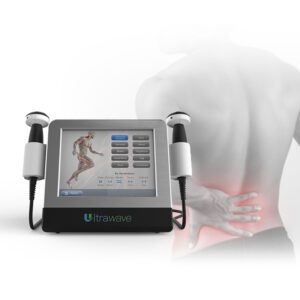
Whether expanding your clinic’s offerings alongside body contouring platforms and acoustic shockwave therapy systems or upgrading from flexible inflatable soft bags, explore our authoritative clinical analysis in the Hyperbaric Oxygen Chamber BIBS Inhalation & Safety Engineering Guide to evaluate how mild hyperbaric oxygenation accelerates cellular regeneration and elevates patient clinical outcomes.
Under normal sea-level conditions (1.0 ATA), human hemoglobin in arterial red blood cells is approximately 97% to 98% saturated with oxygen. Breathing 100% ambient oxygen at normobaric pressure yields minimal physiological gain because red blood cells cannot physically bind additional oxygen molecules.
The MNLT Mini Chamber leverages Henry’s Physical Gas Law, which dictates that the volume of gas dissolved in a liquid is directly proportional to the partial pressure of that gas above the liquid. When the cabin pressure increases to 1.3 ATA (30 kPa of positive hydrostatic gauge pressure) and the client breathes ≥93% concentrated oxygen through an ergonomic medical headset cannula:
Plasma Oxygen Dissolution Multiplier: Oxygen is physically forced into direct solution within blood plasma, cerebrospinal fluid, lymph, and interstitial fluids, multiplying free dissolved plasma oxygen concentration by 300% to 500% independent of hemoglobin transport.
Overcoming Microcirculatory Barriers: Red blood cells measure approximately 7 to 8 microns in diameter and cannot navigate swollen, ischemic, or microvascularly compromised capillary beds post-surgery or during acute trauma. Dissolved plasma oxygen molecules effortlessly permeate compromised capillary beds to oxygenate hypoxic tissue margins directly.
Mitochondrial ATP & Fibroblast Upregulation: Hyperbaric oxygen availability accelerates cellular adenosine triphosphate (ATP) synthesis, activates the sirtuin longevity enzyme pathway, down-regulates pro-inflammatory cytokines (IL-1, IL-6, TNF-α), and stimulates collagen-producing dermal fibroblasts for rapid tissue remodeling.
Angiogenesis & Neovascularization: Sequential sessions stimulate vascular endothelial growth factor (VEGF), promoting new microcapillary sprout formation to permanently restore perfusion in chronically ischemic tissues.
Traditional hyperbaric chambers require 3 to 4 meters of dedicated room length, forcing facilities to sacrifice valuable square footage. The MNLT Mini Chamber measures just 1,400 mm in length, 800 mm in width, and 1,880 mm in height, fitting easily into standard elevators, treatment cubicles, home gyms, or master dressing suites. The vertical sitting orientation allows users to comfortably read, work on laptops, browse tablets, or relax without the disorienting feeling of lying prone in a narrow tube.
Unlike inflatable TPU soft-sided bags that degrade, deform, and leak over time, the MNLT cabin is laser-welded from 3mm SPCC high-strength elastic composite carbon steel with a structural fatigue lifespan exceeding 10 years. The door is precision-machined from 30mm optical-grade high-polymer transparent polycarbonate (PC), offering an expansive 180° field of view that floods the cabin with ambient clinic light and completely alleviates claustrophobic anxiety.
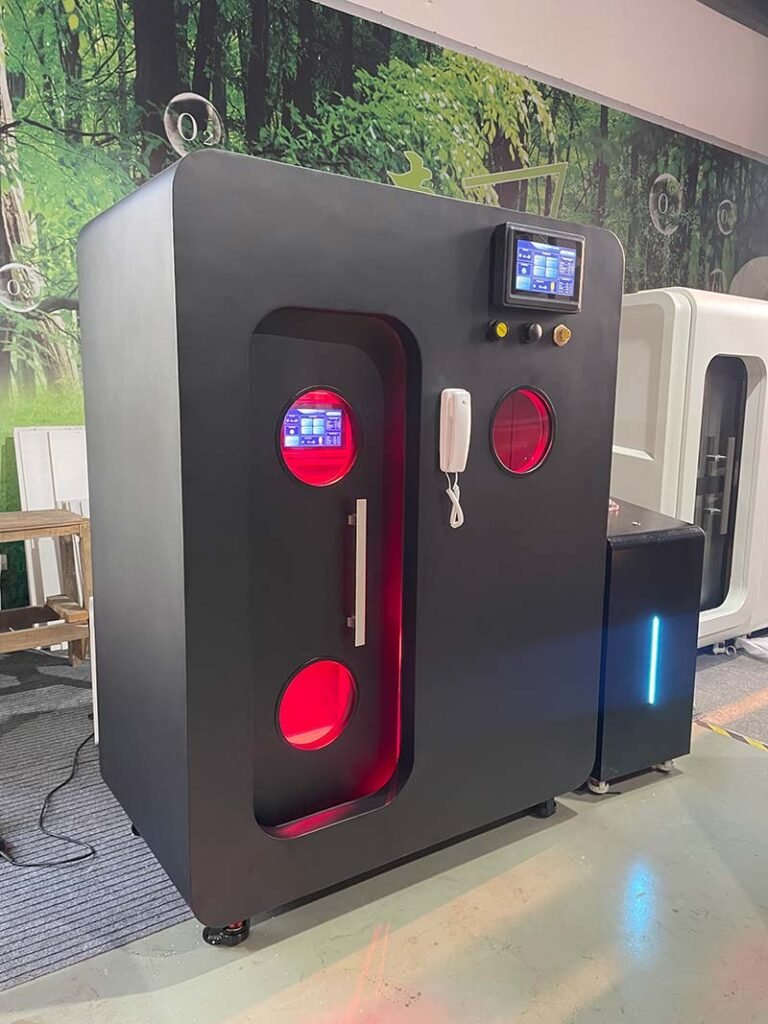
Operation is entirely transparent and dual-controlled. An integrated 10-inch capacitive high-resolution touch console is mounted outside the chamber for clinical staff, while an identical 10-inch screen is mounted inside for client autonomy. Both screens synchronize in real-time, displaying exact chamber pressure (kPa/ATA), real-time internal temperature (°C), ambient humidity (%), cabin diffuse oxygen level (%), oxygen flow rate (L/min), and cycle countdown. An embedded one-touch full-duplex intercom phone provides instantaneous, crystal-clear voice communication at any time.
The external central processing unit incorporates an industrial-grade 10L Pressure Swing Adsorption (PSA) molecular sieve oxygen generator delivering continuous, high-volume oxygen at concentrations between 93% and 95.6%. Inhaled directly through specialized medical headset cannulas, oxygen delivery is targeted directly to the lungs. Crucially, environmental sensors continuously meter the cabin interior to ensure ambient diffuse oxygen concentration stays strictly below 25.5%, maintaining total compliance with international fire safety standards.
Chamber air pressurization is powered by a high-output, 100% oil-free dual-cylinder pneumatic compressor unit that eliminates all risk of hydrocarbon vapor or aerosolized lubricant contamination. Equipped with multistage HEPA particle filtration, activated carbon odor removal, and custom non-restrictive acoustic expansion mufflers, internal cabin operating sound levels are held to ≤55 dB(A)—quieter than a normal conversational office—ensuring undisturbed meditation or entertainment.
Pressurizing gas generates natural thermodynamic heat. To ensure five-star passenger comfort, MNLT includes a custom-engineered 24V low-voltage external water-cooled circulating air conditioning unit, circulating chilled, dehumidified air directly through the cabin ceiling vent with complete electrical safety (zero 110V/220V high-voltage lines enter the cabin). Passengers recline in a multi-position motorized leather lounge chair with push-button lumbar and leg-rest control, surrounded by zero-formaldehyde eco-leather wall linings, 9mm acoustic mineral fiber flooring, and three-color adjustable circadian LED lighting.
Safety is our ultimate design imperative. The MNLT chamber features an intelligent pressure-differential door system: as the cabin inflates, air pressure naturally seals the door against industrial silicone gaskets without mechanical latches. Once pressure equalizes back to atmospheric levels, the door is effortlessly pushed open from inside or outside. Total safety is guaranteed by five independent layers of redundancy:
Dual Internal & External Manual Relief Valves: Independent rotary and push-button manual valves allow full depressurization within 60 to 120 seconds in any scenario.
Dual Mechanical Spring-Loaded Pop-Off Valves: Calibrated to automatically exhaust excess pressure if the cabin ever exceeds 1.35 ATA.
Digital Microprocessor Overpressure Lockout: Pressure sensors automatically halt the compressor if sensor limits are breached.
Cabin Emergency Stop (E-Stop): An illuminated mushroom button instantly isolates power and initiates automated soft decompression.
Zero Mechanical Trapping Risk: No motorized latches, locks, or pins exist; depressurization physically guarantees immediate egress.
The following technical metrics represent certified manufacturing specifications from the MNLT engineering department for Model MNLT-HBOT-1.3M:
| System Parameter | Factory Technical Specification |
|---|---|
| Product Model | MNLT 1.3 ATA Single-Person Mini Hyperbaric Oxygen Chamber (Sitting / Reclining Type) |
| Chamber Dimensions (L×W×H) | 1,400 mm × 800 mm × 1,880 mm (Occupies only 1.12 m² floor footprint) |
| Central Processing Unit Size | 750 mm × 659 mm × 1,028 mm (Houses PSA, oil-free compressor & telemetry) |
| Working / Design Pressure | 1.3 ATA (approx. 30 kPa gauge) / 1.7 ATA maximum design burst rating |
| Chamber Shell Material | 3.0 mm SPCC high-strength elastic composite carbon steel (10-year lifespan) |
| Observation Door Assembly | 30 mm thick optical-grade high-polymer transparent PC (180° anti-claustrophobia view) |
| Door Seal & Lock Mechanism | Differential pressure self-sealing / self-unlocking (Zero mechanical lock / zero trap hazard) |
| Oxygen Output & Purity | Medical PSA molecular sieve: 10 L/min flow rate; ≥93% ± 3% purity |
| Cabin Diffuse Oxygen Level | Strictly maintained at ≤ 25.5% (Fire safety environmental exhaust compliant) |
| Acoustic Performance | Cabin Interior: ≤ 55 dB(A) | External Host: ≤ 65 dB(A) (Ultra-quiet silencer) |
| Thermal Conditioning (HVAC) | Custom 24V DC low-voltage water-cooled AC (Zero high voltage enters cabin) |
| Telemetry & Intercom | Dual 10-inch synchronized touchscreens (inside/outside) + 1-touch full-duplex intercom |
| Safety Exhaust Matrix | 4× Manual relief valves (2 in / 2 out) + 2× auto mechanical pop-off valves + cabin E-stop |
| Manufacturer Warranty | 3 Years structural warranty for cabin | 1 Year comprehensive for host unit |
The 1.3 ATA mild hyperbaric oxygen pressure protocol represents the global gold standard for cosmetic, wellness, regenerative, and athletic recovery applications—offering maximum cellular stimulation with zero risk of central nervous system (CNS) oxygen toxicity.
Drastically accelerates recovery following blepharoplasty, rhinoplasty, rhytidectomy (facelifts), liposuction, and laser skin resurfacing. Hyperbaric oxygen reduces postoperative ecchymosis (bruising) and erythema by 40% to 60%, resolving tissue edema and preventing post-inflammatory hyperpigmentation.
Elevated dissolved oxygen stimulates prolyl hydroxylase enzymes essential for cross-linking mature Type I collagen and elastin fibers. Regular sessions reverse photo-aging, reduce micro-wrinkle depth, and promote vibrant skin radiance from within deep dermal capillary beds.
Rapidly clears muscular lactic acid, reduces systemic creatine kinase inflammation, and accelerates the repair of micro-tears in skeletal myofibers following strenuous athletic training or competitive performance. Ideal for sports clubs and biohacking facilities.
The human brain consumes 20% of total body oxygen despite accounting for only 2% of total mass. Elevating oxygen tension in cerebrospinal fluid clears mental fog, restores sleep quality, enhances neuro-plasticity, and combats chronic executive cognitive fatigue.
In accordance with international hyperbaric medical guidelines and the official Instructions for the Safe Use of the Oxygen Chamber (Doc Ref: HBOT-MNLT-SOP), clinical operators must strictly adhere to the following medical pre-screening rules:
Untreated Pneumothorax: Absolute mechanical prohibition due to tension pneumothorax risk during depressurization.
Active Medical Device Implants: Patients with non-certified cardiac pacemakers, implantable cardioverter-defibrillators (ICDs), or wearable electrocardiograph monitors.
Concurrent Incompatible Pharmacotherapies: Patients undergoing active treatments involving Disulfiram (Antabuse), or antineoplastic chemotherapeutic drugs including Bleomycin (pulmonary toxicity risk), Cisplatin, or Doxorubicin (cardiotoxicity risk).
Medical evaluation is mandated prior to chamber entry for individuals with:
Thoracic, pulmonary, or middle ear surgery within the active perioperative window;
Acute viral upper respiratory tract infections or severe Eustachian tube dysfunction;
Uncontrolled seizure disorders or epilepsy;
Severe emphysema, pulmonary bullae, or active pulmonary tuberculosis cavities;
Uncontrolled hypertension, severe bradycardia (<50 bpm), or active internal hemorrhages;
Pregnancy (first trimester / first 3 months strictly discouraged);
Diabetic Patients:Hyperbaric oxygenation increases insulin sensitivity and glucose uptake. Diabetic patients taking hypoglycemic medication must test blood glucose immediately before entry to avoid hypoglycemia during treatment.
Under no circumstances shall the following be introduced into the chamber: open flames, matches, lighters, disposable chemical hand warmers, external power banks or lithium-ion batteries, unapproved electrical devices exceeding 24V DC, spark-generating metal tools, or sealed pressurized containers (e.g., carbonated soda cans or sealed glass bottles that could rupture under pressure).
19 Years of Advanced Manufacturing Heritage: Founded in 2005 in Weifang, Shandong, MNLT operates state-of-the-art ISO 13485 certified production facilities, serving more than 20,000 commercial clinics and distributors across 120+ countries worldwide.
Direct Ex-Factory Pricing (Zero Middleman Margin): Eliminate domestic importer markups and distributor surcharges. We supply complete commercial systems directly from our factory floor with tiered volume discounts for multi-unit facility fit-outs.
Turnkey OEM & ODM Customization: Tailor your hyperbaric chambers to reflect your corporate brand identity: custom exterior chassis color schemes, bespoke clinic logos, customized UI software splash screens, and localized touch interface languages.
Rigorous 72-Hour Continuous Hydrostatic & Pressure Cycling: Every single chamber undergoes extensive 1.7 ATA overpressure hold tests and electrical safety validation before crating in export-grade reinforced wooden cases.
24/7 Global Engineering Support & Lifetime Parts Availability: Enjoy direct access to MNLT biomedical engineers via dedicated video support channels, backed by guaranteed stock availability on air filtration elements, molecular sieves, and replacement seals.
Equip your clinic, medical spa, or luxury suite with factory-direct engineering excellence from Shandong Moonlight. Request certified CAD site layout drawings, clinical treatment protocols, and ex-factory quotation packages today.
Direct Factory Dispatch • CE & ISO 13485 Certified • Full OEM/ODM Brand Labeling Available
Hospital-grade chambers typically operate between 2.0 and 3.0 ATA using 100% pure pressurized oxygen gas, requiring on-site physician supervision, explosive-proof bunkers, and specialized hospital infrastructure to manage risks of pulmonary and CNS oxygen toxicity. In contrast, 1.3 ATA mild hyperbaric oxygen therapy utilizes safe pressurized ambient air combined with targeted 93%+ pure oxygen inhalation via a dedicated mask. This pressure level achieves potent physiological cellular oxygenation (300% to 500% plasma increase) while maintaining absolute safety, zero risk of barotrauma or oxygen seizures, and complete compliance for commercial medspas, clinics, and private home suites without medical gas licenses.
The chamber requires a floor area of approximately 2.0 m × 1.5 m to accommodate the cabin and its external processing cabinet with proper ventilation clearances (at least 50 cm clearance from surrounding walls). Electrically, the entire system connects to a single standard AC 110V or 220V dedicated wall outlet (10A circuit). No special plumbing, water lines, or high-voltage commercial drops are necessary; the 24V water-cooled air conditioner utilizes an internal closed-loop reservoir that requires only occasional distilled water top-ups.
Yes, exceptionally so. Unlike conventional horizontal hyperbaric tubes where users lie flat in an enclosed cylinder, the MNLT Mini Chamber features an upright sitting architecture and an oversized 30mm thick panoramic composite polycarbonate door. The expansive viewing window floods the interior with natural room light, allows continuous eye contact with staff, and enables clients to sit upright comfortably while reading or using electronic devices—eliminating the confined sensation that triggers claustrophobic distress.
As the chamber inflates during the initial 8 to 12 minute pressurization phase, air pressure changes against the tympanic membrane similar to ascending or descending in a commercial airliner. Users equalize effortlessly by swallowing, yawning, performing the gentle Valsalva maneuver (pinching nostrils and gently blowing), or sipping water. The synchronized internal touchscreen allows the user to pause pressurization or adjust the rate of ascent at any second if ear clearance requires additional time.
In commercial aesthetic clinics, wellness studios, and longevity centers, a standard 60-minute mild HBOT session typically commands between $90 and $180 USD, while post-surgical recovery packages (10 to 15 sessions) range from $1,200 to $2,500 USD. Because the chamber requires zero per-treatment consumables and operates autonomously once set, a clinic serving just 3 to 4 clients per day will achieve complete equipment capital recovery within 3 to 5 months of operation.
A trustworthy beauty equipment manufacturer