Tattoo removal machine wavelengths play a critical role in treatment results. This guide explains how 1064nm Nd:YAG, 532nm, and picosecond laser tattoo removal machines work, and how clinics can choose the best laser technology for different ink colors, skin types, and business goals.
When clinics, medical spas, or distributors start comparing a tattoo removal machine, the conversation often jumps straight to price or brand. But in real clinical results, one technical factor quietly determines success more than any other: laser wavelength.
Understanding tattoo removal laser wavelengths is not just a technical detail. It directly affects ink clearance speed, skin safety, treatment versatility, and long-term return on investment. This guide explains how different wavelengths work in modern laser tattoo removal machines, and how to choose the right technology for your clinic or distribution market.
How Does Laser Tattoo Removal Work? Understanding the Role of Wavelengths
Before comparing machines, it’s important to understand how laser tattoo removal works at a fundamental level.
Laser tattoo removal relies on selective photothermolysis. A specific laser wavelength passes through the skin and targets tattoo pigment particles. The pigment absorbs the laser energy, breaks into microscopic fragments, and is then gradually removed by the body’s lymphatic system.
What many buyers overlook is this:
Different ink colors and skin types respond differently to different wavelengths.
That’s why modern professional tattoo removal machines are designed around specific wavelength combinations rather than a single “one-size-fits-all” laser.
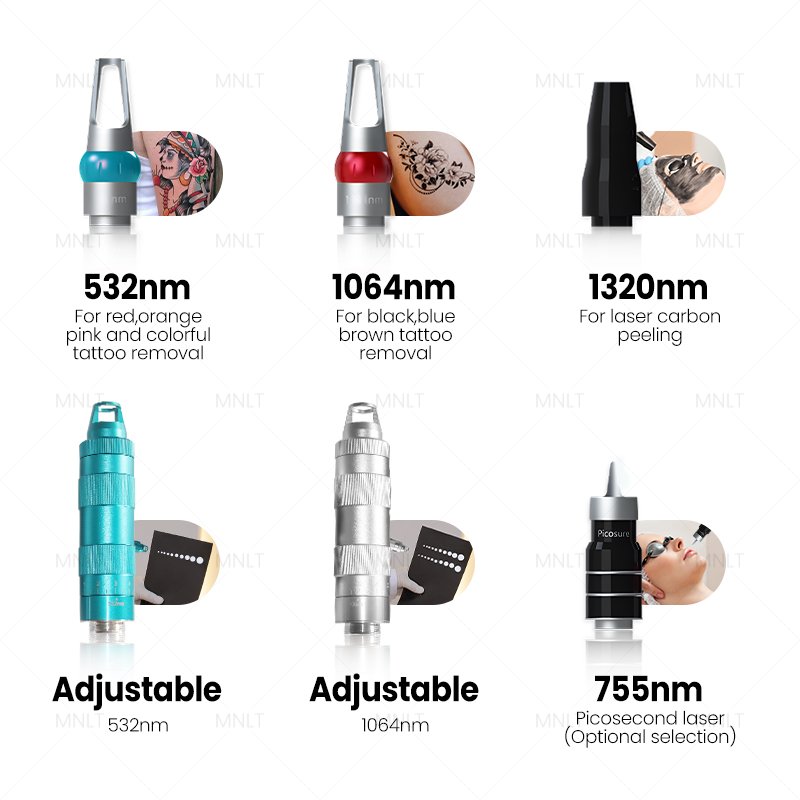
Tattoo Removal Laser Wavelengths: Why They Matter More Than Power
Many first-time buyers focus on wattage or energy numbers. In practice, wavelength selection matters more than raw power.
A well-matched wavelength:
Penetrates to the correct skin depth
Targets ink efficiently without overheating tissue
Reduces risk of burns, hyperpigmentation, or scarring
This is why most best tattoo removal machines on the market rely on Nd:YAG laser technology and, increasingly, picosecond laser machines.
1064nm Nd:YAG Laser: The Gold Standard for Tattoo Removal Machines
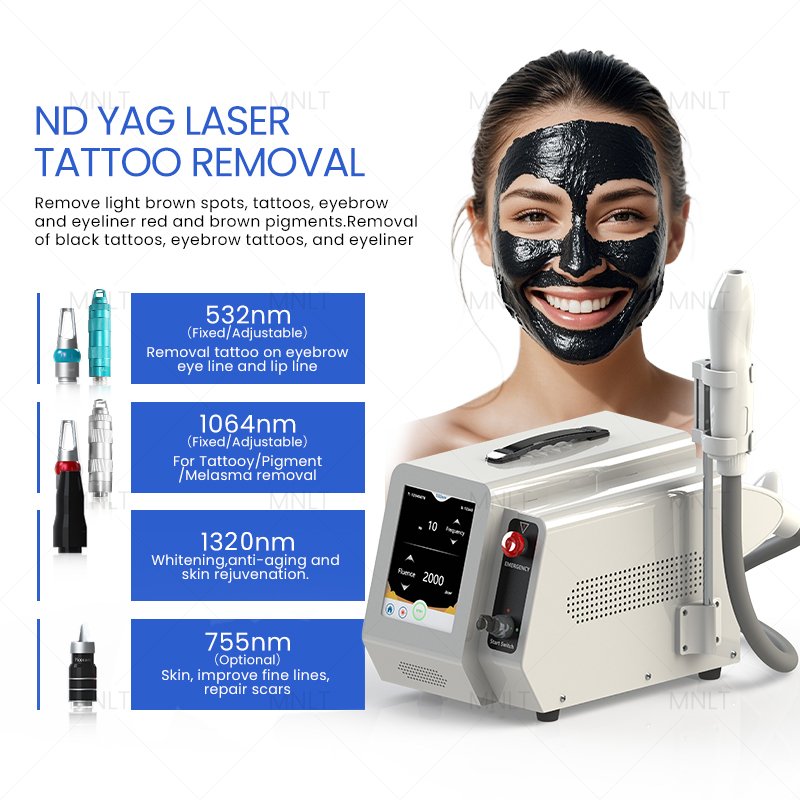
The 1064 nm Nd:YAG laser wavelength is widely regarded as the backbone of professional tattoo removal.
Why 1064nm Nd:YAG Is So Widely Used
Deep penetration into the dermis
Strong absorption by black and dark blue inks
Lower melanin absorption, making it safer for darker skin tones
This makes the 1064 Nd:YAG laser ideal for:
Black and dark tattoos
Patients with Fitzpatrick IV–VI skin types
Clinics treating a wide range of clients
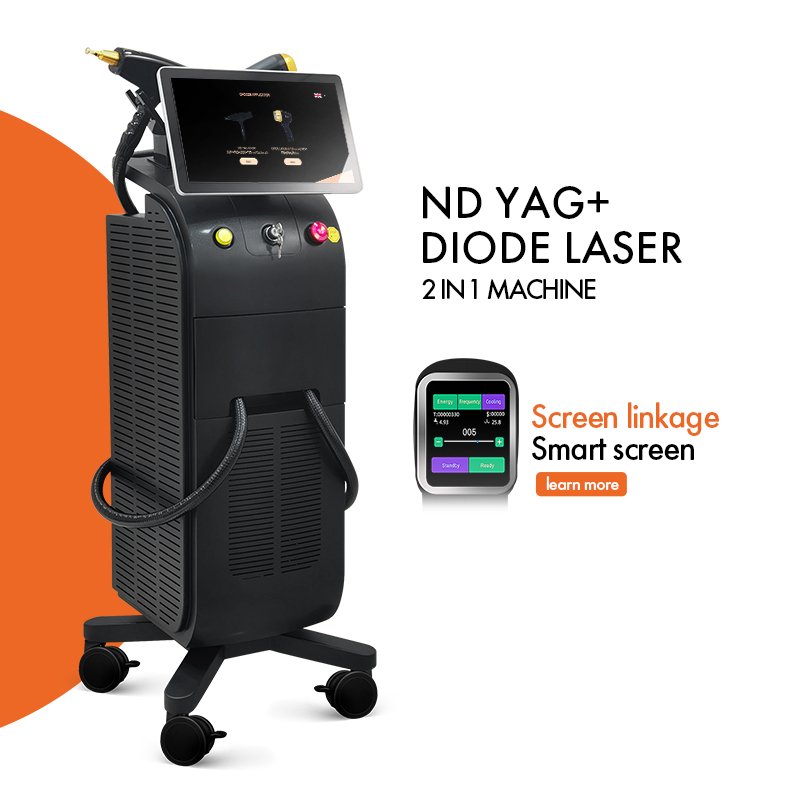
Most ND YAG laser tattoo removal machines use either Q-switched Nd:YAG lasers or long-pulsed Nd:YAG systems.
Q-Switched Nd:YAG Laser vs Long-Pulsed Nd:YAG Laser
A Q-switched Nd:YAG laser delivers extremely short, high-energy pulses. This creates a strong photoacoustic effect that shatters ink particles without excessive heat damage.
Benefits of Q-switched Nd:YAG tattoo removal machines:
Faster ink fragmentation
Lower thermal injury risk
Proven safety record over decades
In contrast, long pulsed Nd:YAG lasers are more commonly used for hair removal or vascular treatments. While they can assist with certain tattoo applications, Q-switched Nd:YAG remains the preferred choice for professional tattoo removal.
532nm Nd:YAG Laser: Essential for Color Tattoo Removal
While 1064nm targets dark pigments, 532nm Nd:YAG laser wavelength is designed for lighter ink colors.
What 532nm Is Best For
Red, orange, and yellow pigments
Cosmetic tattoos (lip liner, eyebrow pigments)
Most tattoo removal laser machines include both 1064nm and 532nm wavelengths, allowing clinics to treat multi-color tattoos effectively.
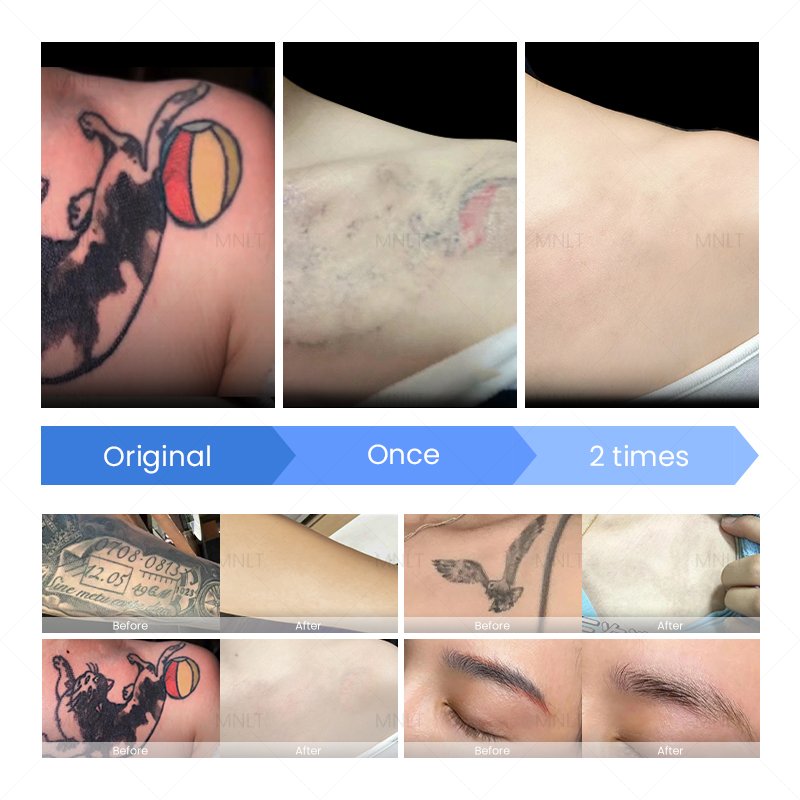
Without 532nm capability, clinics often struggle with stubborn red or warm-toned inks—leading to incomplete results and dissatisfied clients.
详情_13-1.jpg)
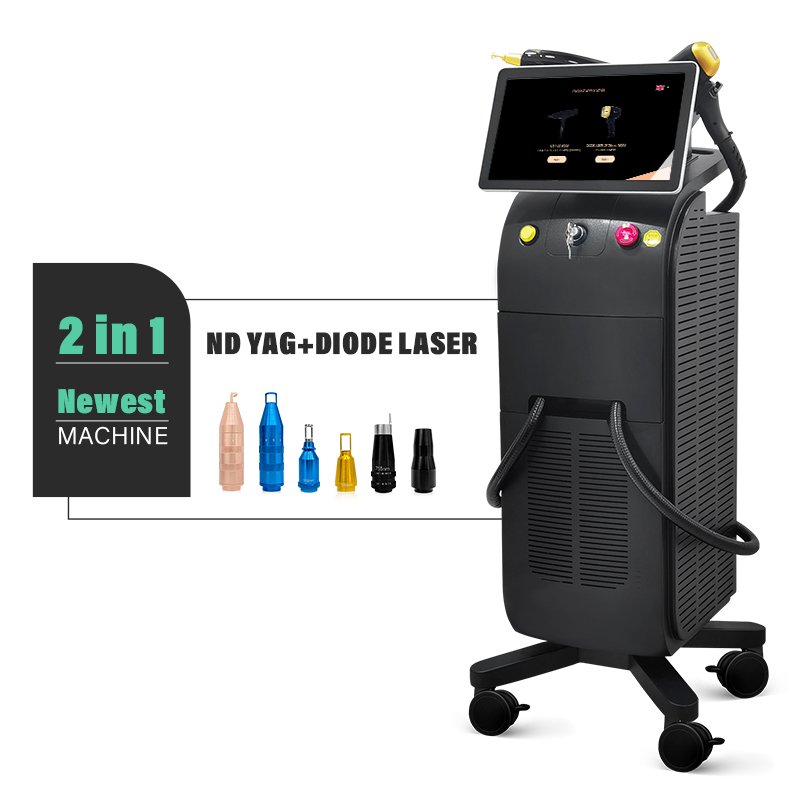
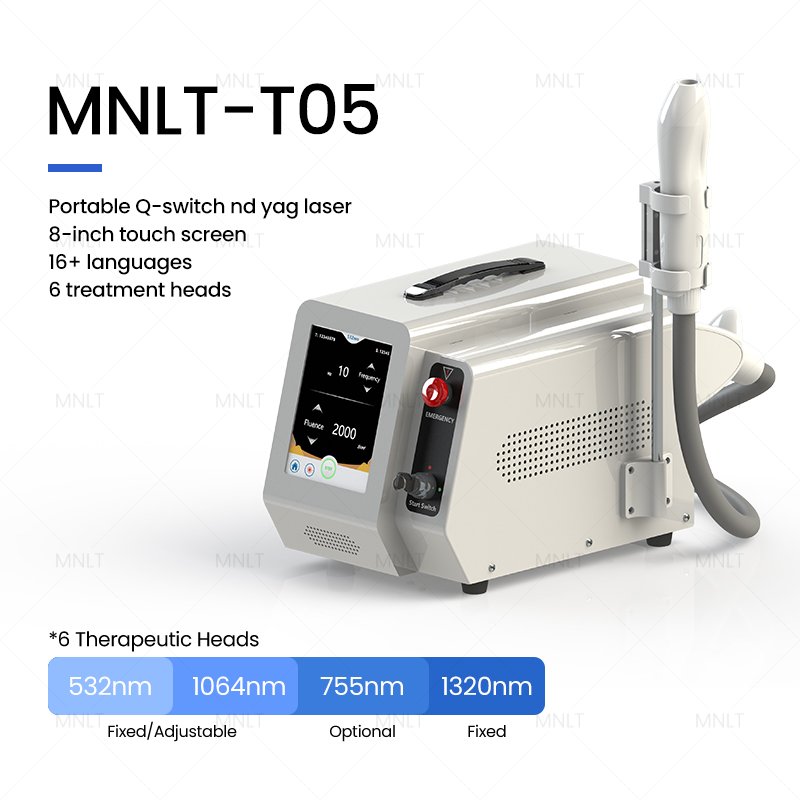
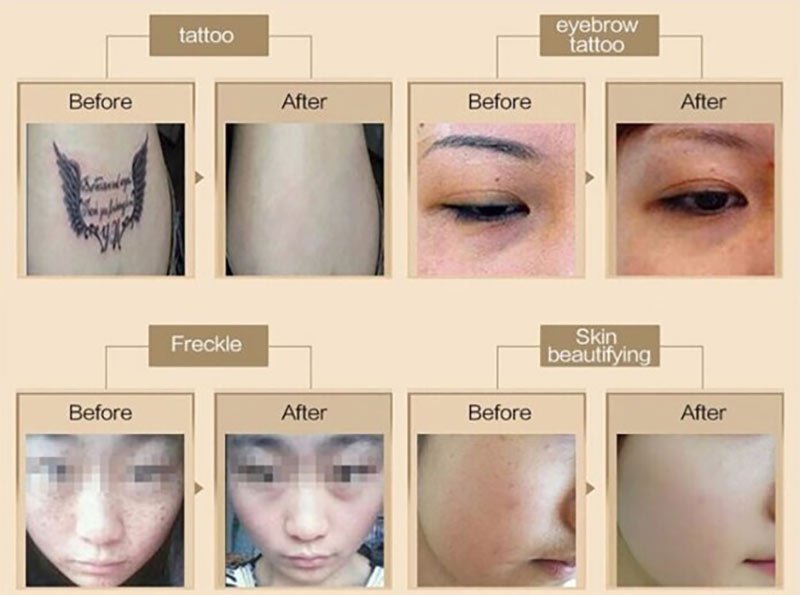
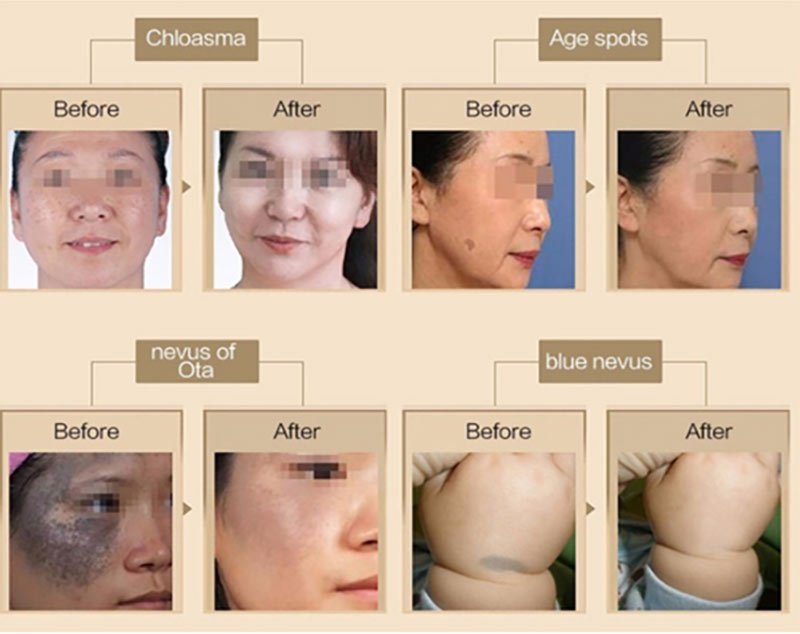
Picosecond Laser Tattoo Removal Machine: Shorter Pulses, Faster Results
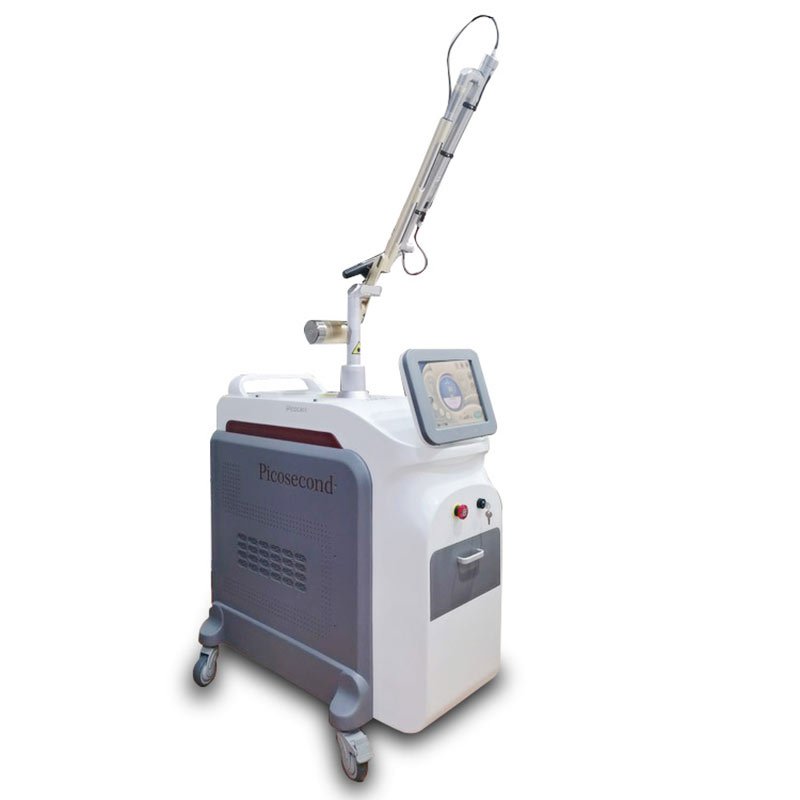
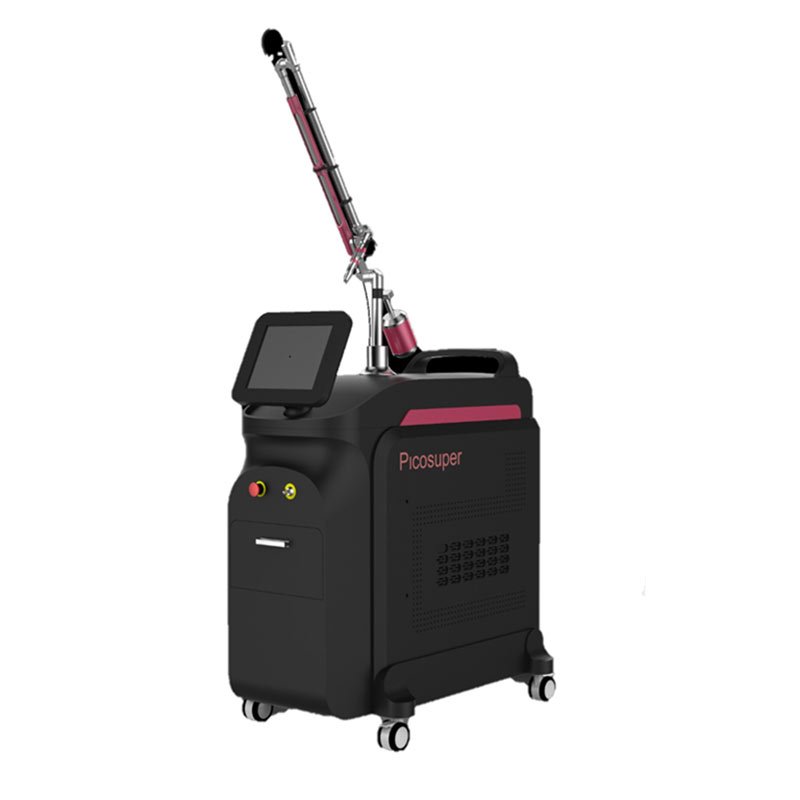
In recent years, the picosecond laser tattoo removal machine has become a major topic in the industry.
Unlike nanosecond Q-switched lasers, picosecond laser machines deliver energy in trillionths of a second. This creates a stronger photo-mechanical effect with less heat diffusion.
Key Advantages of Picosecond Laser Technology
Faster ink fragmentation
Fewer treatment sessions in many cases
Improved clearance for difficult colors
This is why many clinics compare Nd:YAG vs Picosecond laser tattoo removal machines when upgrading equipment.
Picosecond Laser vs Q-Switched Nd:YAG: Which Is Better?
The answer depends on your clinic’s positioning.
Q-switched Nd:YAG tattoo removal machines are cost-effective, versatile, and proven
Picosecond laser tattoo removal machines offer faster results but come with higher machine cost
For distributors, combining both technologies—or offering a picosecond laser machine with multiple wavelengths—often attracts higher-end clinics.
It’s also worth noting that brand-name systems like PicoSure laser tattoo removal machines helped popularize picosecond technology, but many OEM tattoo removal machine manufacturers now offer comparable performance at a more competitive price point.
For a detailed comparison of the parameters of Picosecond Laser vs Q-Switched Nd:YAG, you can refer to this link.

Tattoo Removal Machine Cost: How Wavelengths Affect ROI
From a business perspective, wavelength flexibility directly impacts tattoo removal machine cost effectiveness.
Machines with:
Dual wavelengths (1064nm + 532nm)
Q-switched Nd:YAG systems
Optional picosecond upgrades
tend to generate higher long-term ROI, even if the initial tattoo removal machine price is higher.
Why?
Because they allow clinics to:
Treat more ink colors
Serve more skin types
Reduce referral losses
For buyers evaluating a tattoo removal machine for sale, wavelength versatility should be considered an investment, not an expense.
Choosing the Right Tattoo Removal Machine for Clinics and Distributors
When selecting a tattoo removal machine for clinic use or resale, ask these questions:
Does the machine support 1064nm Nd:YAG wavelength?
Is 532nm wavelength included for color tattoos?
Is it Q-switched Nd:YAG or picosecond laser technology?
Can the supplier provide OEM customization and long-term support?
A reliable tattoo removal machine manufacturer should clearly explain wavelength performance, not just quote power numbers or prices.
Why Wavelength Knowledge Defines Professional Tattoo Removal
In today’s competitive aesthetic market, clinics that understand tattoo removal laser wavelengths consistently achieve better results and higher client satisfaction.
Whether you choose a Q-switched Nd:YAG laser machine, a picosecond laser tattoo removal machine, or a combination system, wavelength selection should guide your decision—not marketing claims alone.
For clinics and distributors aiming to build a long-term business, investing in the right tattoo removal laser technology is the smartest step forward.
Inquire Now
Fill out the form for more information, and an MNLT product manager will contact you shortly!
Best Tattoo Removal Machine Recommendation