

At a Glance
- Mild Hyperbaric Oxygen Therapy (mHBOT) operating at 1.3 ATA elevates arterial oxygen partial pressure (PaO₂) by 24% to 30% according to Henry's Law, dissolving biologically significant oxygen directly into blood plasma without requiring hospital-grade medical vessel licenses.
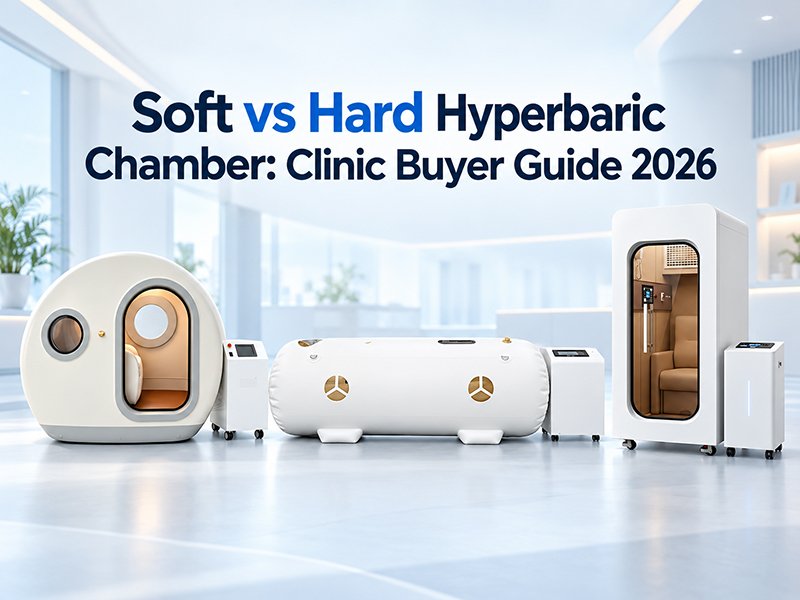
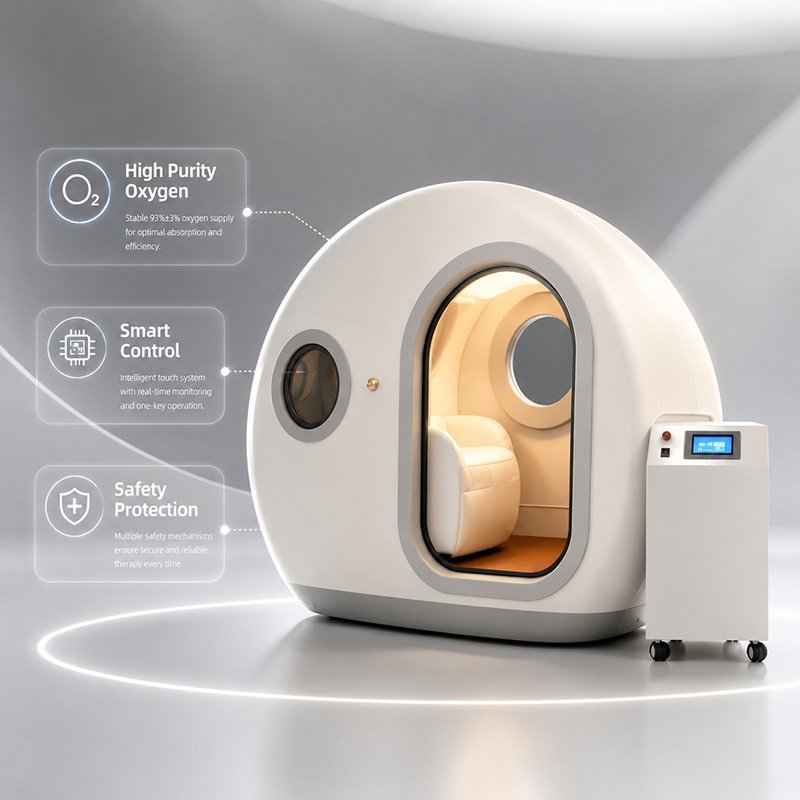
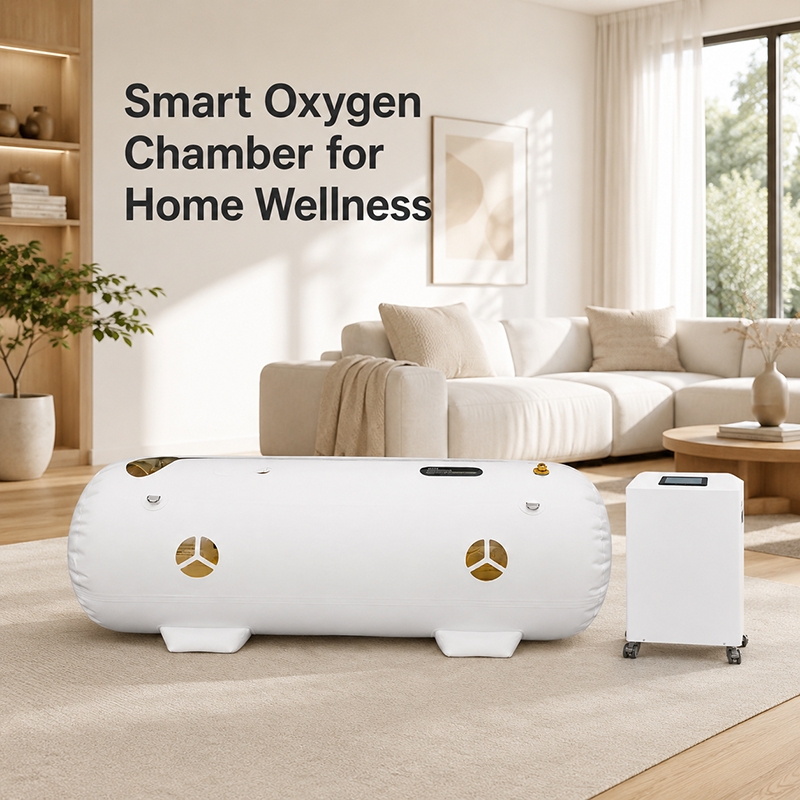
- Soft-shell chambers (1.3 ATA) are constructed from multi-layer TPU-coated composite polymers with reinforced dual-zipper sealing, delivering high portability, lower spatial footprint, and accessible capital expenditure for wellness centers, medspas, and athletic recovery facilities.
- Hard-shell chambers (1.5 ATA to 2.0 ATA) utilize aircraft-grade aluminum alloy or dual-layer stainless steel pressure hulls designed to ASME PVHO-1 standards, supporting higher therapeutic tissue oxygenation for severe clinical indications and post-operative surgical rehabilitation.
- Modern safety protocols require Built-In Breathing Systems (BIBS) with external exhaust dumps to isolate pure medical oxygen to patient respiratory circuits, maintaining ambient chamber oxygen levels strictly below the hazardous NFPA 99 threshold of 23.5%.
- From an equipment economics perspective, factory-direct soft chambers ($3,500–$6,500) and compact hard-shell mono-place models ($11,000–$18,000) allow commercial operators charging $80 to $150 per session to reach full capital break-even within 2 to 4 months.
- Pairing hyperbaric oxygenation with complementary aesthetic modalities—such as compressive microvibration for lymphatic drainage—accelerates post-procedure tissue healing and boosts clinic package revenues.
- MNLT Laser (Shandong Moonlight Electronic Technology Co., Ltd.) brings 19 years of medical aesthetic engineering experience, backed by ISO 13485 and CE compliance, providing worldwide factory-direct supply and 24/7 technical engineering support.
Hyperbaric Oxygen Therapy (HBOT) has transitioned from hospital-bound specialty decompression medicine into one of the most profitable service additions for modern medical spas, wellness clinics, functional medicine practices, and sports rehabilitation centers. However, commercial operators evaluating hyperbaric equipment face a fundamental purchasing dilemma: should you invest in an accessible, flexible soft-shell chamber operating at 1.3 ATA, or commit capital to an industrial-grade hard-shell chamber capable of 1.5 ATA to 2.0 ATA?
Navigating this procurement decision requires understanding gas physics, tissue oxygen tension biology, international pressure vessel regulations, fire safety standards (NFPA 99), and capital recovery timelines. This comprehensive 2026 buyer guide explores the physiological, engineering, and financial distinctions between soft-shell and hard-shell hyperbaric systems to ensure clinic owners make an informed, commercially viable investment.
1. Biophysical Principles: Pressure, Henry's Law, and Plasma Dissolved Oxygen
The therapeutic mechanism of hyperbaric medicine relies on Henry’s Law of Gas Solubility, which states that at a constant temperature, the amount of a given gas dissolved in a given type and volume of liquid is directly proportional to the partial pressure of that gas in equilibrium with that liquid:
C=k⋅PC=k⋅P
Where:
- CC represents the dissolved gas concentration in blood plasma.
- kk is Henry’s solubility constant for oxygen in human plasma (0.0031 mL O2/dL blood/mmHg0.0031 mL O2/dL blood/mmHg).
- PP is the partial pressure of alveolar oxygen (PAO2PAO2).
Standard Atmospheric Pressure (1.0 ATA, Air):
Red Blood Cells (Hemoglobin 97-98% Saturated) ──▶ Dissolved Plasma O2: ~0.3 mL/dL
Mild Hyperbaric Pressure (1.3 ATA, 95% O2 via Mask):
Hemoglobin 100% Saturated ──▶ Dissolved Plasma O2: ~1.8 – 2.2 mL/dL (6-7x Increase)
Clinical Hyperbaric Pressure (1.5 – 2.0 ATA, 100% O2 BIBS):
Hemoglobin 100% Saturated ──▶ Dissolved Plasma O2: ~3.5 – 4.8 mL/dL (12-16x Increase)
Under normal sea-level conditions (1.0 ATA breathing 21% ambient oxygen), oxygen delivery is almost entirely dependent on erythrocyte hemoglobin saturation (SaO2≈97–98%SaO2≈97–98%), with only 0.3 mL0.3 mL of oxygen dissolved per 100 mL100 mL of blood plasma.
- At 1.3 ATA (Soft-Shell mHBOT): When a client breathes oxygen-enriched air (90%–95% O2O2 delivered via an oxygen concentrator and mask) at 1.3 atmospheres absolute (131.7 kPa131.7 kPa / 4.4 psi4.4 psi above ambient), the plasma-dissolved oxygen increases nearly sevenfold. This dissolved oxygen bypasses compromised micro-capillaries, diffusing across damaged interstitial tissue beds to support mitochondrial ATP generation, fibroblast proliferation, and cellular recovery.
- At 1.5 ATA to 2.0 ATA (Hard-Shell Medical HBOT): Pressurization to 1.5–2.0 ATA elevates plasma-dissolved oxygen to levels that can sustain cellular metabolism even in the complete absence of functioning red blood cells. Higher pressures trigger intense biological cascades, including the upregulation of vascular endothelial growth factor (VEGF), suppression of pro-inflammatory cytokines (IL-1, IL-6, TNF-αα), mobilization of CD34+ pluripotent stem cells, and accelerated neovascularization.
To review certified mono-place hardware engineered for wellness practices, explore the single-person mini hyperbaric oxygen chamber designed by MNLT.
2. Engineering Architecture: Soft-Shell 1.3 ATA vs. Hard-Shell 1.5–2.0 ATA
Chamber construction dictates maximum operating pressure, structural lifespan, and daily operational workflow.
Soft-Shell Chambers (Inflatable TPU Fabric)
Mild hyperbaric chambers (mHBOT) are manufactured using flexible, high-tensile multi-layer composite polymers, primarily non-toxic Thermoplastic Polyurethane (TPU) heat-welded or radio-frequency bonded over high-density nylon scrims.
- Sealing Mechanics: Soft chambers rely on specialized heavy-duty dual-zipper assemblies (an interior mechanical pressure zipper combined with an exterior airtight sealing zipper) backed by longitudinal internal pressure bladders.
- Internal Air Circulation: An external oil-free rotary compressor continuously pumps filtered ambient air into the chamber to achieve and sustain 1.3 ATA1.3 ATA (30 kPa30 kPa gauge pressure), while calibrated mechanical pressure-relief valves continuously vent excess air to prevent over-pressurization.
- Portability & Installation: Soft chambers weigh between 40 kg and 80 kg, require no specialized architectural floor reinforcements, and can be deflated, packed into travel cases, and relocated within minutes.
Hard-Shell Chambers (Rigid Metal / Acrylic Vessels)
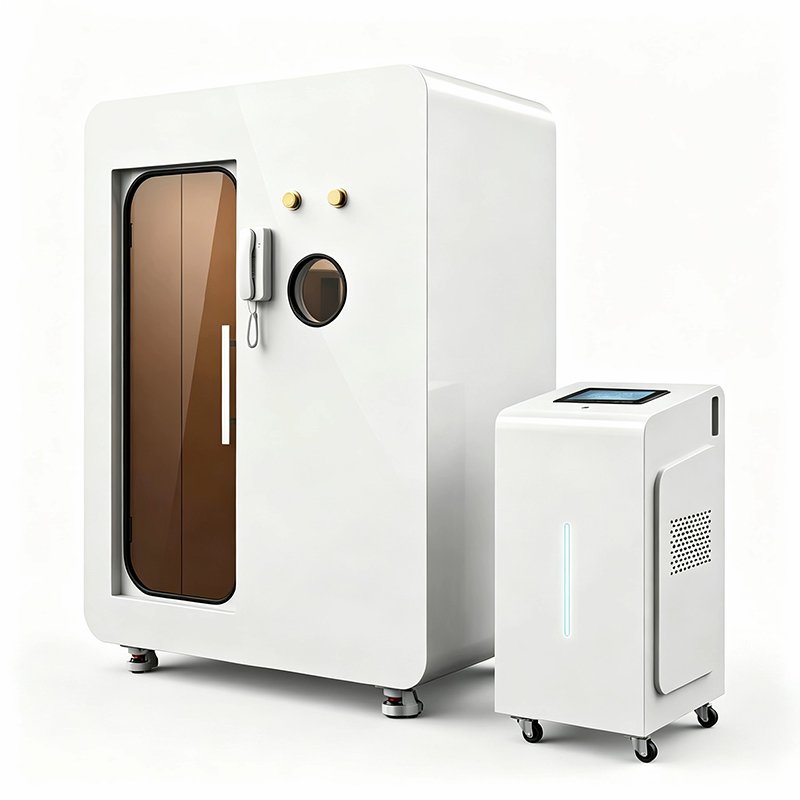
Hard-shell chambers are structural pressure vessels engineered to withstand higher internal hoop stress without elastic deformation.
- Structural Metallurgy: Fabricated from marine-grade 5083 aluminum alloy or 304/316L medical stainless steel with minimum wall thicknesses of 6 mm to 10 mm, inspected and certified under strict pressure equipment directives (such as ASME PVHO-1 and European EN 14931).
- Door Sealing System: Rigid chambers feature self-sealing internal wedge hatch doors or precision-latched external swing doors fitted with food-grade silicone O-rings. As internal pressure rises, the differential pressure compresses the silicone gasket, establishing an impervious gas seal without relying on zippers.
- Observation Windows: Multiple optical-grade acrylic (PMMA) viewport windows allow constant patient monitoring and eliminate claustrophobia.
- Fixed Infrastructure: Weighing between 180 kg and 650 kg, rigid chambers represent a permanent clinic asset requiring dedicated treatment suites, high-flow oil-free compressor skids, external air-drying chillers, and dedicated power circuits.
For practices evaluating physical rehabilitation equipment, view our broader portfolio of certified physical therapy and wellness machines.
3. Side-by-Side Specifications: Soft vs. Hard Shell Chambers
The engineering and clinical differences between 1.3 ATA flexible chambers and 1.5–2.0 ATA rigid systems are outlined in the comparison matrix below:
| Engineering & Clinical Factor | Soft-Shell Chamber (mHBOT) | Hard-Shell Chamber (Clinical HBOT) |
|---|---|---|
| Operating Pressure Range | 1.3 ATA (approx. 4.4 psi / 30 kPa) | 1.5 ATA – 2.0 ATA (7.35 – 14.7 psi / 50 – 100 kPa) |
| Hull Construction Material | Multi-layer TPU-coated nylon polymer | Aircraft-grade aluminum / 304 stainless steel & PMMA |
| Sealing Mechanism | Dual-zipper mechanical sliding seal | Mechanical auto-pressurizing silicone gasket hatch |
| Oxygen Delivery Method | Non-pressurized nasal cannula or loose mask | BIBS demand-regulator mask with overboard dump |
| Ambient Chamber Atmosphere | Ambient air pressurized (21%–23% O₂) | Pressurized dry filtered air (NFPA 99 compliant <23.5%) |
| Regulatory Licensing Barrier | Low / General wellness device (FDA Class II) | Moderate to High / Requires medical pressure vessel clearance |
| Operator Supervision Requirements | Trained clinic staff; self-operation capable | Certified Hyperbaric Technologist (CHT) recommended |
| Equipment Net Weight | 40 – 75 kg (Highly portable) | 180 – 350 kg (Permanent installation) |
| Capital Acquisition Cost | $3,500 – $6,500 (Factory-direct) | $11,000 – $18,000 (Compact commercial hard-shell) |
| Average Session Pricing (B2C) | $75 – $110 per 60-min session | $130 – $220 per 60–90 min session |
4. Safety Architecture and Fire Prevention: The Critical BIBS Protocol
Safety governance represents the most critical differentiator in professional hyperbaric equipment procurement. Under high-pressure environments, the flammability of organic textiles and materials increases exponentially.
Chamber Atmosphere Safety Threshold (NFPA 99 Chapter 14):
[ Safe Zone: 20.9% – 23.5% O2 ] ──▶ [ Critical Fire Hazard Zone: > 23.5% O2 ]
▲
Direct Ambient Oxygen Flooding ────┘ (Severe Risk without BIBS Exhaust)
The Oxygen Enrichment Risk
Standard room air contains approximately 20.95%20.95% oxygen. According to NFPA 99 (Health Care Facilities Code, Chapter 14) and CGA G-4.1 Standards, any hyperbaric chamber environment where ambient oxygen levels exceed 23.5% is classified as a severe fire and explosion hazard. In an oxygen-enriched atmosphere, materials that do not burn in room air can ignite spontaneously from a single static spark.
How BIBS Isolates the Risk
Premium commercial chambers (such as MNLT systems) resolve this risk by implementing an integrated Built-In Breathing System (BIBS):
- Compressor Air Pressurization: The chamber hull is pressurized exclusively using clean, medical-grade filtered compressed air (21% O221% O2), never pure oxygen gas.
- Dedicated Delivery Loop: The patient breathes 95%–100% oxygen exclusively through a closed-circuit silicone mask or demand-valve mouthpiece directly connected to an external medical oxygen concentrator or manifold.
- Overboard Exhaust Dump: Exhaled patient gas (which contains high residual oxygen concentrations and carbon dioxide) is routed through an independent corrugated circuit connected directly to an overboard exhaust dump valve, venting gas completely outside the chamber.
- Atmospheric Monitoring: Dual optical oxygen sensors continuously monitor ambient chamber air. If oxygen concentration approaches 22.5%22.5%, automated high-flow purge fans activate immediately to dilute and vent the internal air.
5. Clinical Indications: Aligning Chamber Type with Clinic Practice
Selecting between 1.3 ATA and 1.5–2.0 ATA must align directly with your clinic’s patient demographics and treatment protocols:
Clinic Alignment Flowchart:
Wellness, MedSpa, Sports Recovery ──▶ Soft Chamber (1.3 ATA) ──▶ Low License Barrier
Post-Surgery, Deep Tissue Healing ──▶ Hard Chamber (1.5-2.0 ATA) ──▶ Medical Oversight
Best Clinical Applications for 1.3 ATA Soft Chambers:
- Aesthetic Wellness & Anti-Aging: Mild hyperbaric pressures enhance systemic circulation, combat oxidative stress, improve skin elasticity, and promote natural collagen synthesis.
- Athletic Recovery & Fatigue Management: Accelerates metabolic clearance of blood lactic acid, reduces Delayed Onset Muscle Soreness (DOMS), and mitigates acute soft-tissue inflammation in fitness enthusiasts and professional athletes.
- Brain Fog & Cognitive Performance: Mild hyperbaric exposure enhances cerebral microcirculation and cellular oxygenation, relieving chronic cognitive fatigue.
- MedSpa & Salon Operations: Requires no specialized medical director licensing in most Western jurisdictions, allowing licensed estheticians and spa therapists to administer protocols safely.
Best Clinical Applications for 1.5–2.0 ATA Hard Chambers:
- Plastic Surgery & Liposuction Aftercare: Drastically reduces post-operative ecchymosis, seroma formation, and edema while accelerating flap survival and incisional healing.
- Synergistic Aesthetic Combinations: Pairing hyperbaric tissue oxygenation with non-invasive mechanical therapies—such as compressive microvibration for lymphatic drainage—significantly enhances patient recovery outcomes. Review our Inner Ball Roller post-surgical recovery guide for integrated clinical protocols.
- Severe Musculoskeletal Injury: Chronic tendinopathy, ligamentous tears, and non-union bone fractures benefit significantly from higher hyperbaric pressures that stimulate osteoblast activity and rapid collagen cross-linking.
6. Financial ROI & Capital Expenditure Analysis
Evaluating hyperbaric chambers requires a detailed examination of acquisition costs, operational overhead, staffing requirements, and client treatment volume:
| Financial Metric | Soft-Shell Chamber (1.3 ATA) | Hard-Shell Chamber (1.5 ATA) |
|---|---|---|
| Initial Factory-Direct Investment | $4,800 (Turnkey with concentrator) | $14,500 (Industrial hard-shell unit) |
| Facility Setup & Electrical Upgrades | $300 (Standard 110V/220V socket) | $1,200 (Dedicated circuit & climate) |
| Average Charge per Session (B2C) | $90 (60-minute recovery protocol) | $160 (60-minute clinical protocol) |
| Consumables & Electrical Cost / Session | $2.50 (Sanitized mask, filter, power) | $4.80 (Chiller power, oxygen mask, filters) |
| Net Profit per Session | $87.50 | $155.20 |
| Monthly Patients (3 sessions / day, 24 days) | 72 total monthly sessions | 72 total monthly sessions |
| Monthly Net Operating Revenue | $6,300 / month | $11,174 / month |
| Full Capital Payback Period | 0.8 Months (< 25 days) | 1.4 Months (< 45 days) |
Procurement Guidance
- The Soft Chamber Advantage: For a beauty salon, wellness club, or boutique medspa with an initial budget below $10,000, a soft-shell 1.3 ATA chamber delivers rapid capital recovery. The zero-overhead setup and gentle learning curve generate positive cash flow within the first month.
- The Hard Chamber Advantage: For established plastic surgery clinics, integrated medical centers, and sports teams, hard-shell 1.5–2.0 ATA chambers command premium price points (150–150–250/session) and allow practitioners to treat advanced medical conditions with superior clinical efficacy.
7. The MNLT Manufacturing Advantage: 19 Years of Quality Assurance
Sourcing hyperbaric equipment directly from Shandong Moonlight Electronic Technology Co., Ltd. (MNLT Laser) eliminates multi-tier distributor markups while securing tier-one engineering support. With 19 years of continuous aesthetic and medical equipment manufacturing experience, MNLT provides clinic owners with unmatched technical standards:
- Certified Manufacturing Facilities: Our production processes adhere to ISO 13485 quality management systems, and all pressure vessels undergo rigorous hydrostatic and pneumatic pressure testing at 1.5 times their rated operating pressure.
- Integrated Intelligent Controls: MNLT hyperbaric systems feature dual external and internal high-resolution touchscreens, allowing seamless operator management and empowering patients to control chamber lighting, air-cooling, and communication intercoms from inside the vessel.
- Medical-Grade Filtration & Cooling: Each chamber is paired with an oil-free low-noise compressor skid, high-efficiency refrigeration air dryer, and multi-stage particulate filters that supply pure, dehumidified, temperature-controlled air.
- 24/7 Global Technical Dispatch: Benefit from around-the-clock remote engineering troubleshooting, modular plug-and-play component replacement, and dedicated logistics support.
To request detailed technical blueprints, customized branding options, or factory-direct pricing, contact the MNLT engineering team today.
Inquire Now
Fill out the form for more information, and an MNLT product manager will contact you shortly!
Frequently Asked Questions: Commercial Hyperbaric Chambers
Does a wellness clinic need a medical license to operate a 1.3 ATA soft-shell hyperbaric chamber?
In most international jurisdictions (including the United States, Canada, the United Kingdom, and the European Union), soft-shell chambers operating at 1.3 ATA are categorized as mild hyperbaric oxygen (mHBOT) or general wellness devices. Because the chamber is pressurized with filtered ambient air and oxygen is delivered via non-invasive facial masks, wellness centers, athletic clubs, and beauty salons can operate these systems without specialized hospital pressure-vessel permits or dedicated medical director supervision.
How does a Built-In Breathing System (BIBS) prevent fire hazards inside hyperbaric chambers?
According to NFPA 99 fire safety standards, an ambient oxygen concentration exceeding 23.5% presents an extreme fire hazard. A BIBS system ensures the main chamber hull is pressurized exclusively with clean compressed ambient air (21% oxygen). Pure medical oxygen is routed strictly through a sealed patient mask. The patient's exhaled, oxygen-rich breath is immediately directed through an isolated second circuit and vented outside the chamber, maintaining ambient oxygen levels at safe, non-flammable concentrations throughout the entire treatment session.
What is the clinical difference between 1.3 ATA and 1.5–2.0 ATA pressure levels?
Under Henry's Law of gas solubility, 1.3 ATA increases arterial oxygen tension and elevates dissolved plasma oxygen by approximately 24% to 30%, which is ideal for cellular rejuvenation, muscle recovery, and anti-aging benefits. Pressures of 1.5 to 2.0 ATA elevate plasma-dissolved oxygen by several hundred percent, delivering profound physiological effects required for clinical healing, such as neovascularization, surgical wound healing, severe crush injury recovery, and anti-microbial leukocyte activation.
What are the daily electrical and operational requirements for an MNLT hyperbaric chamber?
MNLT hyperbaric systems operate on standard single-phase 110V or 220V electrical circuits with an average total power draw of 1.2 kW to 2.2 kW (inclusive of the oil-free compressor, internal dehumidifying air chiller, and 10L oxygen concentrator). Daily routine maintenance involves wiping the interior mattress with hospital-grade non-alcohol disinfectant, draining the compressor water trap, and inspecting the silicone door seals.
Can hyperbaric oxygen therapy be combined with other aesthetic and body sculpting treatments?
Yes. Hyperbaric oxygen therapy is highly synergistic with body contouring, lymphatic drainage, and facial rejuvenation treatments. Administering an HBOT session immediately before or after compressive microvibration therapy accelerates metabolic waste elimination, reduces tissue inflammation, and enhances microvascular circulation, allowing clinics to create comprehensive wellness packages with superior clinical outcomes.
Reviewed by David Ma
CTO & Chief Engineer, MNLT Laser (Shandong Moonlight Electronic Technology Co., Ltd.)
19 years of medical and aesthetic device manufacturing experience. David leads MNLT's R&D and engineering teams across hyperbaric systems and laser platforms, ensuring every device meets stringent international pressure vessel safety standards and clinical efficacy protocols.