
Mild hyperbaric systems operate in the 1.1–1.5 ATA range, well below the 2.0–3.0 ATA used in hospital-grade hard-shell chambers.
A standard session runs 60–90 minutes, with oxygen concentration maintained around 93% ± 3% and flow rates of 4–10 L/min.
Per-session pricing in EU and North American wellness markets typically runs USD 80–150.
Entry-level wellness-tier units start around USD 8,000–12,000 factory-direct — a fraction of the USD 50,000–150,000+ typical for hospital-grade multiplace chambers.
Unlike most aesthetic equipment, there are no cartridges or electrodes to replace, so per-session operating cost is close to zero beyond electricity.
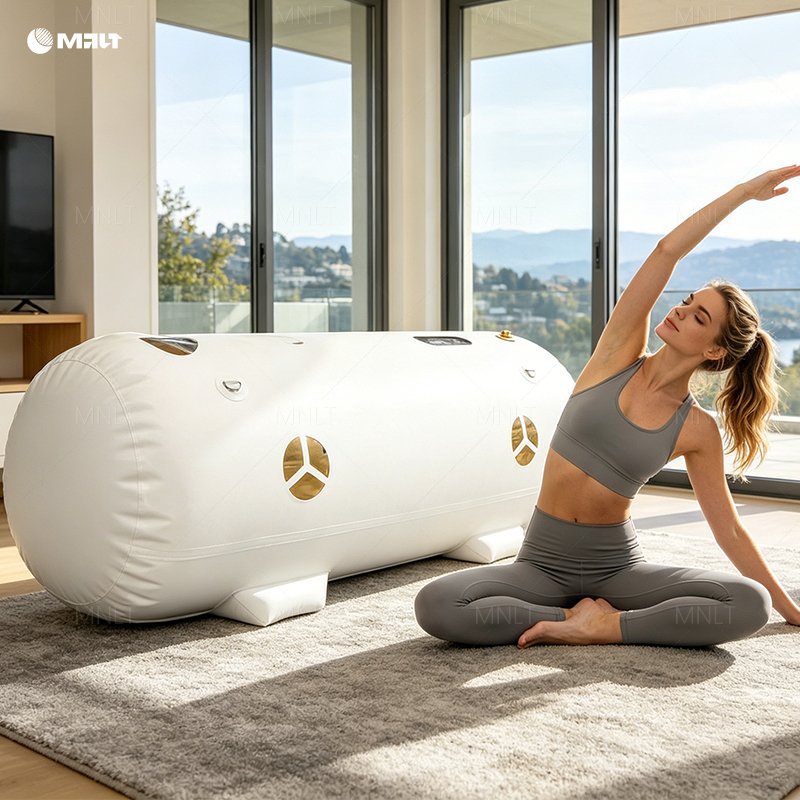
A hyperbaric oxygen chamber for wellness centers is a pressurized enclosure that delivers oxygen-enriched air at mild elevated pressure — typically 1.1 to 1.5 ATA — allowing the occupant to breathe higher concentrations of oxygen during a 60 to 90 minute session. Unlike hard-shell clinical hyperbaric chambers used in medical wound care protocols, mild hyperbaric systems designed for wellness, athletic recovery, and spa environments are soft-shell, portable, and operable without medical staff. In 2026, wellness centers, fitness studios, and aesthetic clinics increasingly offer hyperbaric oxygen sessions as a premium recovery and skin vitality service, with per-session pricing of USD 80–150 in most EU and North American markets.
The One Number That Explains the Price Gap
Before comparing any quotes, it helps to understand why hyperbaric chamber pricing spans such a wide range — from roughly USD 8,000 to well over USD 100,000. The answer is pressure. Mild hyperbaric systems built for wellness use operate at 1.1–1.5 ATA with oxygen-enriched (not pure) air, and are designed to be run by trained non-medical staff. Hospital-grade hard-shell chambers used for wound care and decompression sickness run 2.0–3.0 ATA with 100% medical oxygen, require certified medical supervision, and sit in a different regulatory category entirely. Same underlying concept, genuinely different equipment class — and that distinction should be the first thing confirmed on any quote.
Inside the Chamber: What's Actually Happening
Raising ambient pressure allows more oxygen to dissolve into blood plasma than breathing room air permits at normal atmospheric pressure — true even before adjusting oxygen concentration itself. Mild hyperbaric systems pair a modest pressure increase with air enriched to roughly 90–95% oxygen, which is what keeps wellness-tier use out of the oxygen-toxicity risk zone associated with higher-pressure, pure-oxygen clinical protocols.
Where equipment quality tends to differ in practice — beyond the headline ATA number — comes down to three things: whether the chamber holds a stable oxygen concentration for the full session rather than drifting, whether the compressor, oxygen concentrator, and pressure controller are integrated into a single host unit versus sold as separate components a clinic has to assemble, and how many independent safety mechanisms are built in rather than relying on one pressure valve.
Mild Hyperbaric (Wellness) vs Hospital-Grade Hard-Shell
| Dimension | Mild Hyperbaric (Wellness) | Hospital-Grade Hard-Shell |
|---|---|---|
| Pressure range | 1.1–1.5 ATA | 2.0–3.0 ATA |
| Oxygen source | Enriched air (~90–95%) | 100% medical oxygen |
| Shell construction | Soft-shell, portable | Rigid steel or acrylic |
| Staffing requirement | Trained non-medical operator | Certified medical supervision |
| Regulatory pathway | Wellness/consumer certification | Medical device classification |
| Typical equipment cost | USD 8,000–12,000+ | USD 50,000–150,000+ |
| Primary use case | Recovery, wellness, skin vitality | Wound care, decompression sickness |
| Installation requirements | Standard household/commercial power | Dedicated electrical/structural planning |
Comparison spans eight dimensions: pressure, oxygen source, construction, staffing, regulatory category, cost, use case, and installation.
If a supplier quotes wellness-tier pricing while describing hospital-grade capability, that mismatch is worth questioning directly before ordering.
Does the Math Work? A 3-Scenario Model
Modeled on a single-person chamber around USD 10,000 factory-direct, priced at USD 100 per session, with near-zero consumable cost (estimated USD 5/session for electricity and incidental upkeep).
| Scenario | Sessions/Month | Monthly Revenue | Est. Monthly Operating Cost | Est. Net Monthly Contribution | Approx. Breakeven Timeline |
|---|---|---|---|---|---|
| Conservative | 10 | USD 1,000 | USD 50 | USD 950 | ~10–11 months |
| Standard | 20 | USD 2,000 | USD 100 | USD 1,900 | ~5–6 months |
| Full Capacity | 35 | USD 3,500 | USD 175 | USD 3,325 | ~3 months |
These figures are illustrative projections, not financial guarantees. Actual results depend on local market pricing, how the service is positioned within your broader offering, marketing spend, space allocation, and regional demand for recovery-oriented wellness services. The bigger open question usually isn’t whether the math works at some utilization level — the near-zero consumable cost makes that likely — but whether your specific market can realistically fill 15–20 sessions a month.
Who This Fits
Wellness centers and recovery-focused fitness studios are the clearest fit, given the near-zero consumable cost structure — unusual for equipment in this price range, where cartridges or electrodes typically erode margin over time. Aesthetic clinics and medical spas tend to position sessions as a recovery add-on alongside existing skin or body contouring services, framed around general skin vitality and recovery support rather than specific medical claims. Distributors serving markets without established hyperbaric infrastructure often find the soft-shell, integrated-host format easier to place than clinical equipment, since it avoids the electrical and staffing commitments that come with hospital-grade systems.
Buying Checklist: What to Verify Before You Order
- Get the actual ATA figures in writing — not just the word “hyperbaric,” which gets used loosely in marketing copy.
- Request documented oxygen concentration and flow rate specifications, since these determine session quality more directly than pressure alone.
- Confirm whether the compressor, concentrator, and controller are genuinely integrated into one host unit, which affects both setup time and long-term reliability.
- Check for multiple independent safety mechanisms — an automatic pressure relief valve, a manual exhaust option, and a closure the occupant can open from inside without assistance.
- Request CE certification documentation with a verifiable certificate number, particularly if marketing language implies more than the pressure specifications support.
- Confirm electrical requirements match your facility — universal voltage compatibility (commonly AC 110V/220V) avoids unexpected electrical work.
- Calculate total landed cost, including shipping, import duties, and any local certification requirements specific to your market.
Contact the MNLT Laser team with your space constraints and expected session volume for a tailored recommendation.
Frequently Asked Questions
Why is there such a big price gap between hyperbaric chambers?
Can wellness center staff operate a hyperbaric chamber without medical training?
How long does a typical hyperbaric oxygen session take?
What's the realistic monthly revenue from one chamber?
What should a wellness center check before buying a hyperbaric chamber?
With 15+ years of expertise in optoelectronic and medical aesthetic engineering, David leads MNLT's R&D team across the full professional aesthetic device portfolio, ensuring all technical content meets the highest standards of accuracy and clinical safety.
Get a Factory-Direct Hyperbaric Oxygen Chamber Quotation
MNLT Laser’s Portable Hyperbaric Oxygen Chamber is a single-person, all-in-one system built for exactly the wellness-tier use case covered in this guide — CE certified, factory-direct, and designed for straightforward deployment without specialized infrastructure. With 19 years of manufacturing experience and equipment supplied to clients across 120+ countries, contact the MNLT Laser team for current specifications, pricing, and lead times.