
Cryolipolysis targets fat cells at -5°C to -10°C, a range selective enough to trigger apoptosis in adipocytes while leaving skin and surrounding tissue largely unaffected.
Clinical protocols typically report 20–25% fat layer reduction in the treated zone per session cycle, visible over 8–12 weeks as the body clears the affected cells naturally.
Entry-level single-applicator systems start around USD 3,000–5,000, while multi-applicator systems with 2–4 simultaneous handles run USD 8,000–15,000+.
Because there’s no consumable cartridge or electrode replacement cost, a clinic’s per-session marginal cost is close to zero beyond electricity and applicator maintenance — a materially different economics profile than laser or RF-based fat reduction.
A standard session runs 35–60 minutes per applicator zone, and multi-applicator systems allow 2–4 zones to be treated simultaneously, directly affecting daily client throughput.
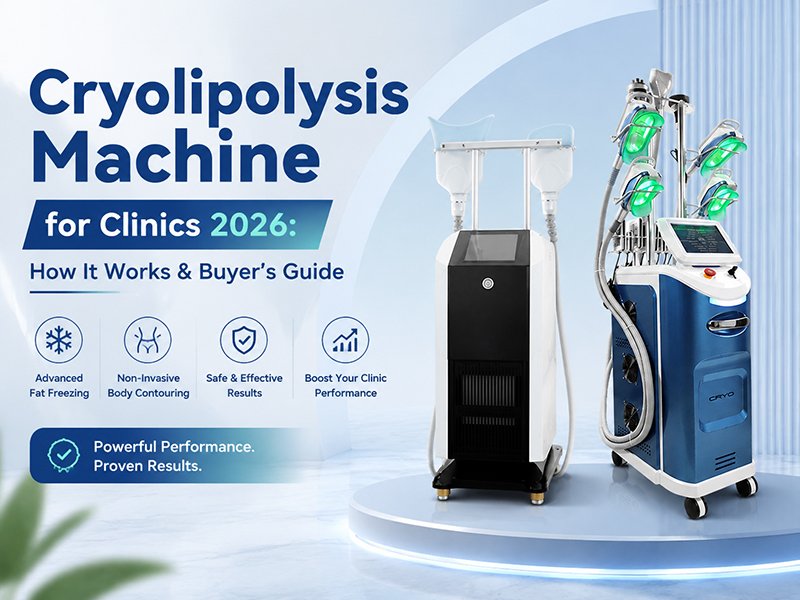
A cryolipolysis machine is a non-invasive body contouring device that uses controlled cooling to target and destroy subcutaneous fat cells through a process called cryolipolysis — selective freezing of adipocytes at temperatures between -5°C and -10°C, triggering natural apoptosis without damaging surrounding tissue. In 2026, clinic-grade cryolipolysis systems typically include multiple applicator sizes to accommodate different body zones, real-time temperature monitoring, and suction-assisted delivery for consistent tissue contact. Unlike thermal-based fat reduction technologies, cryolipolysis requires no consumables beyond applicator maintenance, making it a zero-per-session-cost addition to any body contouring menu.
How Cryolipolysis Actually Works
Cryolipolysis relies on a straightforward biological principle: fat cells (adipocytes) are more sensitive to cold injury than the surrounding skin, muscle, and connective tissue. When a treatment applicator draws the targeted area into a controlled vacuum chamber and cools it to a precise range — commonly between -5°C and -10°C — the fat cells undergo a controlled crystallization process that triggers apoptosis, or programmed cell death. Over the following weeks, the body’s own lymphatic and immune systems gradually clear these affected cells through natural metabolic processes.
Three components determine how effectively — and how safely — a cryolipolysis machine performs this process:
1. Temperature precision and real-time monitoring
The therapeutic window for selective fat cell apoptosis is narrow. Machines with tighter temperature control and continuous sensor feedback maintain the applicator surface within the effective range throughout the full session, reducing the risk of incomplete treatment or surface tissue effects from temperature drift.
2. Applicator design and vacuum consistency.
Suction-assisted applicators need to maintain even tissue contact across the entire treatment zone for the full session duration. Applicators with inconsistent suction pressure create uneven cooling, which shows up as patchy or incomplete results. Applicator shape and size also determine which body zones a given machine can realistically treat — flat/curved handles for abdomen and flanks differ from smaller handles designed for the inner thigh, arm, or submental (under-chin) area.
3. Number of simultaneous applicator ports.
Single-applicator machines treat one zone per session cycle, requiring sequential sessions for multi-zone protocols. Dual- or quad-applicator systems allow multiple zones — for example, both flanks simultaneously — to be treated in parallel, which materially changes session scheduling and same-day service capacity.
Because cryolipolysis has no active pharmaceutical or thermal-injury component in the traditional sense, and doesn’t rely on consumable applicator tips or electrode replacement, the ongoing cost structure differs significantly from HIFU or RF equipment — a factor that shows up clearly in the ROI model below.
Cryolipolysis Machine Configuration Comparison
| Dimension | Single-Applicator Entry System | Dual-Applicator Mid-Range | Quad-Applicator Full System |
|---|---|---|---|
| Typical factory-direct price | USD 3,000–5,000 | USD 6,000–9,000 | USD 8,000–15,000+ |
| Simultaneous treatment zones | 1 | 2 | 2–4 |
| Applicator sizes included | 1–2 (standard body) | 2–3 (body + small zone) | 4+ (body, flank, thigh, submental) |
| Session duration per zone | 35–60 minutes | 35–60 minutes | 35–60 minutes (parallel) |
| Consumable/cartridge cost per session | None (applicator only) | None (applicator only) | None (applicator only) |
| Temperature monitoring | Basic | Real-time feedback | Advanced multi-sensor per applicator |
| Typical daily client throughput | 3–5 single-zone sessions | 5–8 sessions (multi-zone) | 8–14 sessions (multi-zone parallel) |
| Recommended buyer profile | New med-spa, body contouring add-on | Established clinic expanding body services | High-volume body contouring specialist |
Comparison spans eight dimensions: price, simultaneous zones, applicator variety, session length, consumable cost, temperature monitoring, daily throughput, and buyer profile.
The zero-consumable-cost structure is the standout feature across every tier — unlike HIFU cartridges or RF electrode tips, a cryolipolysis applicator is a durable component with a multi-year service life under normal use, not a per-session line item.
Clinic ROI Model: 3-Scenario Breakdown
The table below models a dual-applicator mid-range cryolipolysis system (approx. USD 7,000 factory-direct) across three utilization scenarios. Assumptions: average session price of USD 300 per zone, near-zero consumable cost (estimated USD 5/session for general maintenance and disposables), and no incremental staffing cost beyond existing personnel.
| Scenario | Sessions/Month | Monthly Revenue | Est. Monthly Consumable Cost | Est. Net Monthly Contribution | Approx. Breakeven Timeline |
|---|---|---|---|---|---|
| Conservative | 15 | USD 4,500 | USD 75 | USD 4,425 | ~1.5–2 months |
| Standard | 30 | USD 9,000 | USD 150 | USD 8,850 | <1 month |
| Full Capacity | 50 | USD 15,000 | USD 250 | USD 14,750 | <1 month |
These figures are illustrative projections, not financial guarantees. Actual results depend on local market pricing, marketing spend, staff scheduling capacity, client acquisition cost, machine uptime, and regional regulatory requirements. Clinics should model their own numbers using local session pricing and realistic booking rates before making a purchase decision.
Who Should Be Buying a Cryolipolysis Machine in 2026
This buyer’s guide is written primarily for:
- Medical spa and aesthetic clinic owners looking to add a non-invasive body contouring line without taking on ongoing per-session consumable costs, which distinguishes cryolipolysis from many thermal and laser-based fat reduction alternatives.
- Clinics already offering HIFU or RF facial services who want to extend into body contouring using a complementary, low-marginal-cost technology that appeals to a different client concern (localized fat versus skin laxity).
- Regional distributors stocking body contouring inventory for resale across markets where consumable-free equipment economics are a strong selling point to clinic buyers concerned about recurring costs.
- Multi-branch clinic groups standardizing body contouring equipment across locations, where the absence of per-session consumables simplifies budgeting and eliminates cartridge inventory management across sites.
This guide is not intended for individual consumers seeking at-home body contouring devices; clinic-grade cryolipolysis machines are built for repeated professional use with applicator components rated for years of service.
Buying Checklist: What to Verify Before You Order
- Certification documents. Request CE certificate, FDA clearance or listing status, and MDR technical file references before committing to an order. Cross-check certificate numbers against public regulatory databases where possible.
- Temperature monitoring specifications, in writing. Confirm the machine provides real-time feedback within the applicator, not just a preset temperature dial, since consistent tissue temperature is central to treatment safety and effectiveness.
- Applicator warranty and replacement cost. Even though there’s no per-session consumable, applicators do have a finite service life. Get the expected lifespan and replacement pricing documented in the quotation.
- Number and type of applicators included. Match applicator sizes and shapes to the body zones your target clients most frequently request — abdomen and flanks are the most common, but submental and inner-thigh applicators expand your service menu.
- After-sales support structure. Confirm whether technical support and replacement parts are available through a regional distributor or require direct factory contact, which affects turnaround time if an applicator needs servicing.
- Training and treatment protocols provided. Ensure the supplier provides operator training on applicator placement and session timing, since inconsistent tissue contact is the most common cause of uneven results.
- Total landed cost. Factor in shipping, import duties, and any local certification/registration fees on top of the factory-direct price to understand the true cost of getting the machine operational.
For clinics or distributors evaluating specific configurations, contact the MNLT Laser team with your target body zones and expected session volume for a tailored recommendation and quotation.
Frequently Asked Questions
How much does a professional cryolipolysis machine cost in 2026?
What temperature range does cryolipolysis use to target fat cells?
Does cryolipolysis require ongoing consumable costs like cartridges or electrodes?
How long does a cryolipolysis session take?
What should clinics check before buying a cryolipolysis machine?
With 15+ years of expertise in optoelectronic and medical aesthetic engineering, David leads MNLT's R&D team across the full professional aesthetic device portfolio, ensuring all technical content meets the highest standards of accuracy and clinical safety.
Get a Factory-Direct Cryolipolysis Machine Quotation
Cryolipolysis’s zero-per-session consumable structure makes it one of the more straightforward body contouring technologies to budget for, provided the equipment itself meets temperature-precision and applicator-consistency standards. MNLT Laser brings 19 years of manufacturing experience and CE/FDA/MDR-certified production, supplying cryolipolysis systems factory-direct to clinics and distributors across 120+ countries. For a configuration recommendation and formal price quotation matched to your target body zones and treatment volume, get in touch with the MNLT Laser team for current pricing and lead times.