
At a Glance
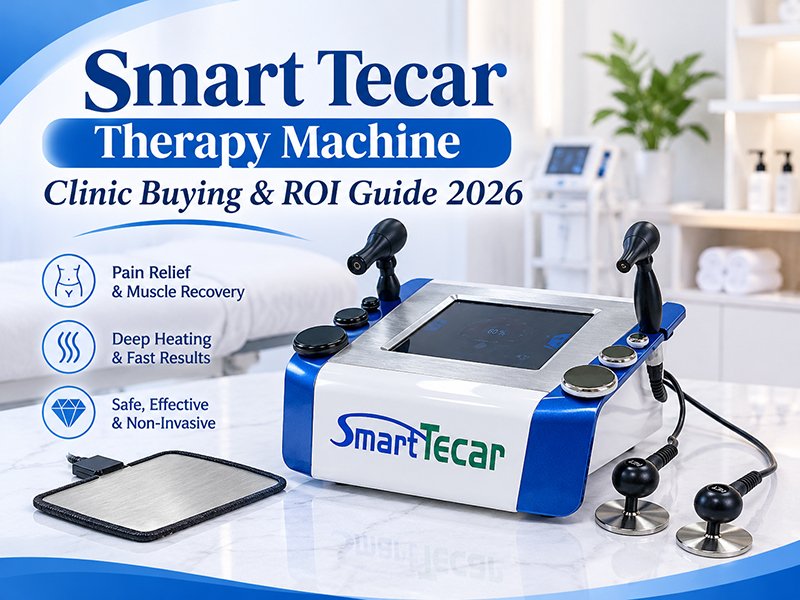
- Smart Tecar therapy uses capacitive and resistive energy transfer at 300–448 kHz to produce controlled endogenous heating through tissue resistance.
- CET is designed for more superficial, water-rich soft tissue and is specified for approximately 3–4 cm working depth; RET is intended for higher-resistance structures and is specified for approximately 8–10 cm.
- The MNLT Smart Tecar platform provides up to 300W maximum output, with 250W practical output for professional treatment planning.
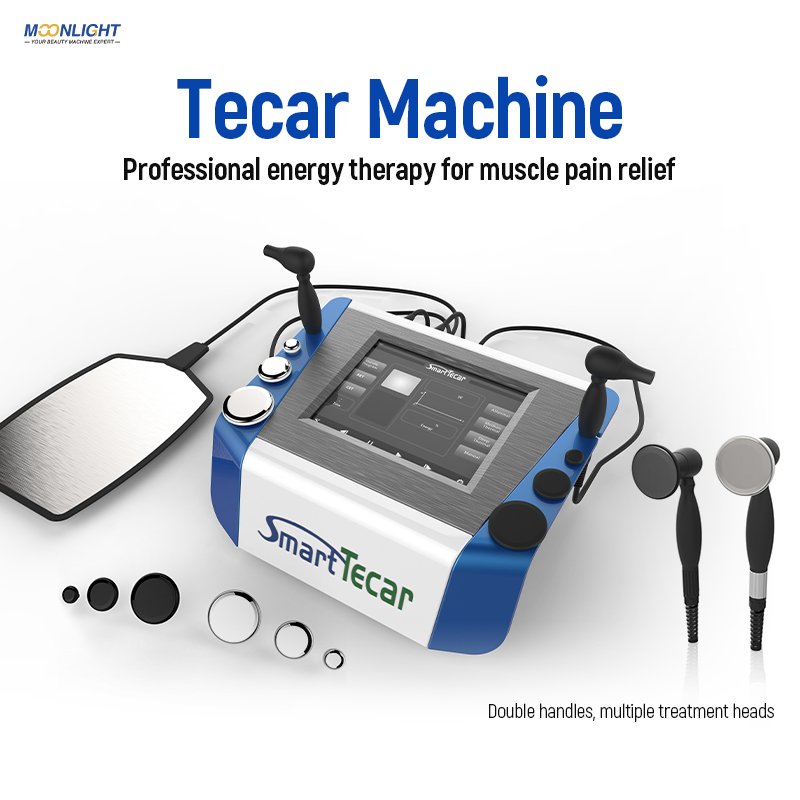
- Interchangeable 20, 40, 60 and 80 mm handpieces allow operators to match electrode size to small joints, localized muscle groups and larger body areas.
- Athermal, medium-thermal and deep-thermal programs support different workflow objectives, but parameter selection must follow patient assessment, practitioner training and local scope-of-practice rules.
- Tecar can support physiotherapy, sports recovery and aesthetic-wellness services without mandatory single-use treatment cartridges; direct costs mainly involve conductive cream, cleaning supplies and practitioner time.
- MNLT Laser has 19 years of professional aesthetic and physical-therapy device manufacturing experience, with factory configuration, OEM/ODM and after-sales engineering support.
A Smart Tecar machine is a professional dual-frequency radiofrequency therapy system that delivers capacitive (CET) and resistive (RET) energy transfer across superficial soft tissue and deeper musculoskeletal structures. The commercial appeal is clear: one system can support therapist-led recovery sessions, muscle relaxation, mobility work, circulation-oriented wellness protocols and selected non-invasive aesthetic services without mandatory disposable treatment cartridges.
The buying decision is less simple. A professional system must give the operator meaningful control over CET and RET modes, power, thermal level, electrode size and treatment feedback. Maximum wattage alone does not determine clinical utility. Tissue selection, electrode contact, movement, return-plate placement, treatment time and practitioner training all influence energy distribution.
This 2026 guide explains the difference between capacitive and resistive transfer, maps physiotherapy and aesthetic use cases, compares parameter logic, models clinic economics and provides a procurement checklist for evaluating a factory-direct Smart Tecar Machine for clinical practice.
1. How Smart Tecar Therapy Works
Tecar therapy delivers radiofrequency energy through a closed electrical circuit formed by the active electrode, the patient’s tissue and a return electrode. Tissue impedance converts part of the electrical energy into heat within the treatment area. Unlike an external hot pack, the thermal effect is generated through electrical resistance inside the tissue path.
The MNLT platform operates at 300–448 kHz. Within that range, the practitioner selects capacitive or resistive transfer according to the target tissue and treatment objective.
Three variables shape the response: electrical properties of the target tissue, electrode construction (insulated capacitive vs. uninsulated resistive), and operator technique (contact pressure, movement speed, conductive medium, and return-plate position).
The machine offers athermal, medium-thermal and deep-thermal program options. Athermal should not be interpreted as no biological interaction, and deep thermal should not be treated as a universal maximum setting. The appropriate program depends on assessment, treatment stage, tissue response and professional scope.
2. CET vs. RET: Tissue Selection, Depth and Technique
A dual-mode system is valuable because many treatment plans involve both tissue types. A therapist may begin with CET for broader soft-tissue preparation and then select RET for a more localized deep structure. The sequence and settings should come from training and assessment rather than a fixed marketing protocol.
CET: Capacitive Energy Transfer
CET uses an insulated active electrode. The insulated surface creates a capacitive effect, with energy concentrating more strongly in water-rich, better-conducting tissue beneath the electrode. It is typically selected for muscle, superficial soft tissue, circulation-oriented work and areas where a more moderate thermal sensation is appropriate.
The published working depth is approximately 3–4 cm. This figure describes intended treatment reach under specified conditions; it is not a promise that every tissue layer receives identical energy. Electrode size, contact quality and anatomy change the distribution.
RET: Resistive Energy Transfer
RET uses an uninsulated conductive electrode. Energy follows tissues with greater electrical resistance and is intended to reach deeper structures such as tendons, ligaments, joint regions and tissue near bone. The published working depth is approximately 8–10 cm.
RET requires careful contact and movement. High resistance does not mean the operator should automatically choose high power. Localized heat can rise quickly over bony or low-padding areas, so practitioner feedback and patient sensation remain important.
| Comparison Point | CET: Capacitive Transfer | RET: Resistive Transfer | Buyer Verification |
|---|---|---|---|
| Active electrode | Insulated capacitive electrode | Uninsulated conductive electrode | Confirm included electrodes and coating quality |
| Primary tissue logic | Water-rich muscle and softer superficial tissue | Higher-resistance tendon, ligament, joint and peri-bone regions | Request mode-specific operator training |
| Specified working depth | Approximately 3–4 cm | Approximately 8–10 cm | Treat depth claims as planning specifications, not uniform-dose guarantees |
| Typical sensation | Broad, comfortable warmth when applied correctly | More focused deep warmth; varies with anatomy | Test smooth adjustment and patient-feedback workflow |
| Common professional context | Muscle preparation, relaxation and soft-tissue work | Deeper musculoskeletal and joint-oriented work | Match modes to practitioner qualifications and service menu |
| Main technique risk | Excess dwell time or poor conductive contact | Localized heat over high-resistance or bony areas | Verify warnings, presets and emergency stop behavior |
3. Physiotherapy and Rehabilitation Applications
Smart Tecar is designed to complement—not replace—clinical evaluation, manual therapy, exercise prescription or medical referral. Its role is to provide controlled energy transfer within a broader rehabilitation plan.
Sports and Musculoskeletal Recovery
Practitioners may integrate Tecar into programs for muscle tightness, overuse-related discomfort, joint stiffness and recovery after sports activity. The thermal effect can support a treatment environment in which soft tissue is more comfortable to mobilize. Any acute injury, suspected fracture, neurological deficit or unexplained swelling requires appropriate assessment before device use.
Tendon and Joint-Oriented Work
RET is generally selected when the target involves deeper or higher-resistance structures. Electrode size and power should be adjusted for the anatomy. The 20 mm and 40 mm electrodes support smaller or localized regions, while 60 mm and 80 mm options improve coverage over larger muscle groups.
Post-Procedure and Recovery Pathways
Tecar may be incorporated into qualified recovery pathways when the treating clinician considers it appropriate. Timing depends on the procedure, tissue status, wound condition and medical clearance. It should not be applied over active bleeding, untreated infection or other contraindicated conditions.
Clinics developing broader aftercare services can also review the Inner Ball Roller Post-Surgical Recovery Guide 2026 to compare radiofrequency energy transfer with mechanical compression and microvibration workflows.
Assessment and Intake Controls
A structured clinical intake should evaluate presenting complaint, functional limitation, implant and cardiac device history, thermal sensitivity, skin integrity, and circulation. Contraindications and precautions must follow the manufacturer manual and local regulations. Clinics should maintain consistent treatment logs recording energy parameters, electrode sizing, contact time and patient feedback.
4. Physiotherapy vs. Aesthetic-Wellness Parameter Planning
The same hardware can serve two business units, but the treatment goals differ. Physiotherapy usually focuses on movement, discomfort, tissue preparation and rehabilitation goals. Aesthetic-wellness sessions may focus on temporary improvement in tissue appearance, massage support, circulation-oriented care or non-invasive facial and body maintenance.
| Planning Variable | Physiotherapy / Rehabilitation | Aesthetic / Wellness | Operational Control |
|---|---|---|---|
| Primary objective | Support mobility, soft-tissue work and recovery planning | Support facial/body maintenance and tissue-appearance services | Define scope and consent clearly |
| Mode emphasis | CET, RET or a sequenced combination by tissue target | Often CET-led for superficial soft tissue; RET only when trained and appropriate | Do not copy one protocol across services |
| Thermal level | Athermal, medium or deeper thermal according to stage and response | Comfort-led low to medium thermal planning is common | Monitor sensation and tissue response continuously |
| Electrode sizing | 20/40 mm for localized structures; 60/80 mm for larger muscle groups | Smaller sizes for face/local zones; larger sizes for body coverage | Match electrode area to anatomy |
| Outcome monitoring | Pain scale, range of motion, function and therapist findings | Standardized photography, circumference or service-specific observations | Use consistent measures and intervals |
| Who should operate | Qualified rehabilitation professional under local rules | Appropriately trained aesthetic professional within local scope | Verify licensing before adding the service |
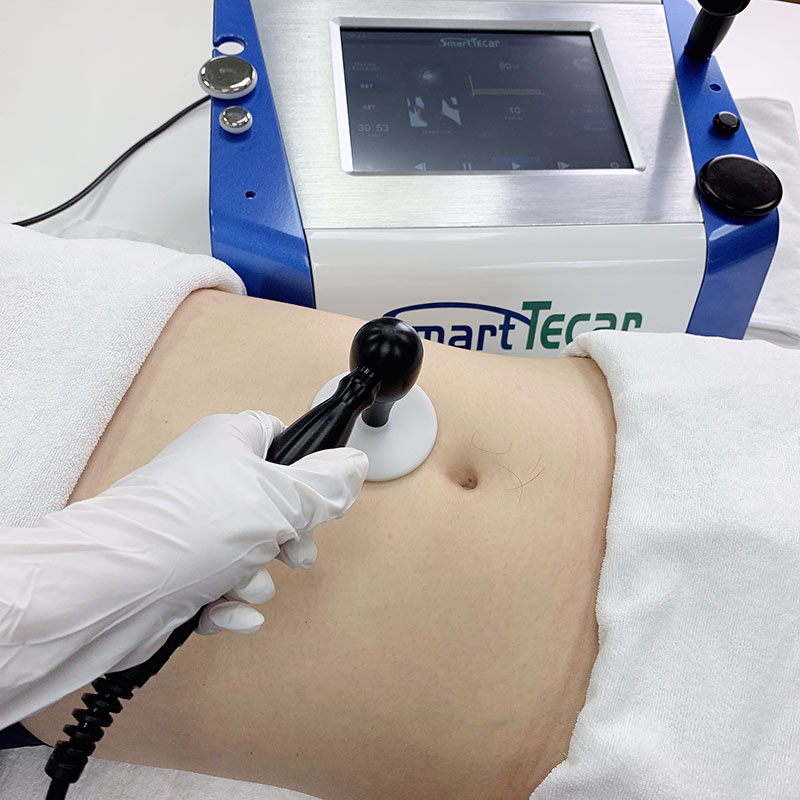
5. Hardware Specifications That Matter in Daily Practice
The MNLT Smart Tecar platform is specified with 300–448 kHz RF frequency, up to 300W maximum output (250W practical professional output), CET and RET dual modes, 20/40/60/80 mm electrode diameters, 10.4-inch LED touchscreen, and OEM/ODM appearance customization.
Maximum wattage deserves context. A 300W rating provides output reserve, but most treatments should not begin or end at maximum. Useful engineering is reflected in smooth low-to-high adjustment, stable output under load, thermal management and repeatable operation across a full clinic day.
During a live equipment demonstration, buyers should verify CET/RET operation with every included electrode size, check low-setting smoothness, test circuit interruption safety responses, and confirm cable strain relief and durability.
6. Clinic ROI, Consumables and Procurement Checklist
Tecar treatment has a relatively simple direct-cost structure because it does not require a single-use treatment cartridge for every session. Typical variable inputs include conductive cream, disinfecting supplies, linens, practitioner labor, payment processing and allocated marketing cost.
Contribution per session = Collected treatment fee − conductive supplies − practitioner labor − payment fees − allocated acquisition cost.
| Illustrative Variable | Conservative Start | Established Clinic | Mixed Rehab + Wellness Model |
|---|---|---|---|
| Paid sessions per month | 30 | 70 | 110 |
| Average collected fee | $75 | $95 | $110 |
| Illustrative direct cost per session | $28 | $32 | $38 |
| Monthly treatment revenue | $2,250 | $6,650 | $12,100 |
| Monthly contribution before fixed overhead | $1,410 | $4,410 | $7,920 |
| Equipment payback formula | Landed equipment investment ÷ monthly contribution before fixed overhead | ||
These are planning examples, not revenue promises. Replace every input with the clinic’s actual price, payroll, taxes, utilization and landed equipment cost. Include training, downtime, warranty exclusions and financing when calculating payback.
Explore the broader range of Physical Therapy Beauty Machines when comparing Tecar with shockwave, ultrasound and other recovery modalities.
Direct Factory Quotation & Technical Support (CET / RET Configurations)
Looking to equip your clinic or distribute MNLT Smart Tecar machines? Speak directly with our engineering and export team on WhatsApp for factory pricing, electrode configurations, OEM customization and CE documentation.
7. Why Source Smart Tecar from MNLT?
Shandong Moonlight Electronic Technology Co., Ltd. has 19 years of professional aesthetic and physical-therapy device manufacturing experience. The MNLT factory-direct process supports clinics and distributors with configuration review, OEM/ODM, production inspection and after-sales engineering rather than a generic reseller package.
Before production, buyers can confirm electrical standard, interface language, logo application, program requirements and accessory list. The Smart Tecar is packed in a protective aluminum case for international transport, and the support process includes operating materials, remote guidance and replacement-part coordination according to the written order terms.
For a reliable purchase, compare suppliers on evidence: model-matched certificates, complete accessory lists, functional test records, training scope and warranty response. A lower quotation has limited value if it omits electrodes, cables, service or shipping responsibilities.
FAQ: Buying and Using a Smart Tecar Machine
What is the practical difference between CET and RET?
CET uses an insulated electrode and is generally selected for water-rich muscle and softer tissue at a specified working depth of about 3–4 cm. RET uses an uninsulated electrode and is intended for higher-resistance, deeper structures such as tendons and joint regions, with a specified working depth of about 8–10 cm. Actual energy distribution varies with anatomy, contact and settings.
Is 300W required for every Tecar treatment?
No. The 300W figure is the maximum output rating, while the platform specifies 250W practical output. Appropriate power depends on mode, electrode size, target tissue, thermal objective, treatment time and patient feedback. Professional value comes from stable adjustable output, not routine use of the maximum.
Which electrode sizes are included and how are they selected?
The Smart Tecar configuration supports 20, 40, 60 and 80 mm sizes. Smaller electrodes suit localized anatomy and small joint regions, while larger electrodes improve coverage over broad muscle groups and body areas. Confirm the exact included CET and RET accessories in the written quotation.
Can one Smart Tecar system support physiotherapy and aesthetic services?
Yes, when each service is delivered by an appropriately trained professional within local scope-of-practice rules. Rehabilitation and aesthetic-wellness services require different assessment, goals, parameter logic, consent and outcome monitoring. Clinics should not reuse one protocol across both departments.
What should distributors verify before placing an OEM order?
Verify model-matched compliance documents, voltage and plug, CET/RET accessory quantities, software language, preset scope, logo and appearance files, packaging, training materials, warranty responsibilities, spare-part pricing and shipping terms. Approve a written specification sheet and interface mock-up before production.
What training and after-sales support should a clinic expect?
A professional package should provide installation guidance, operating and maintenance manuals, CET/RET mode training, contraindication guidance, remote technical support and a written warranty. Buyers should confirm response times, covered parts and who pays international freight for replacement components.
Reviewed by David Ma
CTO & Chief Engineer, MNLT Laser (Shandong Moonlight Electronic Technology Co., Ltd.)
David has 19 years of professional aesthetic and physical-therapy device manufacturing experience. He leads MNLT’s RF generator architecture, CET/RET handpiece integration, production testing and engineering quality control for professional clinic and distributor systems.