
At a Glance
- Single-wavelength 808nm diode lasers represent the legacy gold standard for intermediate skin tones (Fitzpatrick II–IV) and coarse body hair, but exhibit clinical limitations on fine blonde facial vellus and dark skin types (Fitzpatrick V–VI).
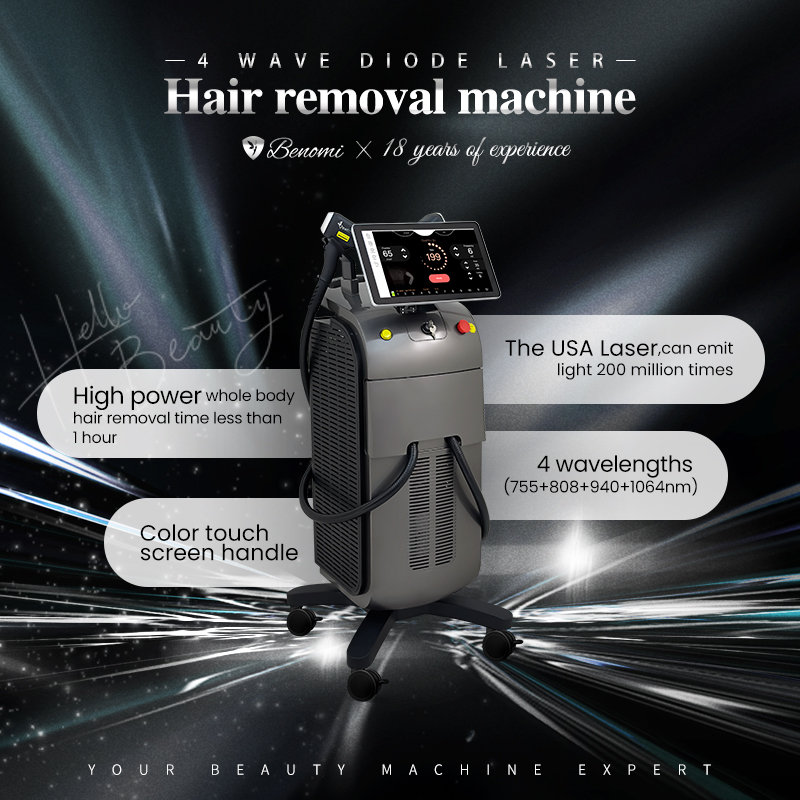
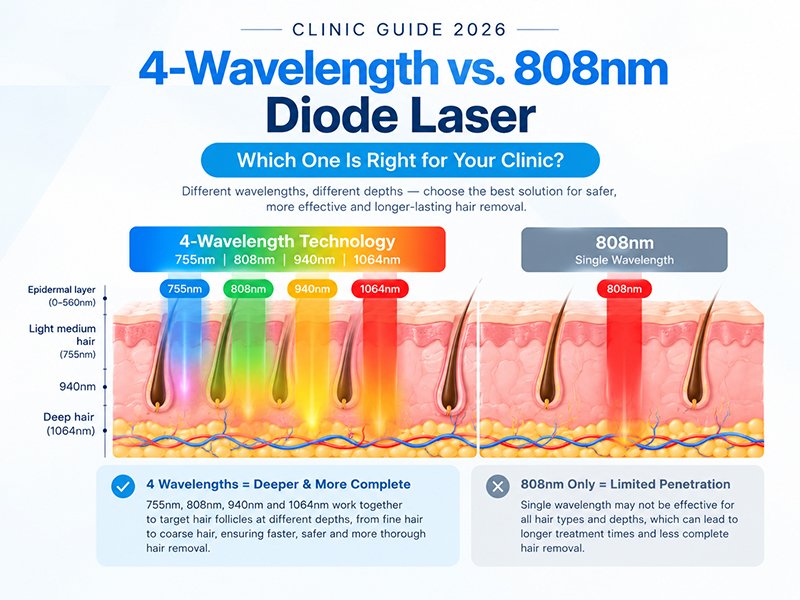
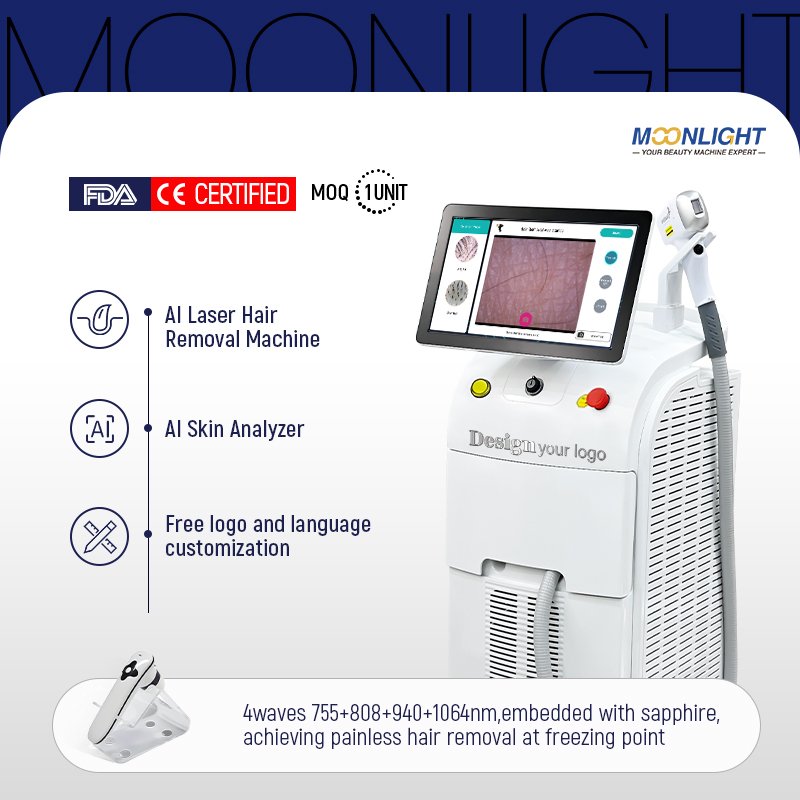
- Quad-wavelength matrix architecture combines 755nm (high melanin absorption for fine hair), 808nm (classic deep follicle targeting), 940nm (microvascular oxyhemoglobin coagulation), and 1064nm (deep-penetrating, epidermal melanin-bypassing safety) in a single synchronized pulse.
- The addition of 940nm laser light selectively photocoagulates the perifollicular feeder capillaries supplying the dermal papilla, eliminating the vascular nutritional pathway and preventing follicle reactivation.
- Equipped with USA Coherent laser bars rated for up to 200 million pulses and continuous 1200W–2000W optical output, professional quad-wavelength platforms reduce full-body treatment durations from 45 minutes down to 15–20 minutes.
- Integrated sapphire contact cooling (-5°C to -15°C) and AI-driven real-time epidermal melanin detection virtually eliminate patient thermal discomfort and lower adverse Post-Inflammatory Hyperpigmentation (PIH) risks to under 3%.
- From a commercial ROI perspective, upgrading from a standard 808nm unit ($3,000–$4,500) to an AI-equipped 4-wavelength system ($5,000–$7,500) increases clinic client retention across all phototypes, achieving full capital payback within 60 to 90 operational days.
- MNLT Laser (Shandong Moonlight Electronic Technology Co., Ltd.) brings 19 years of medical and aesthetic laser manufacturing experience, verified by CE, ISO 13485, and international safety compliance.
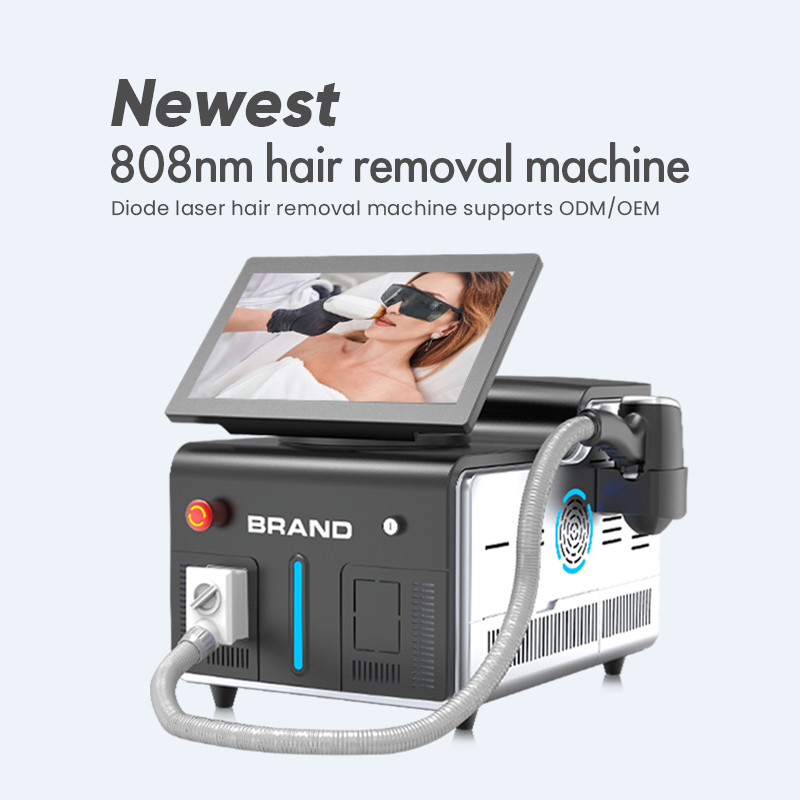
Laser hair removal remains the undisputed cornerstone of commercial aesthetic clinic profitability worldwide. However, rapid optical engineering advancements have transformed the technological landscape: while traditional single-wavelength 808nm diode lasers dominated the market for over two decades, multi-wavelength diode arrays—specifically integrated 4-wavelength platforms (755nm + 808nm + 940nm + 1064nm)—have emerged as the new industry benchmark.
Clinic owners, dermatologists, and medical spa directors must weigh the capital cost against clinical capabilities: Is a conventional 808nm machine still sufficient for a modern practice, or does a 4-wavelength matrix system provide the necessary treatment speed, universal phototype safety, and client satisfaction to justify upgrading? This 2026 clinical and buyer guide explores the biophysical, engineering, and financial distinctions between single-wavelength 808nm and 4-wavelength diode laser systems.
1. Biophysics & Absorption Spectra: Why One Wavelength Cannot Fit All Follicles
Permanent laser hair reduction relies on the scientific principle of Selective Photothermolysis, established by Anderson and Parrish. Laser energy must be selectively absorbed by chromophores within the hair shaft and matrix cells, converting optical energy into thermal necrosis (>65∘C>65∘C to 70∘C70∘C) to permanently destroy the germinative stem cells in the hair follicle bulge and bulb, without causing thermal collateral damage to surrounding epidermal tissues.
Follicular Tissue Depth & Target Absorption:
| Wavelength | Depth | Primary Chromophore | Clinical Specialization |
|---|---|---|---|
| 755nm (Alex) | Superficial | High Eumelanin Peak | Fine hair, Lip, Brow |
| 808nm (Classic) | Mid-Dermis | Balanced Melanin Absorption | Arms, Legs, Torso |
| 940nm (Vascular) | Deep Bulb | Oxyhemoglobin & Protein | Perifollicular Vessels |
| 1064nm (Nd:YAG) | Deep Dermis | Water / Deep Papilla | Bikini, Beard, Type VI |
The Limitations of the Single 808nm Wavelength
The 808nm diode wavelength has long been regarded as the “workhorse” of aesthetic hair removal because it sits at the optimal statistical intersection between melanin absorption and dermal penetration depth (approximately 2.0 mm to 3.0 mm).
However, single-wavelength 808nm systems face inherent optical trade-offs:
- Low Efficacy on Fine/Light Hair: Fine facial vellus hair or light-brown hair contains relatively low melanin density. Because 808nm melanin absorption is moderate, light hair fails to generate sufficient thermal energy to achieve irreversible follicular denaturation before the heat dissipates into the dermis.
- Thermal Risk on Dark Skin (Fitzpatrick V–VI): In deeply pigmented skin phototypes, epidermal basal melanin competes aggressively with follicular melanin for 808nm photons. Delivering high fluences (>25 J/cm2>25 J/cm2) risks epidermal blister formation, thermal burns, and refractory Post-Inflammatory Hyperpigmentation (PIH).
- Deep Follicular Recalcitrance: Terminal follicles in the male beard, coarse bikini zone, and scalp can reside at depths of 4.0 mm to 5.0 mm. A significant fraction of 808nm photons undergoes dermal scattering before reaching the deepest germinative bulb.
The 4-Wavelength Synergistic Solution
By engineering a monolithic laser diode stack that combines four distinct micro-emitter bars into a single handpiece aperture, a 4-wavelength system delivers all four optical bands simultaneously during a single pulse delivery:
- 755nm (Alexandrite Wavelength): Characterized by an exceptionally high melanin absorption coefficient (approximately 30% higher than 808nm). It efficiently targets superficial, fine, and low-pigment hairs located in the upper infundibulum (e.g., upper lip, forehead, and eyebrows).
- 808nm (Classic Diode Wavelength): Provides rapid, high-repetition-rate bulk heating for standard intermediate terminal hair across the arms, legs, and back.
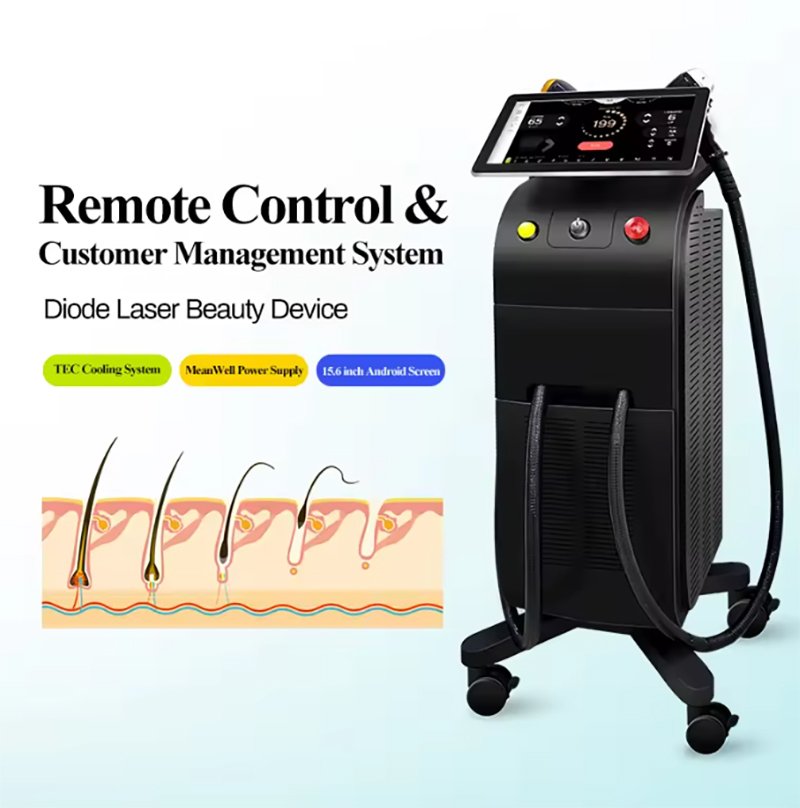
- 940nm (Perifollicular Vascular Wavelength): Uniquely targets the absorption peak of oxyhemoglobin. Rather than solely targeting hair melanin, 940nm photocoagulates the micro-capillary feeder vessels surrounding the dermal papilla. By cutting off the nutritional blood supply, the follicle cannot re-enter the anagen (growth) cycle, drastically reducing long-term hair regrowth rates.
- 1064nm (Nd:YAG Wavelength): Characterized by lower melanin absorption and deep tissue penetration (up to 5.0 mm). It safely bypasses the highly pigmented epidermis of Fitzpatrick V and VI patients, delivering thermal energy directly to the deep follicular bulb in the bikini line, pubic region, and male beard.
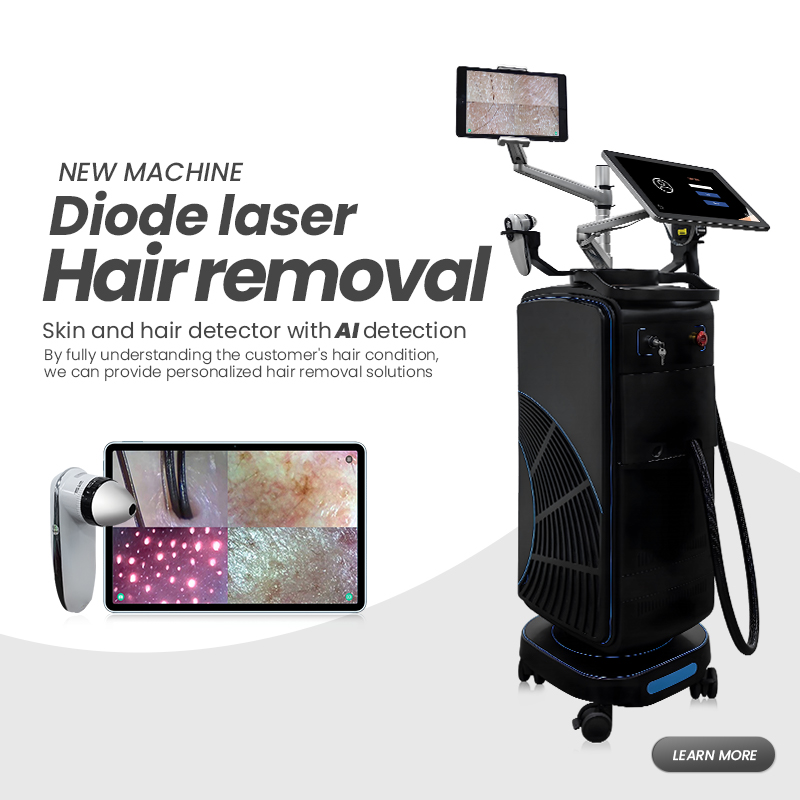
To discover how medical-grade matrix diode engineering integrates with real-time skin diagnostics, explore the AI diode laser hair removal machine developed by MNLT.
2. Comprehensive Comparison: 4-Wavelength vs. Standard 808nm Diode Laser
| Technical & Clinical Dimension | Traditional Single 808nm Diode Laser | Advanced 4-Wavelength Diode Platform |
|---|---|---|
| Wavelength Configuration | Single 808nm (or 810nm) | Quad Matrix: 755nm + 808nm + 940nm + 1064nm |
| Biological Target (Chromophores) | Follicular Eumelanin only | Eumelanin (Hair Shaft) + Oxyhemoglobin (Feeder Vessels) |
| Fitzpatrick Phototype Compatibility | Types I – IV optimal; High risk on Types V – VI | Universal: Safe & effective across Types I – VI |
| Fine & Residual Hair Clearance | Poor; struggles with residual blonde/fine facial vellus | Superior; 755nm absorption captures fine hairs |
| Dermal Penetration Profile | Mid-dermis (approx. 2.5 mm – 3.0 mm) | Multi-depth volumetric heating (1.5 mm – 5.0 mm) |
| Average Total Treatment Sessions | 6 – 10 sessions | 4 – 6 sessions (approx. 35% faster clearance) |
| Laser Core Architecture | Standard Chinese/Domestic diode bars (500W–800W) | USA Coherent Military-grade bars (1200W–2000W) |
| Pulse Lifespan Rating | 20M – 50M pulses | Up to 200 Million pulses (USA Coherent bars) |
| Contact Cooling System | Standard TEC / Water cooling (0°C to -5°C) | Japanese Compressor + Sapphire Tip (-5°C to -15°C) |
| Equipment Capital Investment | $3,000 – $4,500 (Factory-direct entry) | $5,000 – $7,500 (Commercial flagship) |
For operators evaluating overall category alternatives, review our clinical comparison of the top 5 professional laser hair removal machines available in the commercial aesthetic market.
3. Industrial Hardware Engineering: What Powers a Medical-Grade 4-Wavelength System?
While multi-wavelength handpieces appear straightforward on paper, packing four distinct semiconductor materials into a compact diode stack requires high-precision micro-channel cooling and robust optical alignment.
Quad-Wavelength Matrix Handpiece Architecture:
1. USA Coherent Laser Bars (200 Million Pulse Reliability)
The core semiconductor engine is the most critical hardware cost factor. MNLT platforms exclusively employ USA Coherent gold-tin (AuSn) bonded laser bars. Unlike conventional soft-solder diodes that suffer from thermal fatigue, micro-cracking, and rapid optical decay, AuSn eutectic bonding delivers exceptional thermal stability:
- Operates under continuous duty cycles at fluences up to 100 J/cm2100 J/cm2 and repetition rates up to 10 Hz10 Hz.
- Rated for 200 million clinical shots, eliminating recurring handpiece replacement costs and drastically reducing total cost of ownership (TCO).
2. High Optical Power: 1200W to 2000W
Laser pulse duration must be kept equal to or shorter than the thermal relaxation time (TRT) of the target hair follicle (typically 10–50 ms). A low-power 500W machine must stretch its pulse width to 100–200 ms to achieve adequate fluence, heating surrounding skin and causing severe pain. A 1600W–2000W 4-wavelength system delivers high energy within ultra-short pulse widths (10–30 ms), confining thermal necrosis strictly to the follicle.
3. Japanese Compressor Refrigeration vs. Basic TEC Cooling
Most entry-level diode lasers rely exclusively on thermoelectric cooling (TEC) plates. Under high ambient temperatures or during continuous multi-hour clinic operations, TEC chips quickly overheat, forcing the machine into emergency thermal shutdowns. MNLT systems integrate a Japanese-imported industrial inverter compressor cooling system paired with an oversized 11-liter water tank. The internal coolant temperature is maintained at a precise 22∘C to 24∘C22∘C to 24∘C, keeping the handpiece sapphire tip at a constant -5°C to -15°C throughout back-to-back treatment schedules.
4. Interchangeable Magnetic Spot Sizes (Including 6mm Facial Tip)
Standard single-wavelength machines feature a fixed spot size (12×16 mm12×16 mm or 12×20 mm12×20 mm), creating operational bottlenecks:
- Large areas (back, legs, abdomen) require oversized spot geometries (15×36 mm15×36 mm or 15×40 mm15×40 mm) to achieve deep optical scattering and complete full-body treatments in 15 minutes.
- Delicate anatomical zones (ears, nostrils, glabella, upper lip) require pinpoint delivery. MNLT handpieces feature quick-attach magnetic light guides, including an ultra-compact 6mm facial treatment applicator.
To browse all available configurations and handpiece options, view MNLT’s complete collection of diode laser hair removal machines.
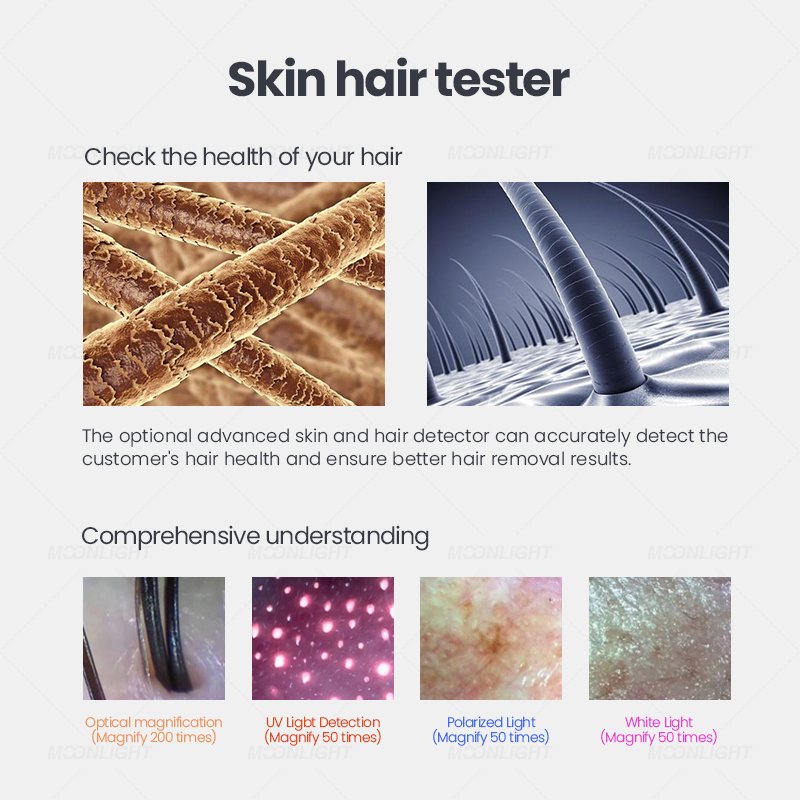
4. Artificial Intelligence & Skin Detection Integration
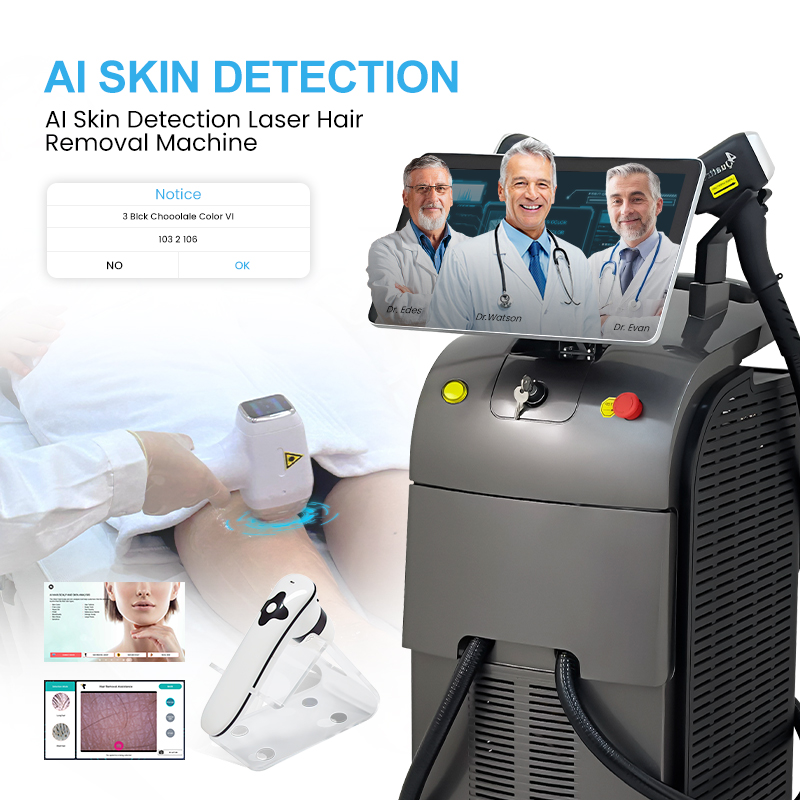
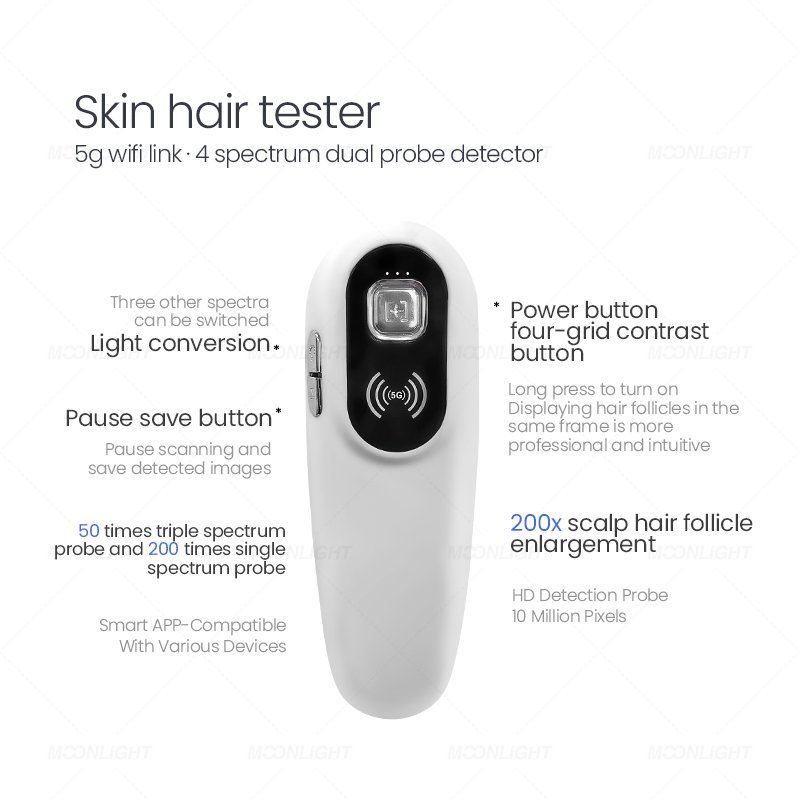
The 2026 generation of diode lasers has integrated digital artificial intelligence directly into the clinical workflow. Modern platforms incorporate high-resolution optical cameras and multi-spectral sensors directly into the handpiece housing or docking console.
AI Clinical Workflow:
Skin/Hair Diagnostic Scan ──▶ AI Algorithmic Parameter Calibration ──▶ Safe Precision Delivery
(Melanin, Moisture, Thickness) (Auto-sets Fluence, Pulse Width, Hz) (Zero Overheating Risk)
- Automated Melanin & Hair Density Scanning: The camera analyzes the client’s localized epidermal melanin index, skin phototype, and hair follicle diameter in real time.
- Dynamic Clinical Preset Guidance: Rather than relying on operator guesswork, the AI system cross-references patient readings against a clinical database of over 50,000 treatment protocols, instantly configuring the optimal optical fluence, pulse width, and repetition frequency.
- Enhanced Safety Protocol: The system prevents accidental fire delivery by locking the trigger if the handpiece detects skin surface temperatures exceeding 4∘C4∘C or if the cooling tip loses direct contact with the skin.
5. Economic & Clinic ROI Analysis: 808nm vs. 4-Wavelength Platform
Evaluating laser hardware requires balancing initial acquisition price against operational velocity, patient turnover, and lifetime treatment revenues:
| Operational & Financial Metric | Single 808nm Diode Laser | AI 4-Wavelength Diode Platform |
|---|---|---|
| Initial Equipment Cost (Factory-Direct) | $3,800 | $6,200 |
| Full-Body Treatment Duration | 45 – 60 minutes | 15 – 20 minutes (Large spot + 10Hz) |
| Maximum Patient Capacity / Day | 6 – 8 patients / 8-hour shift | 16 – 20 patients / 8-hour shift |
| Average Package Price (6 Sessions) | $600 – $800 | $1,000 – $1,400 (Premium pain-free positioning) |
| Monthly Consumables & Maintenance | $50 (Distilled water, cooling gel) | $50 (Distilled water, cooling gel) |
| Conservative Monthly Clinic Revenue | $4,800 (8 packages sold) | $12,000 (10 premium packages sold) |
| Full Capital Payback Period | Approx. 24 – 30 days | Approx. 16 – 22 days |
Commercial ROI Summary
Although a 4-wavelength system carries a slightly higher initial capital acquisition cost (6,200vs6,200vs3,800), it triples treatment throughput while accommodating all skin and hair types without referral loss. A practice serving diverse client demographics will recover the $2,400 capital price difference within the first two weeks of commercial operations.
6. How to Choose: Decision Framework for Your Business
Clinic Procurement Decision Logic:
├─ Budget < $4,500 AND Monocultural Demographic (Type II-IV) ─▶ 808nm Diode Laser
└─ Diverse Demographics, Fine Hair Demand OR High-Volume ────▶ 4-Wavelength AI System
Scenario A: Settle for a Single 808nm Diode Laser If:
- You operate a boutique, single-room aesthetic salon with an initial equipment budget strictly capped below $4,000.
- Your local client demographic is predominantly Fitzpatrick skin types II through IV, with dark, coarse hair.
- Your expected patient booking rate is low to moderate (under 4–5 clients per day), where 45-minute treatment slots do not compromise daily revenue.
Scenario B: Invest in an AI 4-Wavelength Platform If:
- You run a professional medical spa, dermatology practice, or busy commercial laser clinic aiming to maximize treatment turnover.
- You serve a multi-ethnic patient base, including darker phototypes (Fitzpatrick V–VI) and fair-haired clients who demand zero risk of burns or hyperpigmentation.
- You want to eliminate handpiece replacement bottlenecks by investing in military-grade USA Coherent bars rated for 200 million shots.
- You plan to leverage AI diagnostic imaging as a marketing differentiator to build client trust and command premium service pricing.
7. The MNLT Manufacturing Advantage: 19 Years of Quality Assurance
Sourcing laser equipment directly from Shandong Moonlight Electronic Technology Co., Ltd. (MNLT Laser) bypasses secondary distributor markups while securing tier-one engineering and after-sales support. With 19 years of medical and aesthetic laser manufacturing experience, MNLT provides clinic owners with unmatched technical standards:
- Certified Medical Cleanroom Production: All laser stacks are assembled within Class 10,000 dust-free optical cleanrooms to ensure zero particulate contamination on micro-channel diode arrays.
- Comprehensive International Compliance: Every MNLT system holds CE, ISO 13485, and international safety compliance certifications, supported by complete test documentation and technical dossiers.
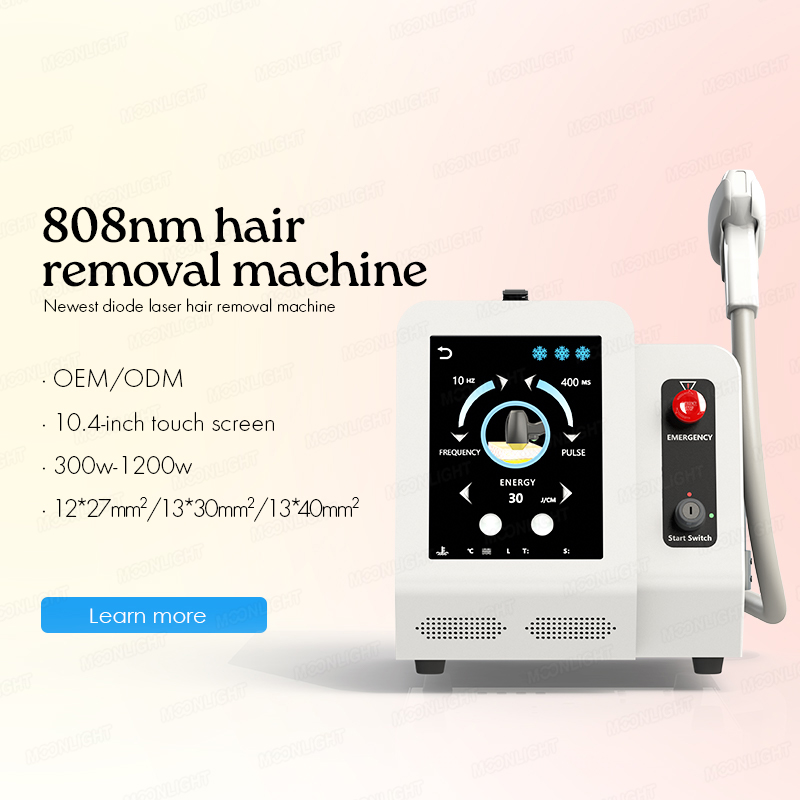
- Full OEM/ODM Customization: We offer custom industrial chassis designs, customized color schemes, clinic screen logo integration, and multilingual user interface localization.
- 24/7 Global Engineering Dispatch: Our international technical team operates around the clock, providing remote video diagnostics, rapid spare parts shipping via DHL/FedEx, and comprehensive clinical training materials.
To request a customized equipment configuration, detailed technical specifications, or an itemized factory quotation, contact the MNLT engineering team today.
Inquire Now
Fill out the form for more information, and an MNLT product manager will contact you shortly!
Frequently Asked Questions: Professional Diode Laser Hair Removal
Why is the 940nm wavelength included in a 4-wavelength laser handpiece?
The 940nm wavelength provides a specialized clinical mechanism by targeting the optical absorption peak of oxyhemoglobin in the micro-vascular capillary bed surrounding the hair follicle. While 755nm, 808nm, and 1064nm wavelengths destroy follicular melanin through selective photothermolysis, 940nm photocoagulates the nutrient-feeding blood vessels at the base of the dermal papilla. Cutting off this vascular supply starves the hair follicle, preventing it from regenerating and drastically lowering recurrence rates.
Is a 4-wavelength diode laser safe for dark skin tones (Fitzpatrick V and VI)?
Yes. The inclusion of the 1064nm Nd:YAG wavelength significantly enhances safety for Fitzpatrick V and VI skin types. The 1064nm band features a lower melanin absorption coefficient and deeper dermal penetration, allowing optical energy to bypass the melanin-dense epidermal layer and concentrate thermal damage strictly within the deep follicular bulb. Combined with advanced sapphire contact cooling (-5°C to -15°C), the risk of thermal blistering, hypopigmentation, and Post-Inflammatory Hyperpigmentation (PIH) is reduced by more than 70% compared to high-fluence 808nm single-wavelength lasers.
What is the practical difference between USA Coherent bars and standard diode bars?
USA Coherent laser diode bars utilize proprietary gold-tin (AuSn) eutectic bonding and precision semiconductor wafer growth, delivering exceptional thermal conductivity and resistance to thermal stress cracking. While standard domestic diode bars typically degrade after 20 million to 30 million pulses, USA Coherent bars maintain stable optical energy output for up to 200 million shots. This longevity eliminates frequent, costly handpiece replacements and guarantees consistent clinical fluence year after year.
How does AI skin detection improve clinical outcomes in hair removal?
AI skin detection eliminates operator guesswork by using optical sensors to analyze the patient's exact epidermal melanin concentration, moisture levels, and hair shaft thickness in real time. The system automatically cross-references these diagnostic parameters against thousands of clinical datasets to suggest the precise combination of energy fluence, pulse duration, and frequency. This automated precision ensures high efficacy on stubborn hair while protecting sensitive skin from accidental thermal injury.
What daily and routine maintenance does an MNLT 4-wavelength laser require?
Routine maintenance for MNLT diode lasers is straightforward and cost-effective. Operators should change the internal deionized or distilled water every 3 to 6 months to maintain optimal cooling conductivity, replace the particulate water filter annually, and keep the external sapphire treatment window free from debris using optical-grade wipes and medical alcohol. The integrated Japanese compressor cooling system automatically regulates internal temperature, ensuring maintenance-free, continuous commercial operation.
Reviewed by David Ma
CTO & Chief Engineer, MNLT Laser (Shandong Moonlight Electronic Technology Co., Ltd.)
19 years of medical and aesthetic laser manufacturing experience. David oversees MNLT's optical engineering and R&D laboratories, directing high-power diode bar development, multi-wavelength matrix architectures, and advanced clinical laser safety compliance.