
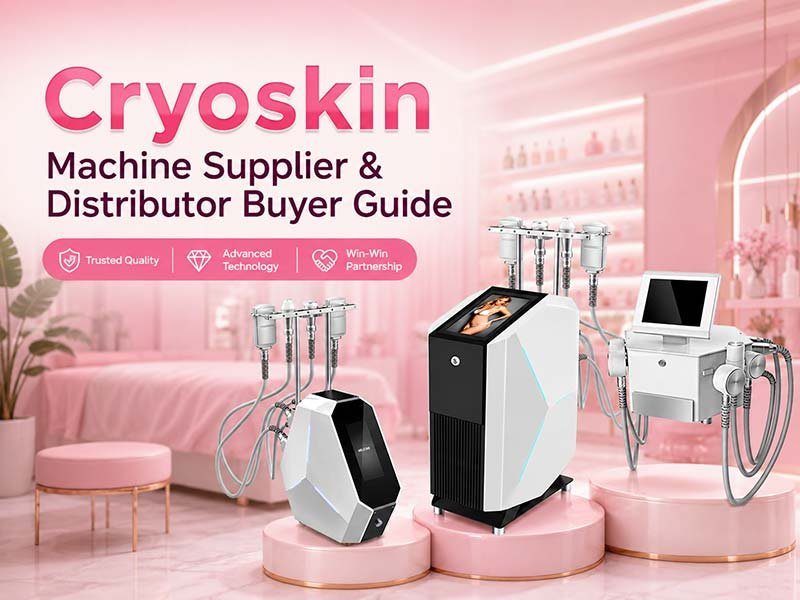
The global non-invasive body contouring market is projected to surpass $11 billion by 2028, and Cryoskin — combining thermal shock fat reduction with skin tightening in a single zero-consumable platform — sits at the centre of that growth. For regional distributors and wholesalers entering or scaling in the aesthetics equipment space, 2026 represents one of the clearest market entry windows in the past decade: clinic demand is strong, branded licensed systems have priced themselves out of the mid-market, and factory-direct sourcing has matured to the point where quality and certification standards are genuinely verifiable.
But the opportunity comes with a sourcing problem. The number of manufacturers claiming Cryoskin capability has expanded faster than the quality of what most of them produce. Distributors who source from the wrong supplier inherit every device fault, every client complaint, and every certification gap their clinics encounter — all of which land on the distributor’s reputation, not the factory’s. This guide gives you the evaluation framework to identify the right Cryoskin machine supplier in 2026, understand the machine types that matter, and build a distribution relationship that generates long-term revenue rather than short-term headaches.
5 Key Factors to Evaluate a Cryoskin Machine Supplier
1. Regulatory Certification — CE, FDA, and MDR
This is the non-negotiable filter. Any Cryoskin machine supplier targeting EU or North American clinic markets must hold verifiable certification — not a certificate image on a product page, but a traceable registration number you can verify through the issuing body’s public database.
What to require:
- CE marking — mandatory for EU market access; the declaration of conformity should specify the applicable directives and notified body
- FDA clearance — for US market placement; verify the 510(k) number in the FDA’s public CDRH database
- MDR compliance — EU Medical Device Regulation; required for devices positioned as clinical-grade in European markets
- ISO 13485 — Quality Management System certification; the global baseline for medical device manufacturing process control
Ask for the certificate number for each credential. A supplier who cannot provide traceable certificate numbers — or who offers to “arrange” certification paperwork — should be removed from your shortlist immediately.
2. OEM/ODM Capability — Private Label for Distributor Differentiation
The majority of successful regional distributors do not sell under the manufacturer’s brand. They build their own clinic-facing brand identity using OEM (manufacturer builds to your spec) or ODM (manufacturer’s existing design with your branding applied) arrangements. This is where your competitive moat comes from.
What a capable Cryoskin machine manufacturer should offer:
- Custom logo, colour scheme, and panel labelling on the device chassis
- Branded packaging and shipping materials
- Localised user interface (language selection, clinic logo on the 10.4-inch touchscreen)
- Custom protocol cards and operator documentation under your brand name
- Minimum order quantities that match your initial market penetration plan
Ask specifically: what is the lead time for OEM customisation, what is the minimum order for branded units, and what design approval process does the factory use? A supplier with genuine OEM capability will have a documented design review workflow — not just a willingness to stick a logo on an existing box.
3. MOQ, Lead Times, and Inventory Flexibility
Distributor cash flow lives or dies on MOQ and delivery schedule alignment. The wrong factory relationship locks capital into slow-moving inventory or leaves you unable to fulfil clinic orders because lead times are unpredictable.
What to establish before signing any purchase agreement:
- Standard MOQ for stock units (non-OEM): what is the minimum for a first order?
- OEM minimum order quantity: typically higher than standard stock — confirm the threshold
- Standard production lead time (order confirmation to warehouse-ready): 15–30 days is typical for an established factory with in-stock components
- OEM lead time (design approval + production): 30–45 days is standard
- Warranty replacement lead time: if a device develops a fault, how quickly can a replacement unit or part reach your market?
- Payment terms: T/T, L/C, and instalment structures all exist in the factory-direct market — confirm what is available at your order volume
A factory that cannot provide specific, written lead time commitments is not operationally reliable enough for distributor-scale sourcing.
4. After-Sales Support and Technical Infrastructure
Your clinics will need help. That is not a pessimistic prediction — it is a certainty. Cryoskin equipment involves electrical, thermal, and software systems that require technical support over a multi-year deployment lifecycle. The question is not whether support will be needed; it is whether your supplier can deliver it.
Minimum after-sales requirements for a distributor relationship:
- 24/7 technical support availability (at minimum, coverage during your market’s business hours)
- Documented troubleshooting library accessible to your support team
- Spare parts availability with committed lead times (applicator heads, cables, control boards)
- Remote diagnostics capability (screen-sharing or video support for software issues)
- Operator training documentation and protocol libraries in English (or your target market language)
- Warranty terms in writing: duration, coverage scope, exclusions, and claim process
Ask the supplier: what happens if a device fails six months after delivery? Walk through the claim process step by step before you commit to a purchase order.
5. Factory Verification — Facility, History, and Reference Accounts
In the factory-direct aesthetics equipment space, the gap between a manufacturer’s marketing presentation and their actual production capability can be significant. Distributors who skip factory verification inherit that gap.
How to verify a Cryoskin machine manufacturer:
- Factory audit: request a virtual or in-person facility tour; a legitimate manufacturer will accommodate this
- Production certifications: ISO 13485 covers the quality management system — ask to see the scope and last audit date
- Component sourcing disclosure: what components are sourced from verified suppliers vs. assembled from spot-market parts? For Cryoskin specifically, the cooling system quality (compressor brand, temperature control precision) is the most performance-critical component
- Reference accounts: request contact details for 2–3 existing distributors in markets similar to yours; speak to them directly
- Years in operation: a manufacturer with less than five years of production history in aesthetics devices carries substantially higher execution risk than an established factory
3 Types of Cryoskin Machines Distributors Should Know
Not all devices marketed as “Cryoskin” use the same technology or target the same clinical application. Distributors need to understand the three primary categories before selecting their product mix.
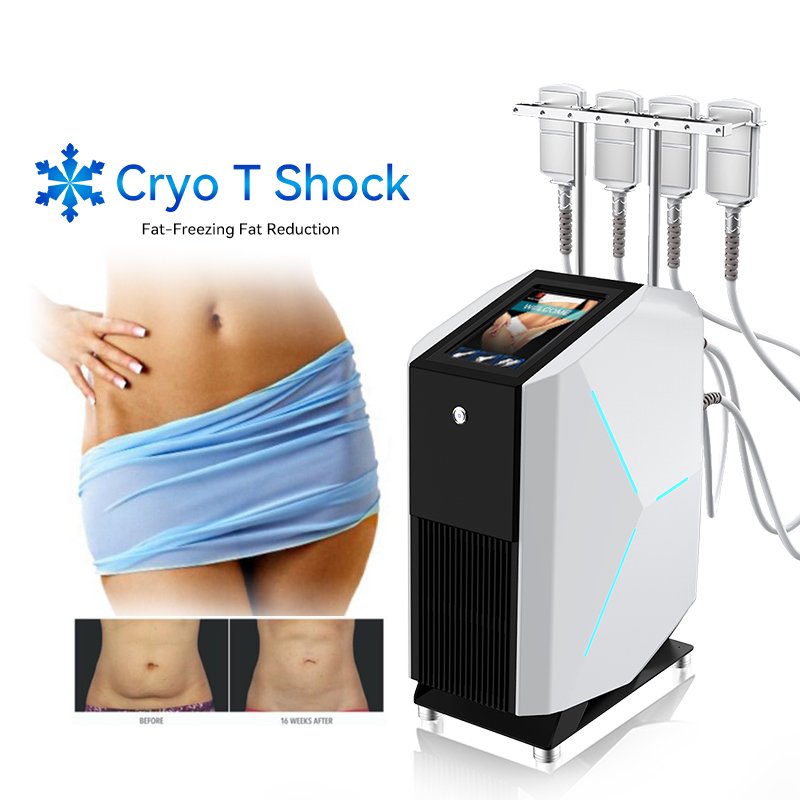
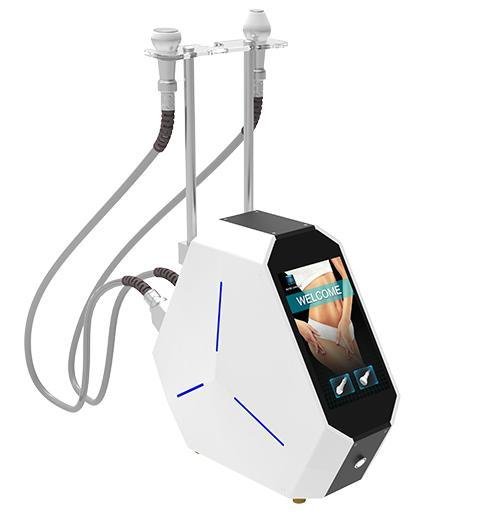
Cryo T-Shock (Thermal Shock — Heat + Cold)
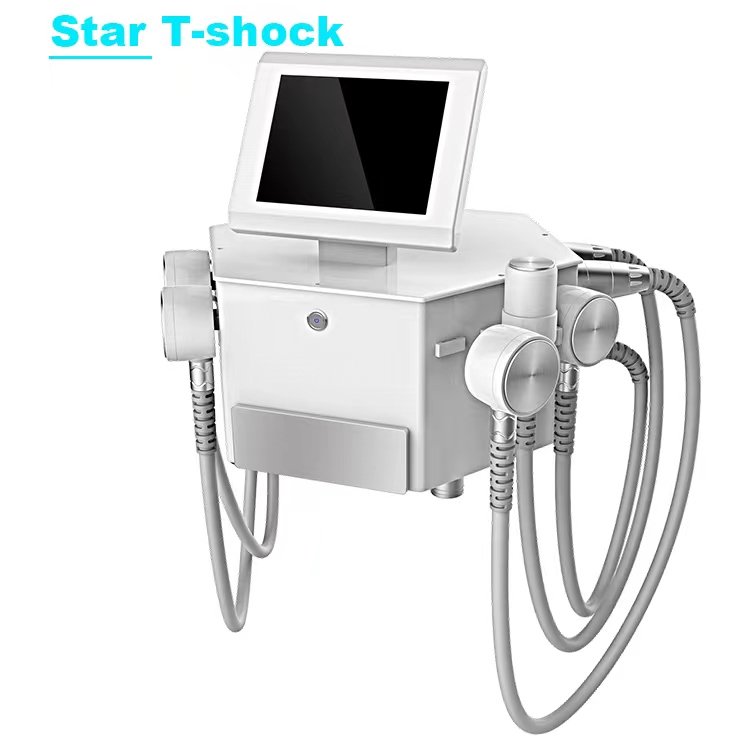
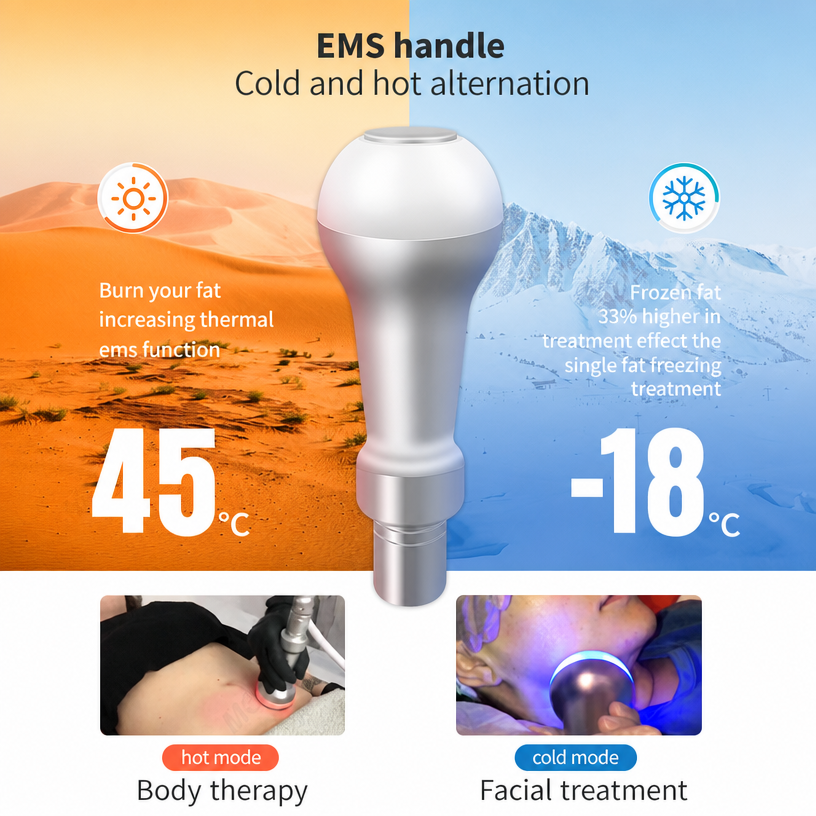
The Cryo T-Shock is the technology that most directly defines the “Cryoskin” category in clinic markets. It combines a manual wand delivering alternating heat (up to 43°C) and cold (down to −10°C) with four static hands-free cryo pads for simultaneous body coverage. The thermal shock mechanism — triggering fat cell apoptosis without suction or compression — is what differentiates Cryoskin from cryolipolysis in clinical positioning and client experience.
Distributor consideration: The Cryo T-Shock’s zero-consumable cost structure and multi-mode capability (body slimming, body toning, skin tightening, facial lifting) make it the highest-versatility single-device option for clinic clients. It is typically the primary product for distributors building a Cryoskin service line from scratch. For a full clinical comparison, see Cryoskin vs CoolSculpting: which slimming machine is right for you.
Cryolipolysis (Static Fat Freezing)
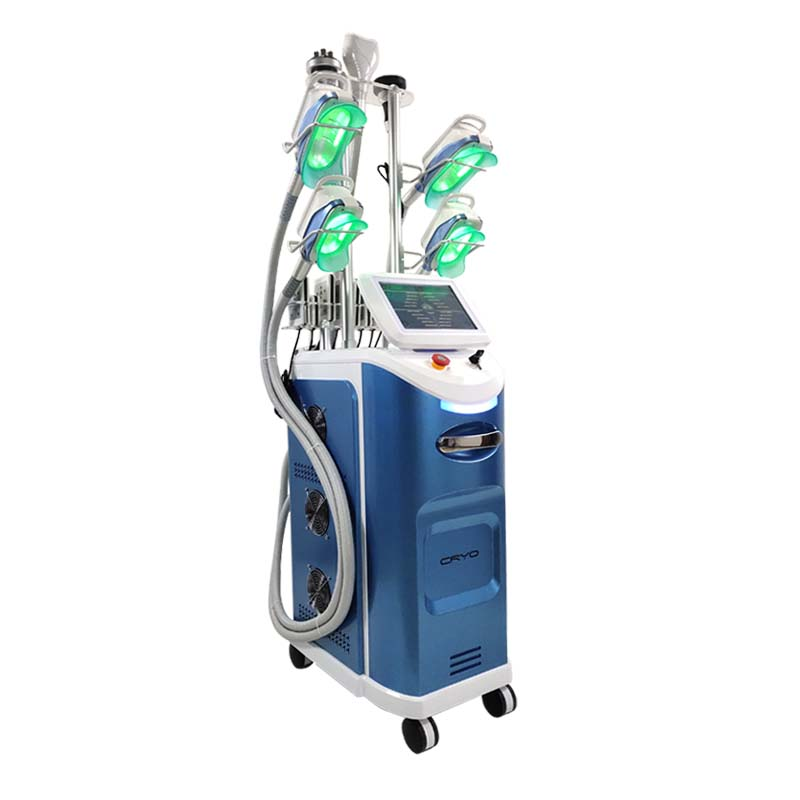
Cryolipolysis uses a vacuum suction applicator to trap a fold of subcutaneous fat and freeze it at approximately −11°C for 35–60 minutes. It is a distinct technology from Cryo T-Shock — static rather than dynamic, suction-based rather than wand-applied, and with a documented risk profile that includes Paradoxical Adipose Hyperplasia (PAH) in a subset of cases.
Distributor consideration: Cryolipolysis has strong brand recognition in the US and UK markets (“fat freezing” is a commonly searched consumer term), which reduces client acquisition cost for the clinics you supply. Factory-direct units without applicator licensing have zero per-session consumable cost. However, distributors should ensure their clinic clients understand the PAH risk and the contraindication profile for suctionable-tissue requirements.
Portable vs. Clinic-Grade Systems
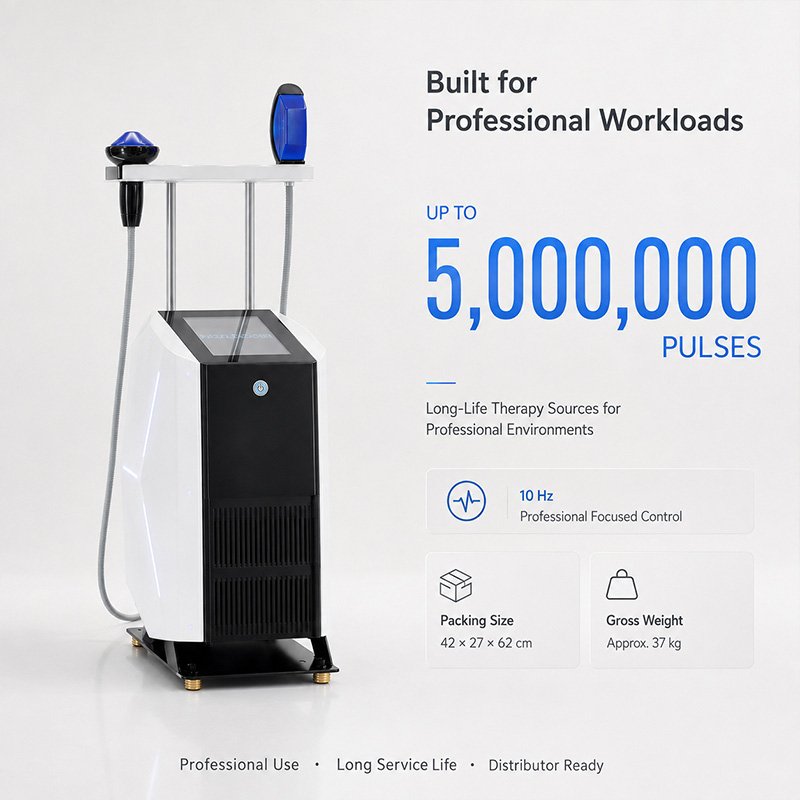
Within both technology categories, equipment exists on a spectrum from portable single-pad systems (lower cost, lower output, appropriate for mobile therapists or entry-level salon deployments) to full clinic-grade multi-applicator systems (higher upfront cost, higher treatment capacity, appropriate for established clinics running multiple sessions per day).
Distributor consideration: Your product mix should match your target clinic profile. A distributor supplying independent beauty therapists needs different specifications than one supplying medical spas and physiotherapy clinics. Source both tiers if your market spans both client types — and make sure the supplier can support the full specification range, not just one end.
Red Flags When Sourcing Cryoskin Equipment
Unverifiable certifications. Any supplier who cannot provide a certificate number traceable through the issuing body’s public database is either uncertified or holding fraudulent documentation. This is a disqualifying condition — not a negotiating point.
Suspiciously low pricing with vague specifications. Factory-direct Cryoskin equipment from an established, certified manufacturer costs 3,500–3,500–8,000 per unit at distributor volume. Offers significantly below this range almost always reflect compromised component quality — particularly the cooling system, which is the most expensive and most performance-critical assembly in a thermal shock device.
No reference accounts. A legitimate manufacturer with a track record in the distributor market will have existing distributor relationships they can reference. A supplier who cannot provide any verifiable reference accounts is either new to the market (higher execution risk) or has had relationships that did not go well (a worse sign).
Slow or evasive responses to technical questions. Ask detailed questions about component sourcing, warranty claim processes, and OEM lead times. A manufacturer with genuine technical depth will answer these precisely and in writing. Vague or delayed responses to specific technical questions indicate either lack of knowledge or lack of willingness to be held to specifics.
No support infrastructure for your market. A supplier with no English-language technical documentation, no time-zone-aligned support window, and no spare parts inventory for your region is a supplier you will be managing yourself when problems arise — which they will.
Why MNLT Is the Preferred Cryoskin Manufacturer for Distributors
MNLT Laser (Shandong Moonlight Electronics Tech Co., Ltd.) has been manufacturing professional aesthetic devices since 2005 — 19 years of continuous production across 120+ countries and 20,000+ clinic clients worldwide. The Cryoskin and body contouring product line is produced in an ISO 13485-certified facility with CE, FDA, and MDR compliance across the portfolio.
What MNLT offers distributors specifically:
- Full OEM/ODM service: custom branding on device chassis, packaging, interface, and documentation — with a documented design review process and sample approval before production
- Flexible MOQ: entry-level distributor orders available without the volume requirements that price out first-time regional partners
- 360° Distributor Support: training documentation, protocol libraries, co-branded marketing materials, and technical support access — structured as a partnership, not a product sale
- 24/7 technical support: global coverage for after-sales issues, remote diagnostics, and spare parts logistics
- Verified reference accounts: existing distributor relationships across Europe, North America, Middle East, and Southeast Asia available for reference on request
U.S. distributor case study: One of MNLT’s strongest ongoing distributor relationships is with a U.S.-based aesthetic equipment company that first visited the MNLT factory in Shandong for an in-person audit before placing any order. Following the factory visit and product evaluation, the distributor committed to a recurring monthly order of approximately $80,000 USD in Cryoskin equipment — a volume maintained consistently across subsequent months, forming one of MNLT’s most stable long-term distribution partnerships in North America. The relationship covers OEM configuration, dedicated after-sales support, and co-branded marketing materials for the U.S. clinic market. Read the full U.S. distributor partnership case on the MNLT website. This is the model MNLT builds with regional partners — not a transactional equipment sale, but a distribution infrastructure investment.
Browse the current Cryoskin machine range to review specifications before requesting a distributor quote.
How to Start Your Cryoskin Distribution Business with MNLT
- If you are evaluating Cryoskin as a new product line for your distribution business, the starting point is a conversation with the MNLT commercial team — not a product catalogue. The distributor onboarding process is designed to establish the right product mix, OEM configuration, and support structure for your specific market before the first purchase order is placed.
What the first conversation covers:
- Your target market (country, clinic tier, existing client base)
- Volume expectations for the first 12 months and expansion trajectory
- OEM branding requirements and timeline
- Certification requirements for your regulatory environment
- Pricing, payment terms, and MOQ at your target volume
What you will receive:
- Full technical specifications and comparison data for the Cryoskin product range
- Sample availability for machine evaluation before full order commitment
- A written commercial proposal covering MOQ, pricing, lead times, warranty, and support terms
Contact the MNLT distributor team to begin the conversation. Response within one business day.
FAQ: Sourcing Cryoskin Machines as a Distributor
What is the minimum order quantity (MOQ) for Cryoskin machines from MNLT?
MNLT offers flexible MOQ structures designed to accommodate both first-time regional distributors and established wholesale partners scaling an existing product line. For standard stock units (non-OEM), the entry MOQ is available at lower volumes suitable for market testing. For OEM/branded units, MOQ is higher to cover customisation costs — the exact threshold depends on your branding specification and product configuration. Contact the MNLT commercial team with your target volume and market profile to receive a written MOQ and pricing proposal specific to your situation.
Does MNLT support OEM branding for Cryoskin machine distributors?
Yes — OEM and ODM customisation is a core part of MNLT's distributor offering. Customisation options include: logo and brand name on the device chassis and packaging, custom colour schemes and panel design, localised user interface (language selection and clinic branding on the 10.4-inch touchscreen), and branded operator documentation and protocol cards. MNLT uses a documented design review and sample approval process before production begins, so distributors can confirm the finished product matches specifications before committing to a full order run.
What certifications do MNLT Cryoskin machines hold?
MNLT Cryoskin machines hold CE marking (EU market access), FDA clearance (US market access), MDR compliance (EU Medical Device Regulation for clinical-grade positioning in European markets), and ISO 13485 Quality Management System certification. All certifications are traceable via the issuing body's public registry — MNLT provides certificate numbers for independent verification upon request. Distributors targeting regulated markets should confirm which specific certifications are required in their jurisdiction before placing an order.
How long does delivery take for a Cryoskin machine wholesale order?
Standard production and delivery lead time for stock Cryoskin units is 15–30 days from order confirmation to warehouse-ready, depending on order volume and current production scheduling. OEM/branded orders require an additional 10–15 days for design approval and customisation, bringing the typical total to 30–45 days. Shipping transit time is additional and varies by destination market and freight method (air freight vs. sea freight). MNLT provides written lead time commitments with each purchase order — confirm these in writing before finalising your order timeline.
How do I become an authorised Cryoskin machine distributor with MNLT?
The distributor onboarding process begins with a commercial conversation — not a catalogue request. Contact the MNLT distributor team with your target market, expected annual volume, OEM requirements, and any specific regulatory or language needs. MNLT will provide full product specifications, sample availability for pre-order evaluation, and a written commercial proposal covering MOQ, pricing tiers, lead times, warranty terms, and support structure. There is no distributor fee or exclusivity minimum for initial onboarding — the relationship structure is agreed as part of the commercial proposal based on your market profile and volume commitment.
Reviewed by David Ma
CTO & Chief Engineer, MNLT Laser (Shandong Moonlight Electronics Tech Co., Ltd.) — 19 years in aesthetic device manufacturing. David leads MNLT's R&D team across the full professional aesthetic device portfolio, ensuring all technical content meets the highest standards of accuracy and clinical safety.