
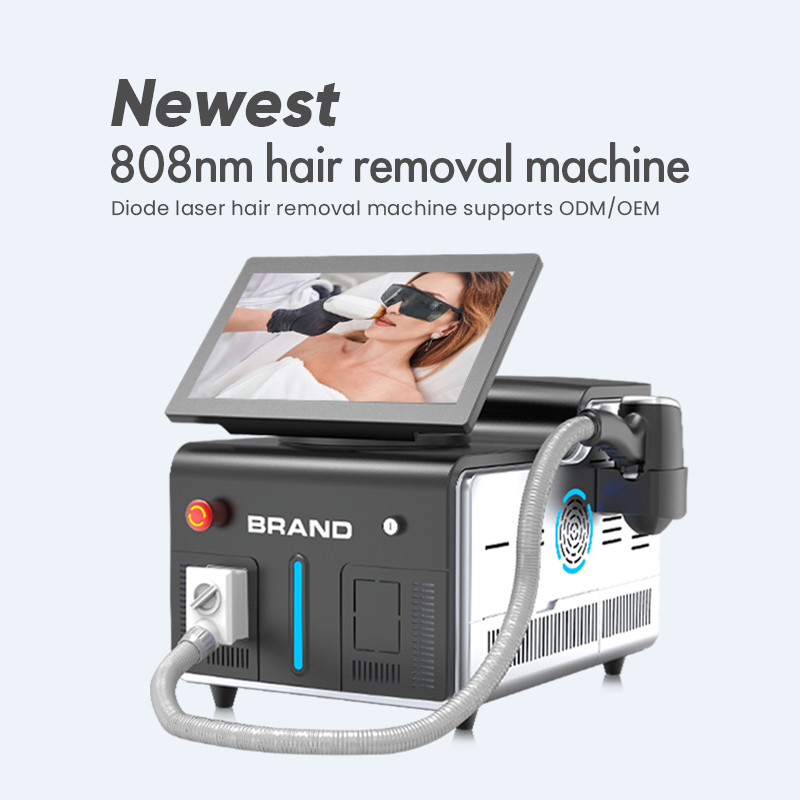
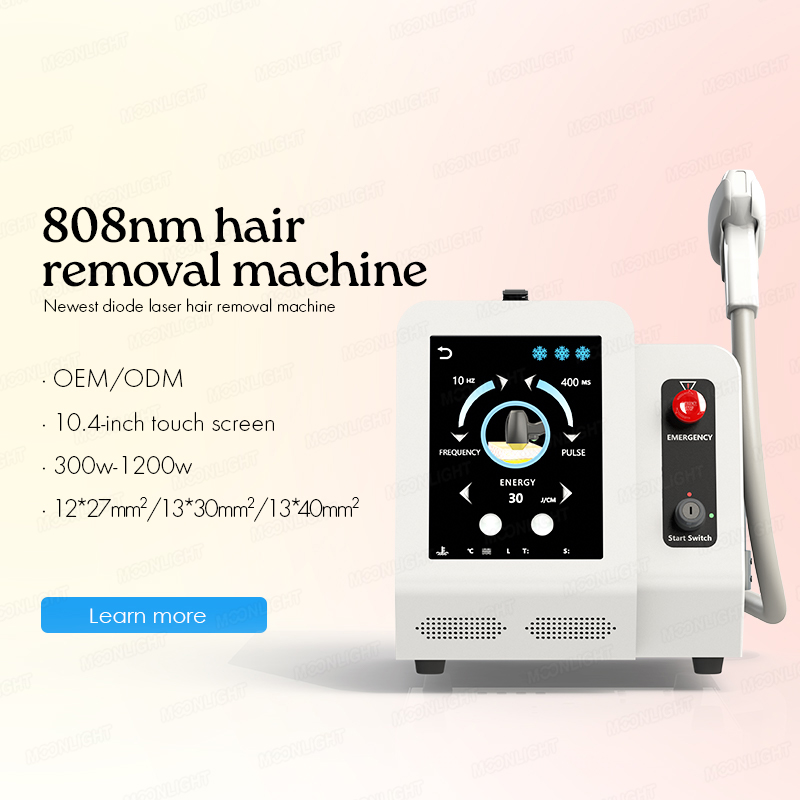
Laser hair removal for dark skin requires fundamentally different equipment decisions than for lighter skin tones. Melanin — the pigment responsible for skin colour — is the same chromophore targeted by hair removal lasers. In clients with Fitzpatrick skin types IV, V, and VI, the epidermal melanin concentration is high enough that incorrect wavelength or insufficient cooling can cause the laser to compete between the hair follicle and the skin itself, risking post-inflammatory hyperpigmentation (PIH), burns, or blistering. This guide is written specifically for clinic owners in the Middle East, South Asia, Southeast Asia, and Sub-Saharan Africa who serve predominantly dark-skinned clientele and need to make evidence-based equipment decisions.
4 Numbers Every Dark-Skin Clinic Owner Must Know
- Fitzpatrick types IV–VI represent an estimated 60%+ of the global population — yet remain underserved by clinics that have only invested in shorter-wavelength laser systems
- 1064nm is the wavelength with the lowest epidermal melanin absorption coefficient, making it the safest primary wavelength for Fitzpatrick V and VI clients
- Contact cooling to ±0.1°C precision is the clinical standard for protecting dark skin epidermal melanin during laser treatment — systems without this specification present elevated PIH risk
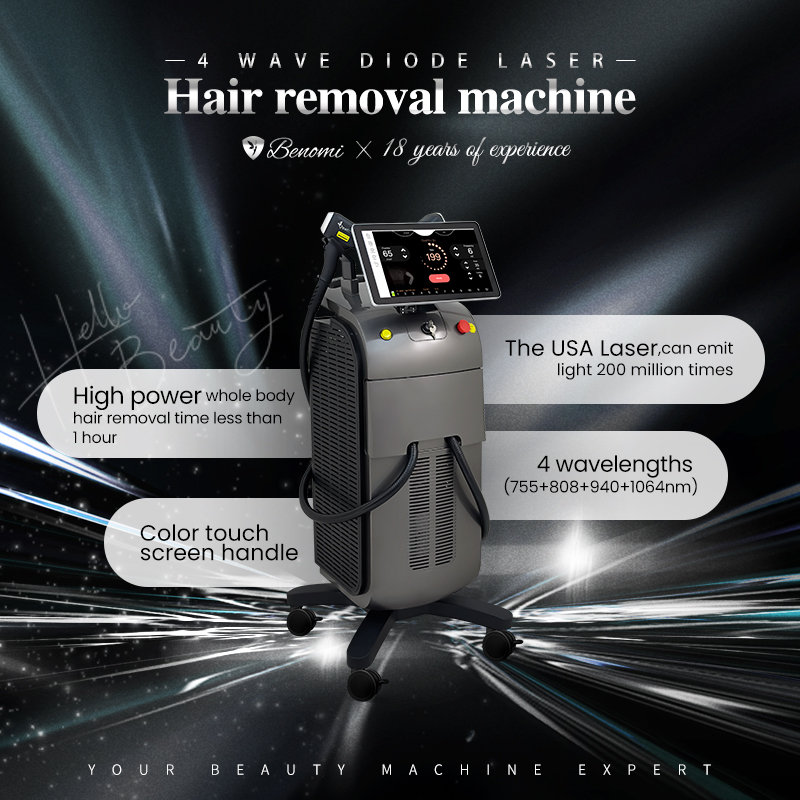
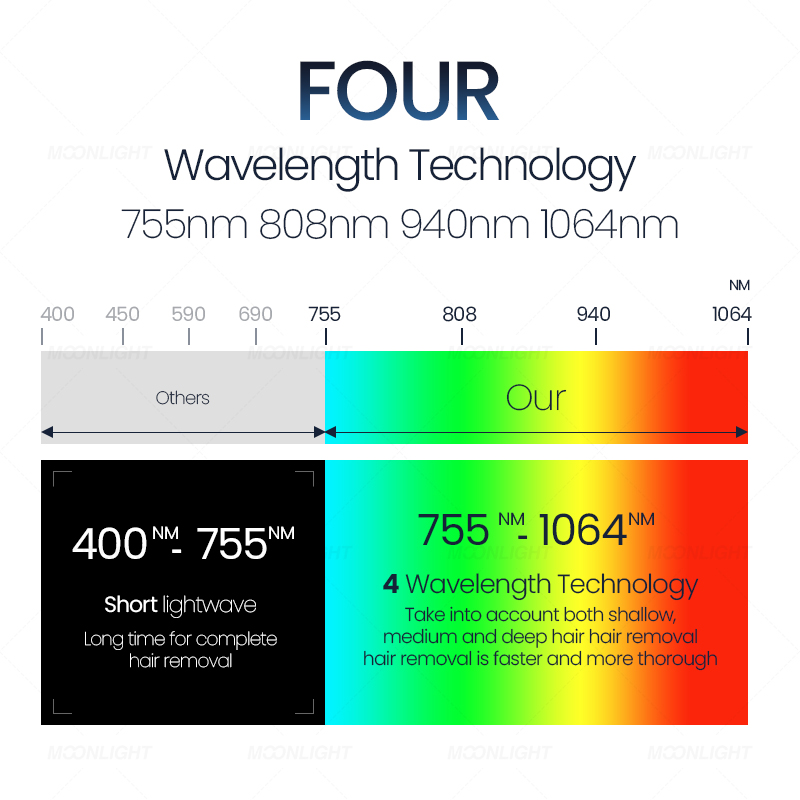
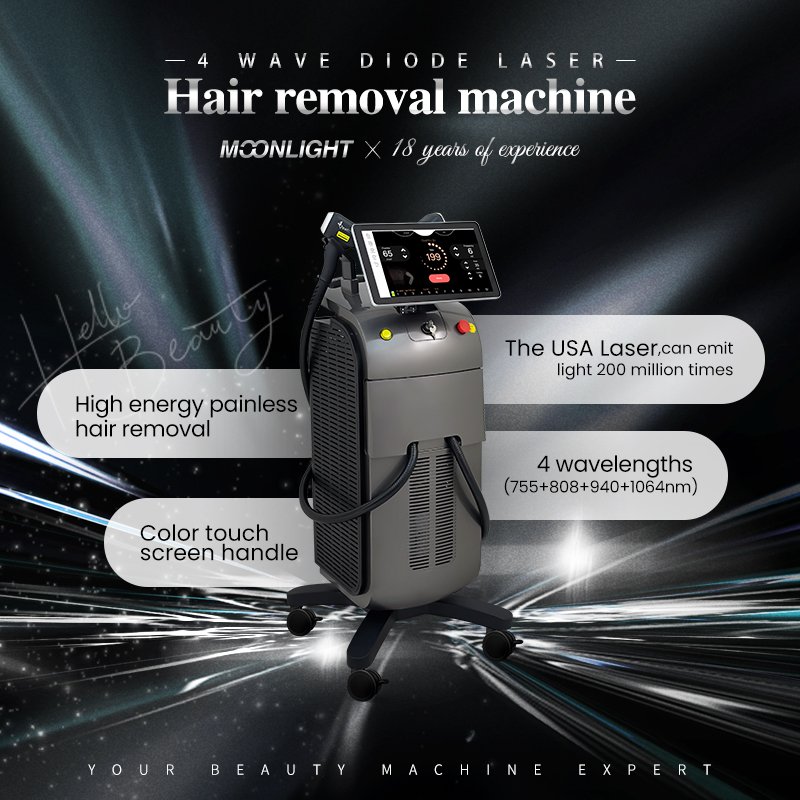
- A 4-wavelength system (755/808/940/1064nm) allows a single clinic device to serve all Fitzpatrick types I–VI safely with per-client wavelength optimisation
Why Skin Tone Matters in Laser Hair Removal
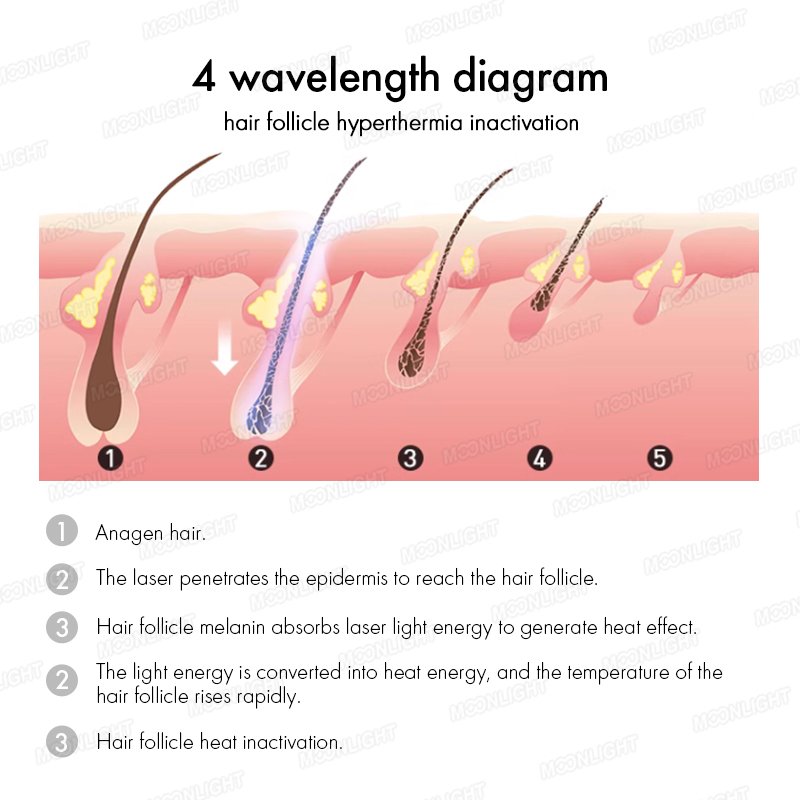
All laser hair removal systems operate on the principle of selective photothermolysis: the laser wavelength is chosen to be preferentially absorbed by the target chromophore (melanin in the hair follicle) while leaving the surrounding tissue unaffected. The fundamental challenge with darker skin is that epidermal melanin — which defines skin colour — absorbs many of the same wavelengths as follicular melanin.
When a laser fires at a dark-skinned client using a wavelength that is strongly absorbed by epidermal melanin, the skin surface absorbs a portion of the energy before it reaches the follicle. This can cause:
- Post-inflammatory hyperpigmentation (PIH): The most common adverse event in dark skin laser treatment — irregular dark patches that can persist for months.
- Transient or permanent hypopigmentation: Loss of colour in treated areas, particularly at higher fluence settings.
- Surface burns or blistering: In severe cases of thermal damage to the epidermis.
These risks are not inherent to laser hair removal itself — they are the result of incorrect wavelength selection or inadequate cooling for the client’s skin type. Properly specified equipment and protocol adjustments make laser hair removal for dark skin safe and highly effective.
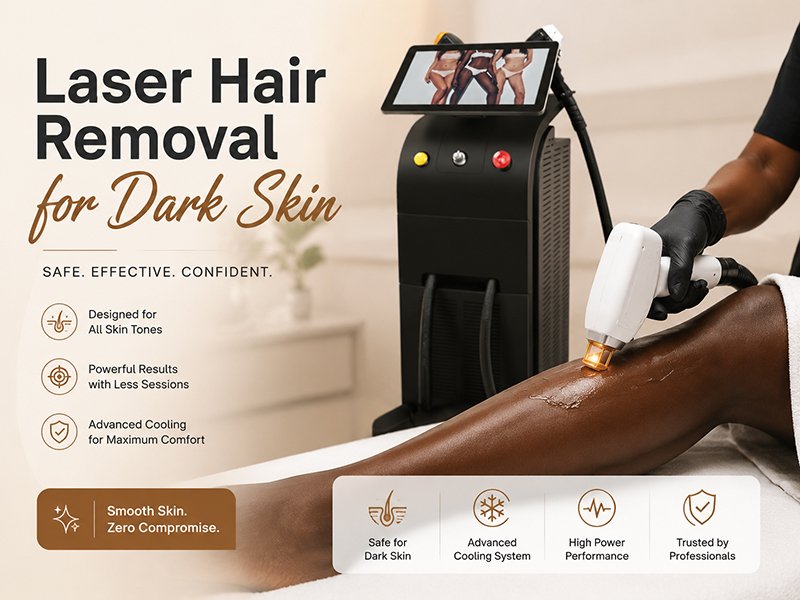
Understanding the Fitzpatrick Scale — How Skin Type Affects Laser Safety
The Fitzpatrick Phototype Classification is the clinical standard for categorising skin’s response to ultraviolet light. For laser hair removal, it directly determines the appropriate wavelength, fluence, pulse width, and cooling parameters.
| Fitzpatrick Type | Skin Colour | Hair Colour | Laser Risk Level | Recommended Primary Wavelength |
|---|---|---|---|---|
| Type I | Very fair, always burns | Blonde/red | Very Low | 755nm / 808nm |
| Type II | Fair, usually burns | Blonde/light brown | Low | 755nm / 808nm |
| Type III | Medium, sometimes burns | Brown | Low-Moderate | 808nm / 940nm |
| Type IV | Olive/light brown, rarely burns | Dark brown | Moderate | 808nm / 940nm / 1064nm |
| Type V | Brown, very rarely burns | Dark brown/black | High | 940nm / 1064nm |
| Type VI | Dark brown/black, never burns | Black | Very High | 1064nm (primary) |
Clinical implication for equipment selection: A clinic serving a predominantly Fitzpatrick V–VI population that has invested only in 755nm Alexandrite or short-pulsed 808nm diode systems cannot safely treat a significant portion of its potential client base. Equipment that covers 940nm and 1064nm is not optional for multi-ethnic clinics — it is a clinical requirement.
Which Laser Wavelength Is Safest for Dark Skin?
The safety of a laser wavelength for dark skin is directly related to its absorption coefficient in epidermal melanin. The lower the absorption at the epidermal level, the deeper the laser penetrates before depositing energy — reducing surface heating and PIH risk.
Wavelength Safety Comparison for Dark Skin
| Wavelength | Technology | Epidermal Melanin Absorption | Penetration Depth | Dark Skin Safety | Notes |
|---|---|---|---|---|---|
| 755nm | Alexandrite | Very High | 1–2mm | ⚠️ Low | Highest PIH risk in FST IV–VI |
| 808nm | Diode | High | 2–4mm | ⚠️ Moderate | Requires careful cooling on FST V–VI |
| 940nm | Diode | Moderate | 3–5mm | ✅ Good | Targets oxyhemoglobin + follicle; reduced epidermal melanin absorption |
| 1064nm | Nd:YAG | Low | 5–7mm | ✅✅ Best | Lowest epidermal melanin absorption; clinical standard for FST V–VI |
Why 940nm and 1064nm Are Safer for Dark Skin
The relationship between wavelength and melanin absorption follows an inverse rule: longer wavelengths are less efficiently absorbed by melanin. At 755nm (Alexandrite), epidermal melanin absorbs approximately 3–4× more energy per unit than at 1064nm (Nd:YAG). This means that for the same delivered fluence, a 755nm laser deposits significantly more energy in the dark epidermis relative to the hair follicle — dramatically increasing the risk surface.
At 940nm, the primary absorption target shifts partially toward oxyhemoglobin in the capillaries supplying the follicle, rather than competing with epidermal melanin. This indirect follicle destruction mechanism, combined with reduced epidermal absorption, makes 940nm an effective and safer wavelength for Fitzpatrick IV clients.
At 1064nm, penetration depth reaches 5–7mm, the energy passes through the melanin-dense epidermis with significantly less absorption, and the follicle is targeted deeper in the dermis where thermal isolation from the surface is greater. A 2022 systematic review published on PubMed (PMID: 28791605) confirmed that safe and effective hair reduction for Fitzpatrick skin types IV–VI is achievable under proper treatment protocols and energy settings — with 1064nm Nd:YAG consistently demonstrating the most favourable safety profile across reviewed studies.
A 2025 clinical study (PMID: 40892306) specifically investigated 1064nm Nd:YAG laser efficacy and safety in 55 Sudanese women with Fitzpatrick types IV, V, and VI — documenting safe and effective hair removal outcomes with low-fluence protocols tailored to the darker skin population.
Both device clearance and wavelength specifications can be independently verified through the FDA 510(k) premarket notification database.
4-Wavelength Systems — The Advantage for Multi-Ethnic Clinics
A clinic serving a mixed ethnic population faces a specific equipment challenge: no single wavelength is optimal for all Fitzpatrick types simultaneously. A machine calibrated for safe Fitzpatrick VI treatment (1064nm primary) is less efficient on Fitzpatrick II clients, where 755nm would achieve faster and more complete follicle destruction.
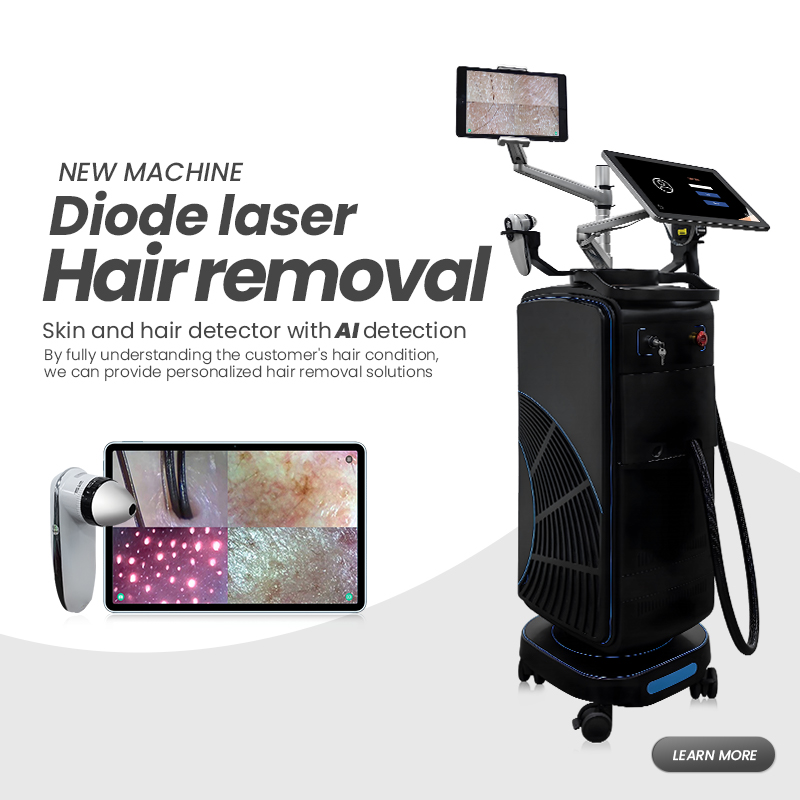
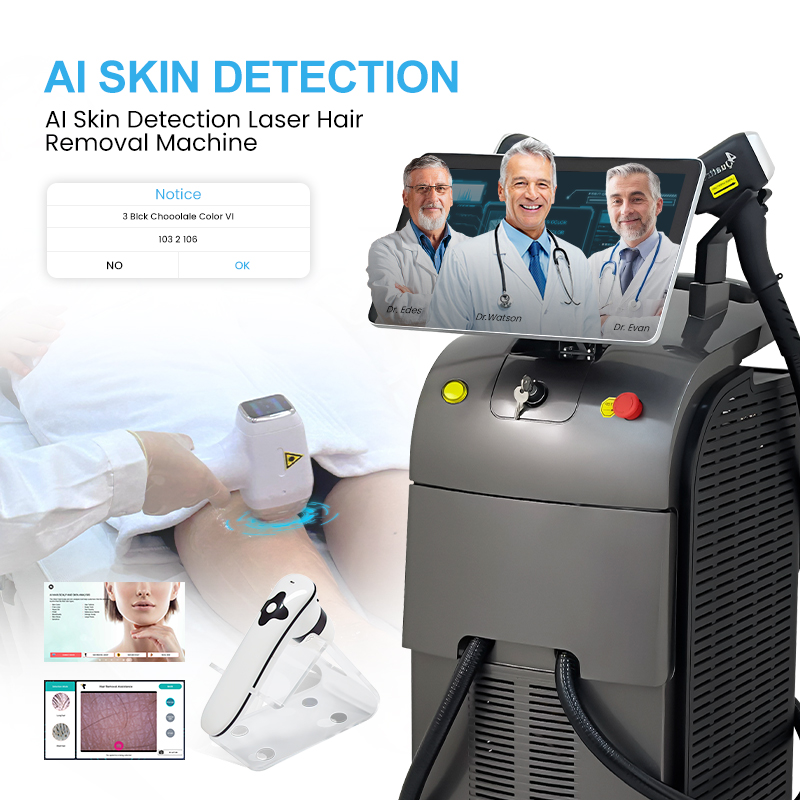
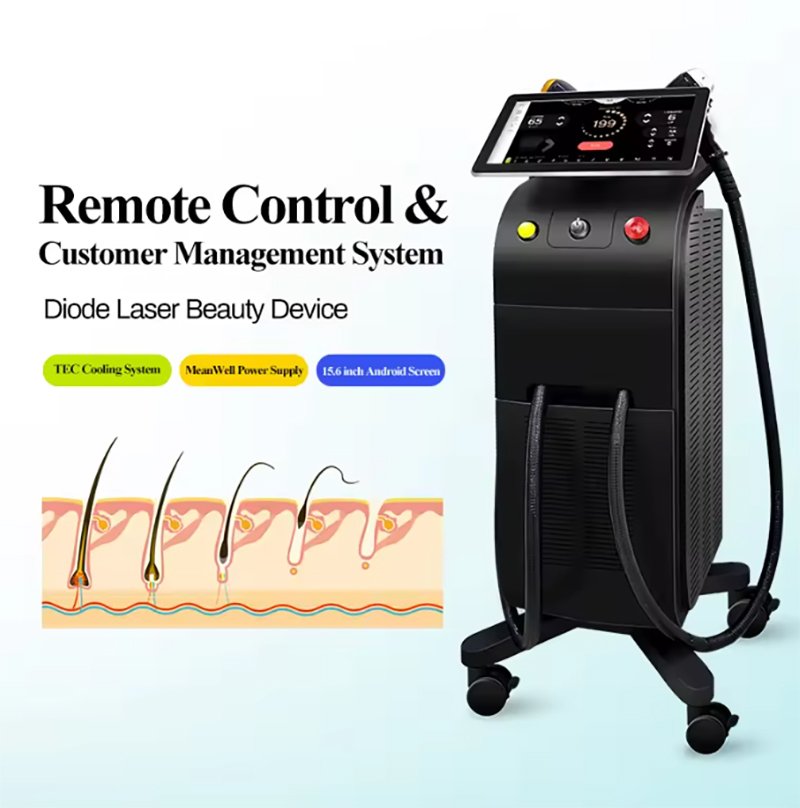
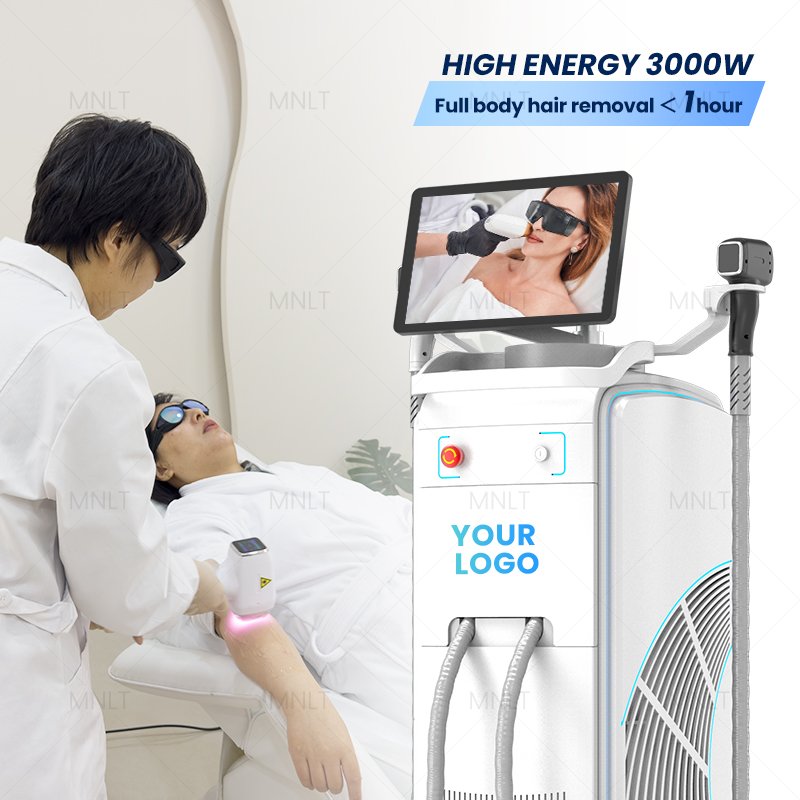
The MNLT 4-Wavelength Diode Laser system (755/808/940/1064nm) solves this directly by integrating all four clinically relevant wavelengths in a single handpiece with an AI-driven skin detection system that selects the appropriate wavelength combination for the detected skin tone in real time.
How the 4-Wavelength Combination Covers All Fitzpatrick Types
| Fitzpatrick Type | Primary Wavelength Used | Secondary Wavelength | Clinical Logic |
|---|---|---|---|
| I–II | 755nm | 808nm | Maximum follicle melanin absorption efficiency |
| III | 808nm | 755nm | Standard diode penetration with minimal PIH risk |
| IV | 808nm + 940nm | — | Dual-mode reduces epidermal load, maintains efficacy |
| V | 940nm + 1064nm | — | Shifts energy to deeper follicle via low-melanin wavelengths |
| VI | 1064nm primary | 940nm support | Maximises epidermal melanin bypass, deepest safe penetration |
This per-client wavelength optimisation is the primary clinical argument for 4-wavelength systems in ethnically diverse markets. A clinic in Dubai, Singapore, Lagos, or Mumbai that serves clients across the full Fitzpatrick spectrum cannot safely deliver optimal results with a single-wavelength diode — regardless of how good that single wavelength is.
Cooling System Requirements for Safe Dark Skin Treatment
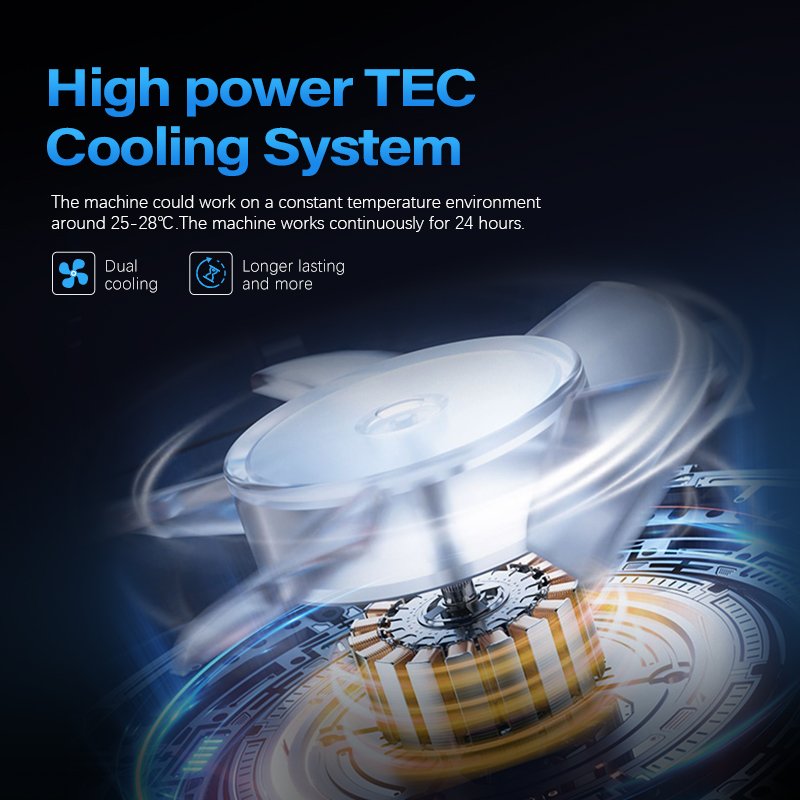
Cooling is not a comfort feature in dark skin laser hair removal — it is a clinical safety mechanism. When a laser fires on dark skin, the epidermal melanin absorbs some energy even at safer wavelengths. Without sufficient pre-cooling and contact cooling during the pulse, this epidermal energy absorption can exceed the tissue’s thermal tolerance threshold, causing PIH or surface damage.
Cooling Precision: Why ±0.1°C Matters
| Cooling System | Temperature Stability | Dark Skin Safety Implication |
|---|---|---|
| Basic air cooling | ±5°C or more | Insufficient — inconsistent epidermal protection |
| Standard contact cooling | ±2°C | Marginal — acceptable for FST III-IV only |
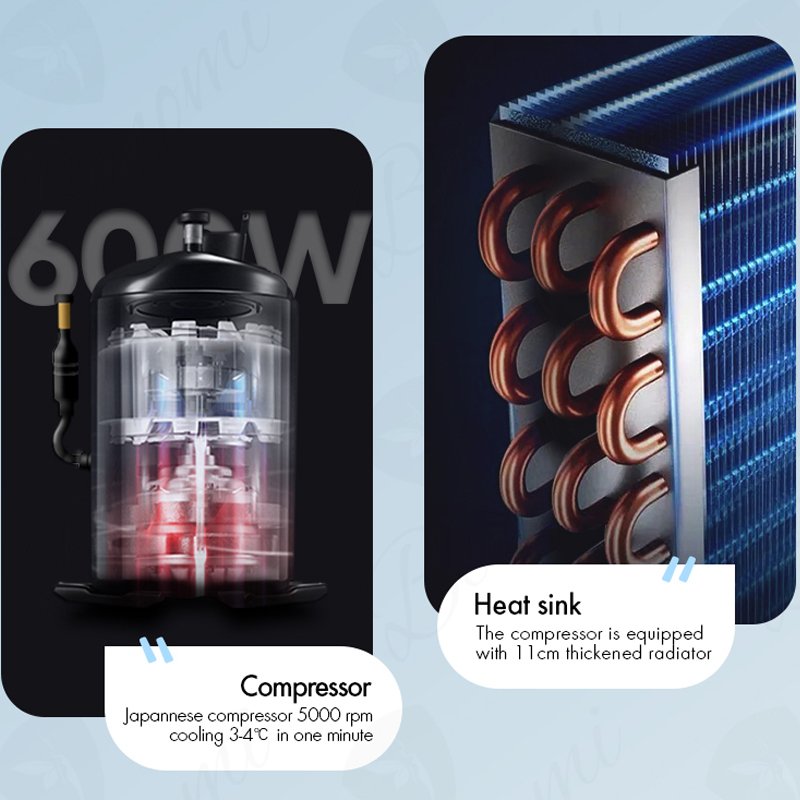
| Japan-manufactured compressor cooling | ±0.1°C | Clinical standard — safe for FST V-VI |
The MNLT OEM/ODM Diode Laser system uses a Japan-imported compression cooling unit that maintains contact-surface temperature to within ±0.1°C continuously. This precision matters because dark skin treatment protocols require the cooling tip to actively extract heat from the epidermis before, during, and after each pulse. A cooling system that drifts by 2–5°C delivers inconsistent epidermal protection — the variability that turns an otherwise safe protocol into a PIH risk.
For clinic owners evaluating equipment: Always request the temperature stability specification in writing, not just “contact cooling” as a category. The difference between ±0.1°C and ±2°C is the difference between a system that can be used on Fitzpatrick VI clients and one that cannot.
Clinical Protocol Adjustments for Fitzpatrick V–VI
Even with the correct wavelength and cooling system, dark skin treatment requires specific parameter adjustments relative to the defaults used for lighter skin types.
Key Parameter Adjustments
Fluence (Energy Density):
- Reduce starting fluence by 20–30% compared to equivalent Fitzpatrick III settings
- Perform a test patch at the nape of the neck or inner arm before the first full session
- Assess the test area at 48–72 hours before proceeding — PIH typically manifests within this window
Pulse Width:
- Use longer pulse widths (40–100ms range for 1064nm on FST VI) to reduce peak tissue temperature while maintaining total energy delivery
- Longer pulses distribute heat more gradually, reducing the risk of thermal spike at the epidermis-dermis junction
Repetition Rate and Fluence Progression:
- Begin at conservative settings (typically 60–70% of the machine’s suggested FST V setting)
- Advance fluence by no more than 10% per session if the client shows no adverse response
- Session intervals for FST V–VI: minimum 6–8 weeks (vs. 4–6 weeks for FST III–IV) to allow complete epidermal recovery
Post-Treatment Protocol:
- Apply broad-spectrum SPF 50+ immediately post-treatment and advise daily use for 4 weeks
- Instruct clients to avoid direct sun exposure for a minimum of 2 weeks post-session
- Schedule follow-up at 72 hours (first session) to document skin response before the next booking
5 Questions to Ask Before Buying a Laser for a Multi-Ethnic Clinic
1. Does the machine include 1064nm as a standard wavelength — not an accessory? For a clinic serving Fitzpatrick V–VI clients, 1064nm capability must be built into the primary handpiece, not available only as a separate applicator purchase. Confirm this before evaluating price.
2. What is the cooling system’s documented temperature stability? Request the ±°C specification in writing. “Contact cooling” without a stated precision figure is insufficient information for dark skin clinical decision-making.
3. Does the AI detection system differentiate between Fitzpatrick types, or does it only detect spot size? A true AI skin detection system should identify melanin index and recommend appropriate wavelength combinations, not simply auto-calibrate for optimal spot size on any skin tone.
4. Is there a test patch protocol documented in the operator manual? Any machine manufacturer claiming suitability for FST V–VI clients must provide documented test patch protocols in their clinical guidelines. Request the operator manual chapter covering dark skin treatment before purchasing.
5. What certifications cover the specific dark skin application? CE, FDA, and MDR clearances establish device safety for general aesthetic use. Ask specifically whether the device’s 510(k) clearance covers all Fitzpatrick types or only specific skin type ranges.
Contact the MNLT clinical team to request detailed dark skin protocol documentation for any MNLT system.
FAQ: What Dark-Skin Clinic Buyers Ask Before Purchasing
Is laser hair removal safe for Fitzpatrick type VI skin in a salon setting?
Can a 808nm diode laser be used on dark skin?
How many laser hair removal sessions do Fitzpatrick V–VI clients typically need?
What is the difference between 940nm and 1064nm for dark skin treatment?
Does a 4-wavelength machine cost significantly more than a standard 808nm diode system?
With 15+ years of expertise in optoelectronic and medical aesthetic engineering, David leads MNLT's R&D team across the full professional aesthetic device portfolio, ensuring all technical content meets the highest standards of accuracy and clinical safety.
Ready to evaluate laser hair removal systems rated for the full Fitzpatrick spectrum? Contact the MNLT technical team for protocol documentation, certified compliance specifications, and factory-direct pricing for multi-ethnic clinic configurations.