

At a Glance
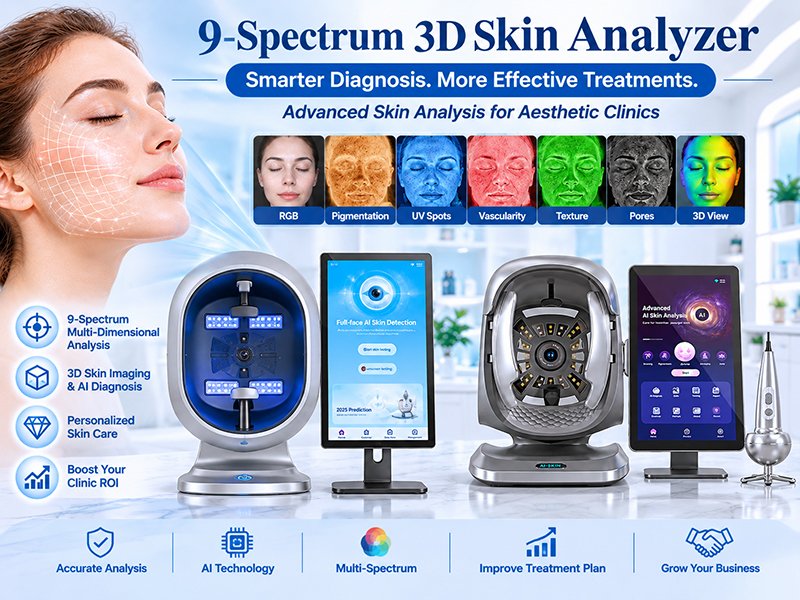
- The 2026 clinical diagnostic standard has evolved beyond basic 3-spectrum RGB/UV imaging to medical-grade 9-spectrum cross-polarized and deep UV analysis, capable of isolating 14 dermal and epidermal subsurface pathologies before they become visible to the naked eye.
- Engineered with an industrial 36-megapixel (36MP) high-definition CMOS sensor and full HD 1920×1080 resolution, the workstation reveals micro-vascular erythema, occult chloasma, porphyrin bacterial colonization, and structural collagen degradation.
- Powered by the high-performance Rockchip RK3566 quad-core Cortex-A55 processor (4GB RAM + 32GB storage) running a customized medical-grade Android OS, providing sub-second multi-spectral cloud and local image processing without subscription latency.
- Features a choice between a 15.6-inch (Pro) and a 21.5-inch (Pro Plus) responsive capacitive touch display, complemented by an integrated macro scalp and hair follicle trichology examination probe.
- Operates on a strictly zero-consumable, non-expendable architecture with encrypted patient digital record archiving, cloud sync, automated before-and-after comparison rendering, and predictive 3D facial aging simulations.
- Direct factory procurement pricing from MNLT Laser starts at just $1,419 (15.6" Pro) to $1,499 (21.5" Pro Plus), providing clinic owners with an accessible consultation asset that achieves full capital breakeven within 10 to 14 clinical operating days.
- Backed by Shandong Moonlight Electronic Technology Co., Ltd. with 19 years of professional aesthetic device manufacturing experience, certified under CE, ISO 13485, and international medical safety standards.
In modern aesthetic dermatology and medical spa practice, patient consultation is no longer just a visual examination—it is a data-driven diagnostic experience. Patients entering a clinic in 2026 are more educated, discerning, and skeptical than ever before. When a practitioner verbally points out early photodamage, dermal dehydration, or sub-surface vascular inflammation, words alone rarely build immediate treatment urgency.
However, when patients view a calibrated, 36-megapixel cross-polarized diagnostic scan revealing hidden chloasma, occult UV damage, and follicular porphyrin fluorescence, skepticism transforms instantly into clinical trust.
The 3D intelligent skin analysis machine has become the single most effective conversion catalyst in professional aesthetic practices. Beyond merely diagnosing skin concerns, it provides quantitative baseline metrics that validate high-ticket laser procedures, chemical peels, hydra-dermabrasion facials, and medical skincare regimens.
This clinical procurement and technical guide examines the biological diagnostic capabilities of the latest 9-spectrum 3D skin analysis workstation, detailing sensor architecture, clinical spectrum differentiation, trichology integration, and concrete financial ROI modeling for medical spas and skincare clinics.
1. Biophysical Principles: Why 3-Spectrum and 5-Spectrum Systems Are Obsolete
Early-generation skin scanners relied on 3 basic illumination modes: standard white light (RGB), basic ultraviolet light (UV), and simple polarized light. While capable of detecting surface sebum and broad pigmentation, legacy systems suffer from significant limitations:
Diagnostic Penetration Depth by Optical Spectrum:
┌────────────────────────────────────────────────────────────────────────┐
│ EPIDERMIS (Stratum Corneum to Basal Layer) │
│ 1. Standard RGB White Light ──▶ Surface texture, open pores, wrinkles │
│ 2. Parallel Polarized Light (PL-Parallel) ──▶ Surface reflection & gloss│
│ 3. Cross-Polarized Light (PL-Cross) ──▶ Epidermal melanin & redness │
├────────────────────────────────────────────────────────────────────────┤
│ DERMO-EPIDERMAL JUNCTION & PAPILLARY DERMIS │
│ 4. UV Light (365nm) ──▶ Subsurface sun damage, actinic lentigines │
│ 5. Wood’s Light (Filtered UV) ──▶ Porphyrin fluorescence & fungal acne │
│ 6. Composite UV Pigment Layer ──▶ Deep hyperpigmentation clusters │
├────────────────────────────────────────────────────────────────────────┤
│ RETICULAR DERMIS & MICRO-VASCULAR BED │
│ 7. Brown Chloasma Layer ──▶ Hormonal melasma & dermal melanocytosis │
│ 8. Vascular Red Layer (Erythema) ──▶ Telangiectasia, rosacea, spider veins│
│ 9. Follicular Porphyrin & Sebum Layer ──▶ Propionibacterium acnes load │
└────────────────────────────────────────────────────────────────────────┘
- Surface Reflection Glare: Standard white light reflects harshly off the stratum corneum, masking underlying cellular structures.
- Inability to Separate Vascular from Melanin Pathology: Without dedicated parallel and cross-polarization filters, erythema (redness) and melanin (brown spots) overlap, leading to inaccurate diagnostic scoring.
- Absence of Biochemical Fluorescence: Early systems cannot isolate the 365nm narrow-band excitation required to illuminate bacterial porphyrins (the biological byproduct of Cutibacterium acnes).
The modern 9-spectrum architecture overcomes these optical constraints by synchronizing nine rapid, sequential spectral flashes with a high-speed camera shutter, capturing a comprehensive 3-dimensional multi-layered optical biopsy in under 15 seconds.
Clinics looking to upgrade their diagnostic consultation suites can review the complete factory specifications for the intelligent skin analyzer machine.
2. 9-Spectrum vs. 3-Spectrum vs. 5-Spectrum Clinical Comparison
The table below provides a detailed technical breakdown comparing legacy 3-spectrum and 5-spectrum units against the advanced 9-spectrum 3D clinical workstation:
| Engineering & Diagnostic Parameter | Legacy 3-Spectrum Device | Mid-Tier 5-Spectrum Unit | MNLT 9-Spectrum 3D Workstation |
|---|---|---|---|
| Camera Sensor Resolution | 12 – 16 Megapixels | 20 – 24 Megapixels | 36MP Industrial CMOS (1920×1080 FHD) |
| Illumination Channels | 3 Modes (RGB, UV, Simple Polarized) | 5 Modes (RGB, UV, PL, Moisture, Brown) | 9 Clinical Modes (RGB, PL-Cross, PL-Parallel, 365nm UV, Wood's Light, UV Spots, Chloasma, Erythema, Porphyrin) |
| Core Processing Chipset | Dual-Core Generic ARM | Quad-Core Entry SoC | Rockchip RK3566 Quad-Core Cortex-A55 |
| System RAM & Solid-State Storage | 1GB RAM / 8GB ROM | 2GB RAM / 16GB ROM | 4GB High-Speed RAM + 32GB Storage |
| Touchscreen Console Display | External Tablet (Requires iPad/PC) | 10.1-inch Integrated Screen | 15.6-inch (Pro) or 21.5-inch (Pro Plus) FHD Capacitive Touchscreen |
| Trichology / Scalp Analysis Probe | Not Supported | Optional Paid Accessory (+$350) | Standard Dedicated Scalp & Follicle Macro Lens Included |
| Predictive 3D Facial Aging Simulation | Not Available | Basic 2D Morphing Filter | AI-Driven Volumetric 3D Facial Aging & Treatment Reversal Simulation |
| Recurring Cloud Software Subscription | $50 – $150 / month | $40 – $99 / month | $0 (Lifetime Free Embedded Android Medical Software) |
| Factory Direct Acquisition Cost | $900 – $1,200 (Outdated Tech) | $1,800 – $2,600 (Distributor Retail) | $1,419 (15.6" Pro) / $1,499 (21.5" Pro Plus) |
To explore our full ecosystem of non-invasive facial rejuvenation workstations, browse MNLT’s catalog of certified skin care device platforms.
3. Deep Clinical Spectrum Breakdown: What the 9 Optical Channels Reveal
The strength of this diagnostic system lies in its ability to separate complex dermal pathologies into distinct, high-contrast visual layers:
Comprehensive 9-Spectrum Diagnostic Capabilities:
┌─────────────────┬──────────────────────┬──────────────────────────────────┐
│ Spectrum Layer │ Optical Wavelength │ Pathological Target │
├─────────────────┼──────────────────────┼──────────────────────────────────┤
│ 1. RGB White │ 400nm – 700nm │ Surface texture, pore diameter │
│ 2. PL-Parallel │ Linear Polarized │ Cuticular reflection, fine lines │
│ 3. PL-Cross │ 90° Orthogonal Cross │ Epidermal redness, superficial spots│
│ 4. UV Light │ 365nm Narrowband │ Hidden solar elastosis, sunspots │
│ 5. Wood’s Light │ Filtered UVA 365nm │ Porphyrins, Tinea versicolor │
│ 6. UV Spot Layer│ Algorithmic Blend │ Deep-seated dermal melanin nests │
│ 7. Brown Layer │ Spectral Subtraction │ Hormonal chloasma, PIH risk │
│ 8. Red Layer │ Hemoglobin Selective │ Rosacea, telangiectasia, flush │
│ 9. Fluorescence │ Bio-Excitation 405nm │ Bacterial bio-burden, clogged pores│
└─────────────────┴──────────────────────┴──────────────────────────────────┘
The Vascular & Sensitive Red Layer (Erythema)
Using hemoglobin-selective spectral filtering, the machine isolates sub-surface capillary blood flow. This allows dermatologists to objectively diagnose:
- Early-stage rosacea before diffuse facial redness becomes permanent
- Post-inflammatory erythema (PIE) following active acne breakouts
- Broken capillaries and telangiectasias around the nasal alae and cheeks
This layer provides clear clinical justification for vascular laser treatments and soothing barrier-repair facial protocols. For clinics managing comprehensive hair and skin portfolios, pairing diagnostic imaging with our guide to the top 5 professional laser hair removal machines provides a complete treatment roadmap.
The Dermal Brown Layer (Chloasma & Hyperpigmentation)
Hormonal melasma often resides deep within the dermo-epidermal junction and reticular dermis, making it invisible under conventional lighting. Treating melasma with aggressive non-fractionated heat can worsen pigmentation through post-inflammatory hyperpigmentation (PIH).
The 9-spectrum system accurately differentiates between superficial epidermal freckles and deep dermal chloasma, guiding practitioners to select safe, sub-nanosecond picosecond laser parameters rather than risky ablative modalities.
Dual-Band 365nm UV & Wood's Light Analysis
By bathing facial tissue in calibrated 365nm ultraviolet radiation, the system excites natural fluorophores within the skin. It highlights:
- Porphyrin Fluorescence: Cutibacterium acnes bacteria produce coproporphyrins that fluoresce bright orange-red under 365nm UV light. Seeing this bright fluorescence motivates acne patients to commit to comprehensive deep-cleansing facial series.
- Occult Photodamage: Displays sun-induced cellular damage sustained years earlier, projecting how premature aging will manifest if daily broad-spectrum SPF protection is neglected.
4. Hardware Engineering: Rockchip RK3566 & Industrial Sensor Architecture
Unlike consumer-grade imaging devices that rely on wireless Wi-Fi streaming to external tablets, the MNLT 3D Skin Analyzer features an integrated medical computing console:
Integrated Hardware Architecture:
┌────────────────────────────────────────────────────────────────────────┐
│ Optical Hood Assembly: │
│ • 36MP Industrial CMOS HD Sensor (1920×1080 Output) │
│ • Precision 9-Wavelength LED Strobe Cluster │
│ • Ergonomic Chin Rest with Auto-Centering Optical Alignment │
├────────────────────────────────────────────────────────────────────────┤
│ Processing & Display Architecture: │
│ • Rockchip RK3566 Quad-Core Cortex-A55 @ 1.8GHz │
│ • 4GB High-Speed DDR4 RAM + 32GB High-Speed Solid-State Storage │
│ • 15.6″ or 21.5″ Full HD Capacitive 10-Point Touchscreen Console │
│ • Customized Android Medical Diagnostic Operating System │
├────────────────────────────────────────────────────────────────────────┤
│ Multi-Disciplinary Expansion: │
│ • High-Magnification Trichology Handpiece for Scalp/Follicle Scans │
│ • Dual-Band Wi-Fi & LAN Export (Direct PDF Client Report Printing) │
└────────────────────────────────────────────────────────────────────────┘
- Zero Latency Operation: Powered by the Rockchip RK3566 Quad-Core Cortex-A55 processor, multi-spectral capture and mathematical point-to-point facial landmark mapping are completed in under 15 seconds.
- Trichology & Scalp Analysis: The included handheld macro probe allows clinics to expand their treatment menu into profitable medical hair restoration, identifying scalp sebum congestion, perifollicular erythema, and miniaturized hair shafts.
- 3D Aging & Treatment Reversal Simulation: The AI simulation engine projects facial structural changes over the next 3 to 5 years without intervention, while simultaneously rendering the restorative benefits of prescribed aesthetic treatments.
5. Clinic ROI & Consultation Conversion Modeling
The primary purpose of a skin analyzer is not to generate standalone diagnostic fee revenue—it is to exponentially increase treatment package conversion rates.
Clinics without diagnostic imaging typically see treatment plan conversion rates between 25% and 35%. When a patient is presented with an objective, quantified multi-spectral diagnostic report, conversion rates routinely surge to 68% – 82%.
| Financial & Operational Variable | Without Skin Analyzer (Subjective Consultation) |
With 9-Spectrum 3D Analyzer (Objective Diagnostic Consultation) |
|---|---|---|
| Initial Capital Outlay (15.6" Pro System) | $0 | $1,419 (Turnkey Factory-Direct) |
| Monthly New Client Consultations | 60 Consultations | 60 Consultations |
| Treatment Package Closing Rate | 30% (18 Packages Sold) | 70% (42 Packages Sold) |
| Average Package Value (Laser/Facials/Peels) | $800 | $800 |
| Monthly Package Sales Revenue | $14,400 | $33,600 |
| Skincare Retail Attach Rate | 15% ($1,350 Revenue) | 55% ($4,950 Revenue) |
| Total Monthly Attributed Revenue | $15,750 | $38,550 |
| Net Monthly Revenue Lift | Baseline | +$22,800 / month |
| Capital Equipment Payback Window | N/A | Under 3 Business Days |
Why the Payback Window Is So Short
At a factory-direct purchase price of 1,419(15.6″Pro)∗∗or∗∗1,419(15.6″Pro)∗∗or∗∗1,499 (21.5″ Pro Plus), selling just two aesthetic packages ($800 each) fully reimburses the clinic’s initial investment.
From that point forward, the workstation functions as a permanent consultation asset that increases patient retention, eliminates treatment efficacy disputes, and drives consistent retail product sales.

Equip Your Clinic with a 36MP 9-Spectrum 3D Workstation at Factory Cost
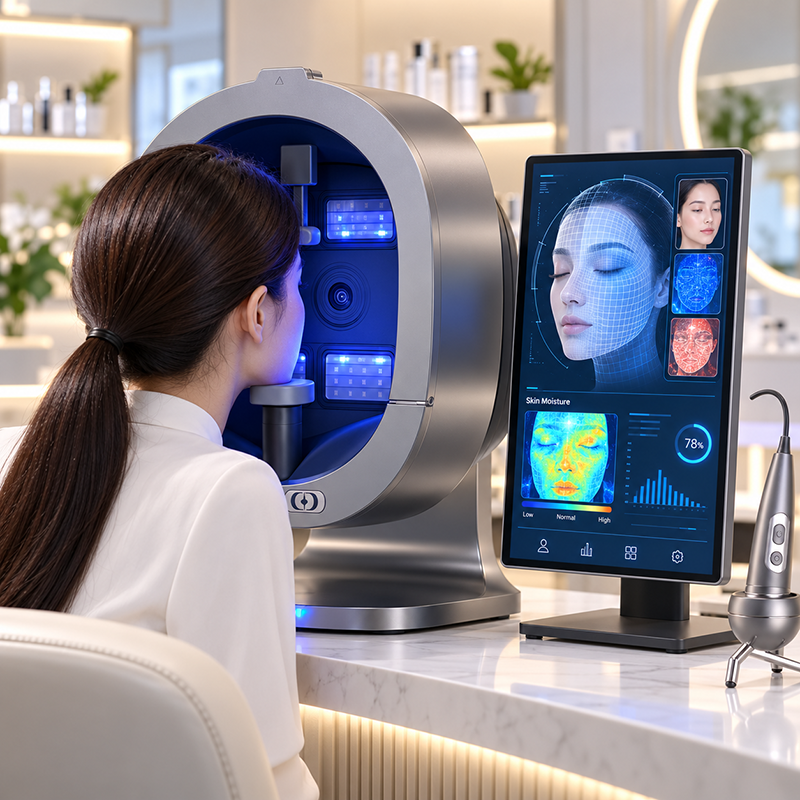
Bypass regional equipment distributors. MNLT supplies medical aesthetic clinics, dermatology centers, and global distributors directly from our manufacturing facility. Secure complete turnkey diagnostic packages at genuine factory wholesale pricing: $1,419 for 15.6" Pro and $1,499 for 21.5" Pro Plus (both including the integrated macro scalp/trichology probe). Check full hardware details on our official Intelligent Skin Analyzer Machine Product Page before ordering.
6. The MNLT Manufacturing Advantage: 19 Years of Engineering Excellence
When sourcing diagnostic imaging equipment, reliability, optical calibration, and software stability are critical. As an established medical aesthetic equipment manufacturer with 19 years of manufacturing experience, Shandong Moonlight Electronic Technology Co., Ltd. (MNLT Laser) provides complete institutional backing:
- Factory-Direct Pricing: Eliminate regional distributor markups of 300% to 500% by acquiring certified workstations directly from our production cleanrooms.
- OEM & ODM Custom Branding: For multi-location clinic chains and distributors, we offer complimentary custom exterior paint matching, silk-screened clinic logos, and custom-branded software interfaces.
- Turnkey Global DDP Logistics: We handle export documentation, customs clearance, and air express door-to-door delivery with complete transit insurance.
- Comprehensive Warranty & Support: Every workstation includes a 2-year full hardware warranty, lifetime software updates, and 24/7 video diagnostic engineering support.
To request an itemized factory quotation, discuss custom branding options, or speak directly with an engineering specialist, contact our team today.
Frequently Asked Questions: 9-Spectrum 3D Skin Analyzer
Does the 9-spectrum skin analyzer require ongoing software subscription or cloud licensing fees?
No. Unlike many European and American diagnostic imaging platforms that charge $50 to $150 per month in mandatory cloud licensing fees, the MNLT 9-spectrum workstation operates with zero recurring subscriptions. The pre-installed diagnostic software includes lifetime algorithmic updates, unlimited client profile storage, and direct local and cloud backup capabilities at no additional cost.
What is the clinical difference between the 15.6-inch Pro and 21.5-inch Pro Plus models?
Both models share the exact same 36-megapixel industrial CMOS sensor, 9-spectrum illumination module, and Rockchip RK3566 quad-core processing architecture, ensuring identical diagnostic precision. The key distinction is the display format: the 15.6-inch Pro ($1,419) is a compact, space-efficient solution for aesthetic treatment rooms, while the 21.5-inch Pro Plus ($1,499) features an expansive console designed for flagship consultation suites and medical demonstration theaters.
How does the scalp and hair follicle examination handpiece integrate into clinic workflows?
The included trichology examination probe connects directly to the system console. It provides calibrated high-magnification polarized imaging of hair follicles, scalp sebum levels, micro-vascular scalp redness, and hair shaft density. This feature allows medspas and clinics to introduce trichology consultations and sell high-value hair rejuvenation regimens without investing in a separate dedicated trichoscope.
Can clinics print or digitally export diagnostic consultation reports for patients?
Yes. The software generates comprehensive, patient-friendly PDF diagnostic reports with a single tap. Reports can be printed instantly via local Wi-Fi/LAN office printers, exported to USB storage, or shared directly to the patient's smartphone via an encrypted QR code, providing clear visual evidence of their clinical baseline and progress.
How are device calibration and optical maintenance handled?
The workstation features an automated digital self-calibration routine executed upon system startup, ensuring optical consistency across varying ambient room lighting. Routine maintenance is minimal: simply wipe the optical hood and chin rest with medical-grade non-alcoholic disinfectant wipes between patients. The solid-state LED illumination arrays are rated for over 50,000 operational hours.
Reviewed by David Ma
CTO & Chief Engineer, MNLT Laser (Shandong Moonlight Electronic Technology Co., Ltd.)
19 years of professional aesthetic device manufacturing experience. David oversees MNLT's medical diagnostic imaging engineering labs and optical sensor integration, specializing in multi-spectral polarization algorithms, industrial CMOS sensor calibration, and clinical consulting hardware architecture for international medical aesthetic clinics.