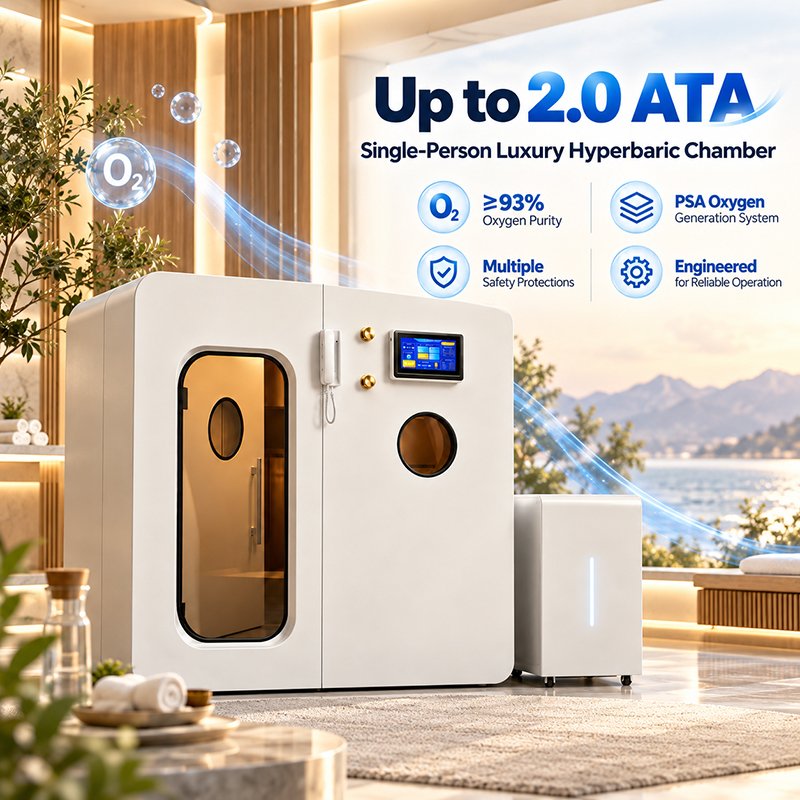
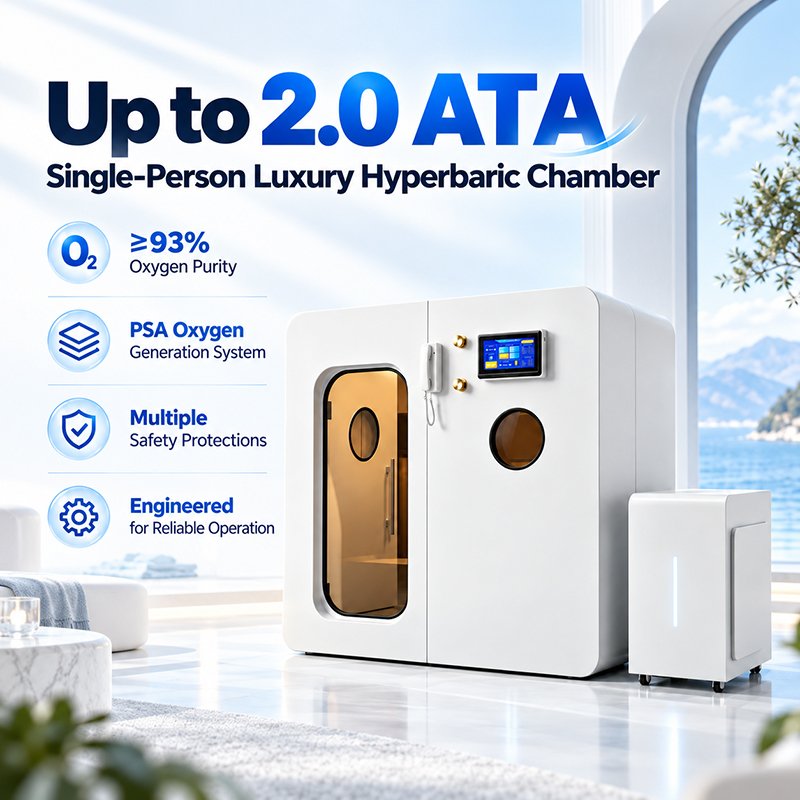
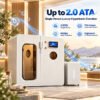
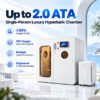
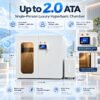
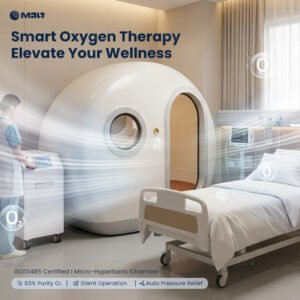
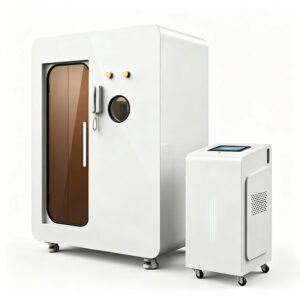
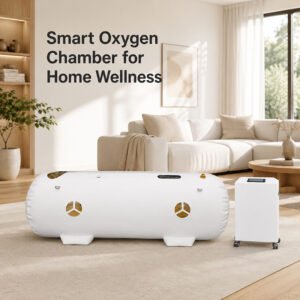
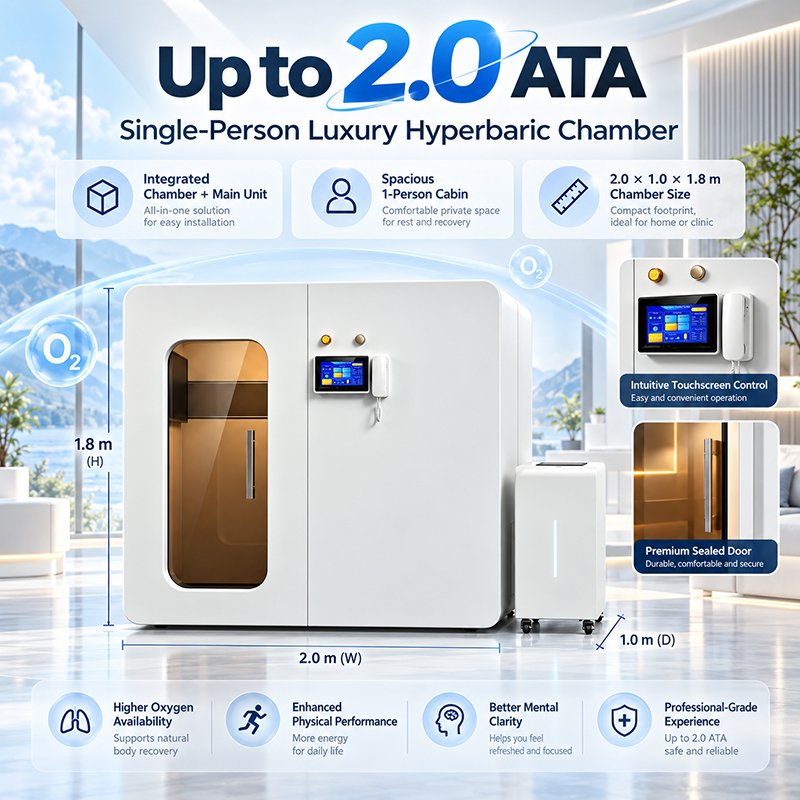
The MNLT S2 2.0 ATA Luxury Hyperbaric Oxygen Chamber is a commercial-grade, single-occupancy hard-shell wellness cabin engineered for high-end medspas, longevity clinics, and executive private suites.
Factory Direct: 10,000–10,000–15,000 USD | OEM/ODM Customization | CE & ISO 13485 Certified.
The MNLT 2.0 ATA Luxury Hard-Shell Hyperbaric Oxygen Chamber is an integrated, rigid-body mild-to-medium hyperbaric oxygen therapy (mHBOT) system designed for professional clinical recovery, anti-aging, neuro-regeneration, and cellular wellness. Operating at therapeutic pressure gradients up to 2.0 Absolute Atmospheres (2.0 ATA / 100 kPa positive gauge pressure), the system combines a robust 3mm structural SPCC carbon steel enclosure with an exterior all-in-one oil-free compression and medical-grade 10 L/min Pressure Swing Adsorption (PSA) molecular sieve unit. In full compliance with Henry’s Physical Gas Law, the 2.0 ATA environment increases dissolved oxygen concentration in blood plasma, lymph, and cerebrospinal fluid by up to 800% to 1200% independent of hemoglobin saturation, stimulating angiogenesis, fibroblast collagen synthesis, and deep tissue cellular oxygenation within a spacious, climate-controlled walk-in luxury cabin.
The MNLT S2 2.0 ATA Luxury Single-Person Hyperbaric Chamber redefines commercial hyperbaric therapy by pairing medical-grade engineering with executive-lounge luxury. Engineered for modern medical spas, longevity medical institutes, plastic surgery recovery suites, luxury wellness resorts, and discerning residential clients, this vertical rectangular cabin resolves the spatial claustrophobia and operational limitations of traditional inflatable bags and narrow horizontal tubes.
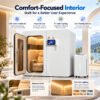
While commercial wellness operators frequently struggle to accommodate 2.3-meter-long horizontal metal tubes that induce severe claustrophobia, the MNLT Luxury Chamber features an architectural walk-in profile (2,000 mm Length × 1,000 mm Width × 1,800 mm Height) housing a fully motorized reclining leather armchair, dedicated 24V water-cooled air conditioning, high-definition entertainment, and whisper-quiet acoustic management. Built with cold-rolled SPCC structural carbon steel, dual synchronized capacitive telemetry consoles, and six-fold mechanical safety redundancy, it offers aesthetic and medical operators an uncompromising commercial turnkey asset backed by 19 years of precision manufacturing excellence from Shandong Moonlight Electronics Tech Co., Ltd.
Whether comparing clinical pressure capabilities against our 1.3 ATA compact sitting hyperbaric chamber or evaluating structural hull engineering in the comprehensive soft vs. hard shell hyperbaric chamber guide, explore our certified manufacturing specifications and factory-direct procurement programs to establish an industry-leading hyperbaric recovery suite.
Under normal atmospheric conditions (1.0 ATA), arterial blood oxygenation is almost entirely reliant on hemoglobin binding, which reaches 97%–98% saturation at sea level. Ingesting or breathing additional oxygen at normobaric pressure provides negligible physiological benefit because hemoglobin transport capacity is physically capped.
The MNLT 2.0 ATA system unlocks Henry’s Law of Gas Dissolution: the solubility of a gas in a physiological liquid is directly proportional to its partial pressure.
+————————————————————————————————–+
| MNLT 2.0 ATA LUXURY CABIN ARCHITECTURE |
| |
| [ SPCC 3mm Steel Shell ] —> 2.0 ATA Working / 2.2 ATA Design (10-Yr Structural Lifespan) |
| [ PSA 10L Oxygen Plant ] —> >=93% Purity Inhalation | Cabin Ambient Dispersion <=25.5% |
| [ Smart Dual Displays ] —> Internal & External 10″ Touchscreens with Synchronous Control |
| [ Executive Comfort ] —> Electric Recliner + 24V Water Chilled AC + 24V Smart Network TV|
| [ Acoustic Protection ] —> Oil-Free Air Compressor + Noise Silencer (Cabin <=55 dB) |
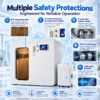
| [ 6-Fold Safety System ] —> 4 Manual Vector Reliefs + 2 Auto Valves + E-Stop + Self-Unlock |
+————————————————————————————————–+
The cabin is fabricated from 3mm cold-rolled SPCC structural carbon steel, precision laser-cut and robotically welded to withstand continuous positive pressure cycling up to 2.2 ATA. Unlike acrylic cylinders that yellow and crack under UV or cleaning agents, the SPCC body boasts an engineered service lifespan exceeding 10 years.
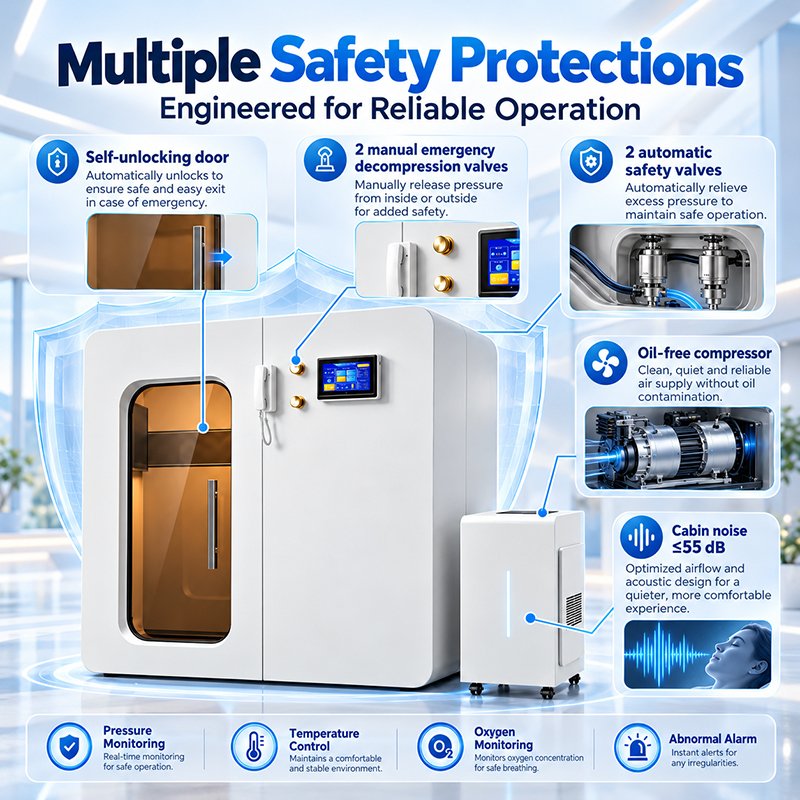
Eliminating complex mechanical latches that present entrapment hazards, the door utilizes an airtight pneumatic seal principle. Internal positive pressure automatically forms a hermetic seal against the high-density silicone gasket. When depressurization is complete, the door releases automatically. There is zero risk of client entrapment during a sudden power outage.
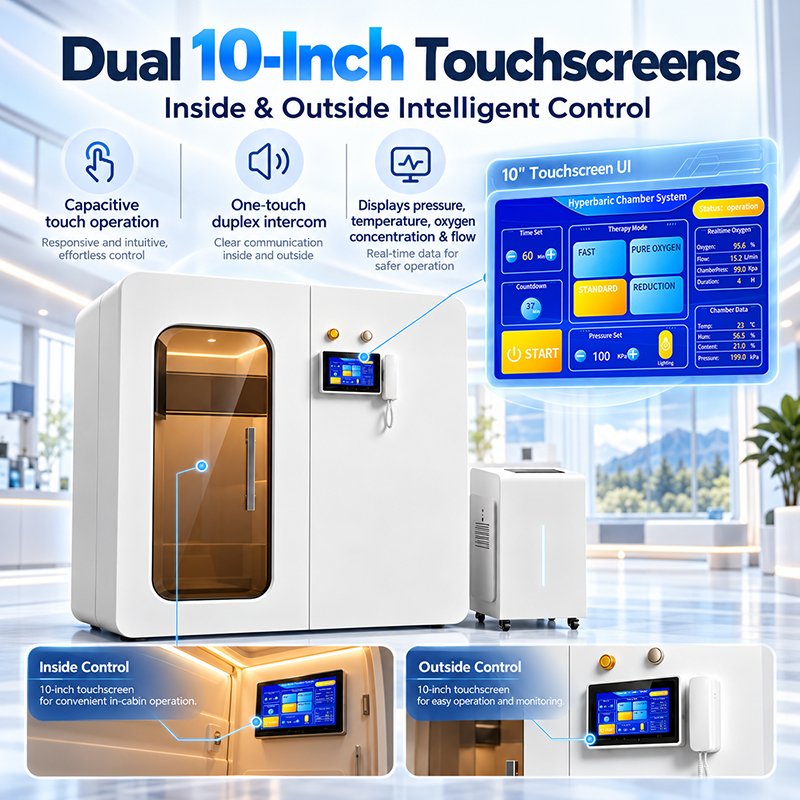
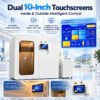
Equipped with dual industrial-grade 10-inch capacitive touchscreens (one outside for the supervising clinician and one inside for client self-adjustment). The system tracks real-time cabin pressure (kPa/ATA), ambient temperature, relative humidity, oxygen concentration, oxygen flow rate, and countdown timer in real time.
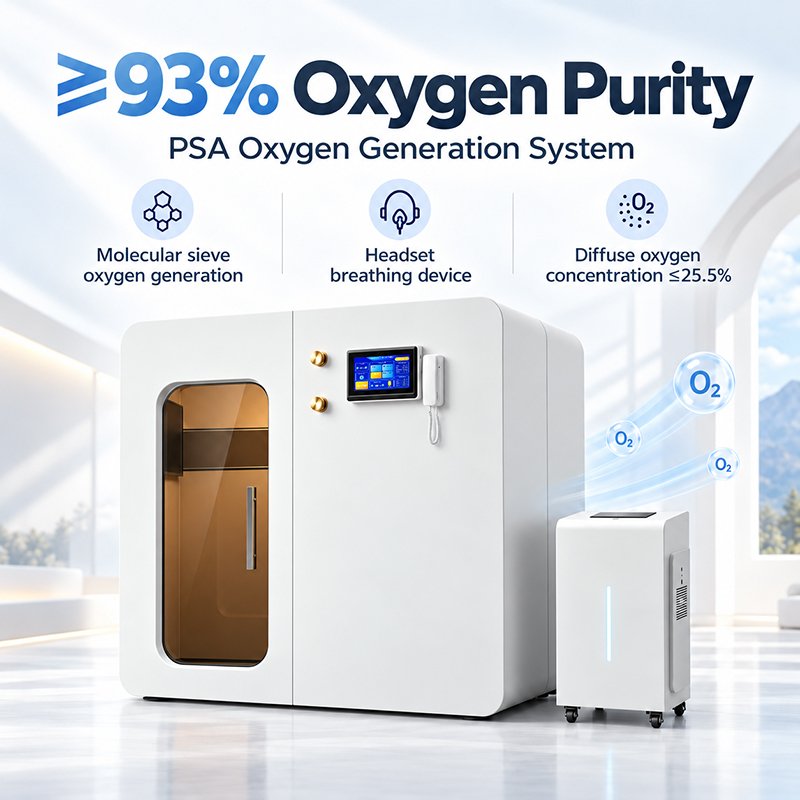
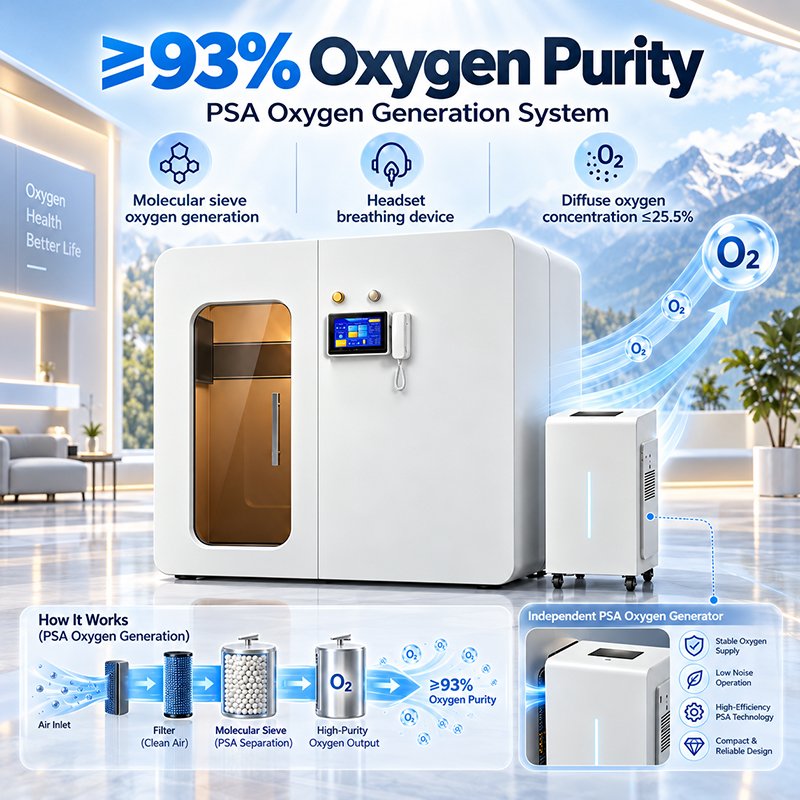
The exterior powerhouse incorporates medical-grade zeolite molecular sieves operating under Pressure Swing Adsorption (PSA) technology. Ambient air is filtered, compressed, and stripped of nitrogen, delivering ≥93% ± 3% medical oxygen directly to the client’s headset inhalation cannula.
While the patient breathes high-concentration oxygen via a closed-loop headset, the general cabin air utilizes filtered compressed atmospheric air. In strict adherence to international hyperbaric safety codes, ambient oxygen dispersion inside the cabin is monitored and regulated strictly below 25.5%, preventing hyperoxic combustion hazards while allowing normal electronic usage (24V internal systems).
Commercial hyperbaric setups frequently suffer from loud vibration. MNLT incorporates an isolated, dual-head oil-free compressor coupled with an aerospace-grade multi-chamber acoustic muffler. Sound levels remain below 55 dB inside the cabin (equivalent to a quiet library) and under 65 dB outside, ensuring profound relaxation or focused work during sessions.
Compression naturally generates thermal energy. The cabin integrates a dedicated 24V DC brushless water-chilled air conditioning system connected to an exterior cooling module, allowing clients to maintain their desired temperature (18°C–26°C) effortlessly. A custom 24V internet television provides seamless entertainment (Netflix, YouTube, web browsing) or relaxing meditation music.
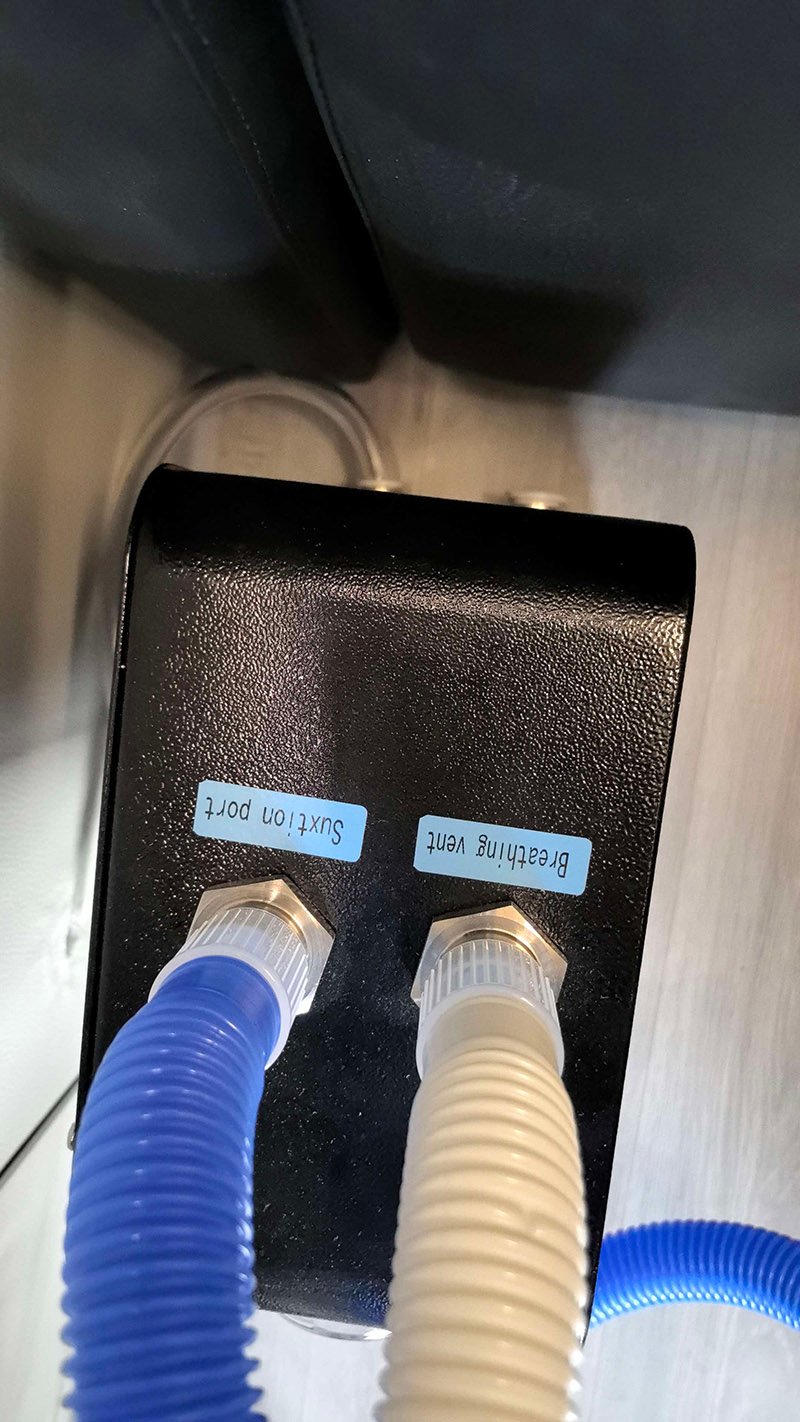
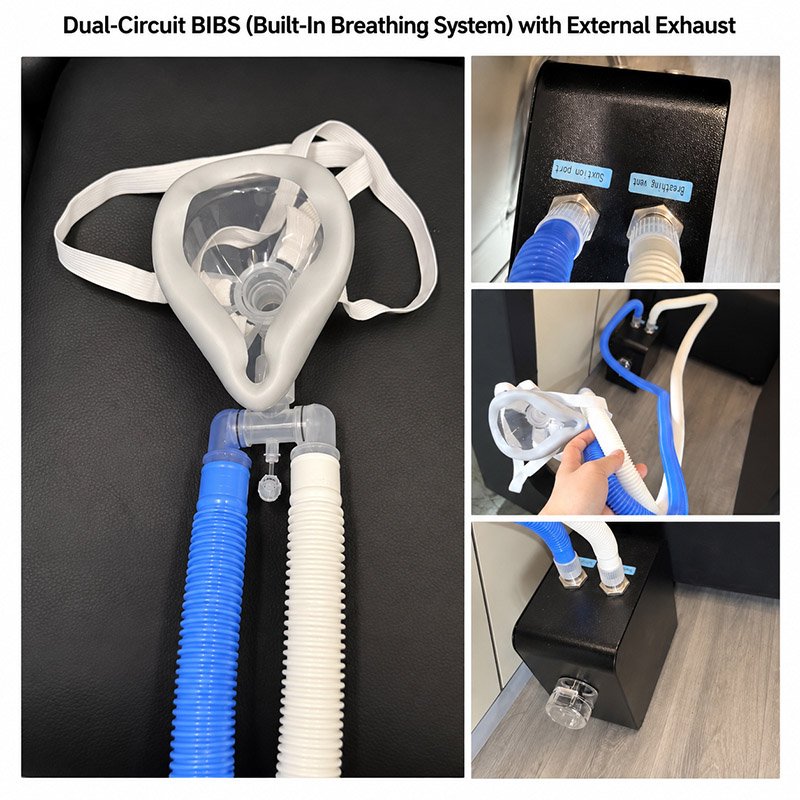
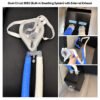
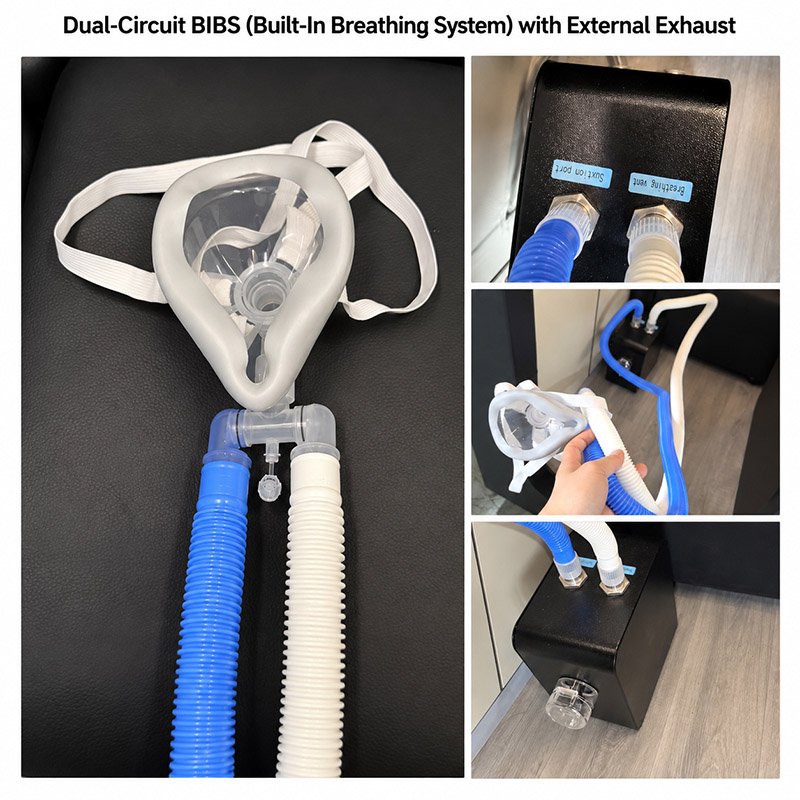
The MNLT S2 2.0 ATA Luxury Chamber is engineered with a specialized Dual-Circuit Built-In Breathing System (BIBS) featuring an isolated inhalation and active external exhaust circuit. This hospital-grade architecture guarantees maximum oxygen bioavailability while completely eliminating cabin fire hazards:
For a detailed engineering breakdown of NFPA 99 fire-safety codes, differential exhaustion mechanics, and oxygen concentration management, review our clinical whitepaper: Built-In Breathing System (BIBS) clinical protocol and safety guide.
| System Module | Engineering Specification | Clinical & Operational Advantage |
|---|---|---|
| Cabin Architecture & Dimensions | L2,000 mm × W1,000 mm × H1,800 mm Structural Weight: ~1,000 kg |
Spacious walk-in rectangular cabin; fits full adult recliner without feeling confined. |
| Pressure Rating & Regulation | Max Working: 2.0 ATA (100 kPa) Max Structural Design: 2.2 ATA Presets: 30 / 50 / 90 / 100 kPa |
Multi-stage flexibility (1.3 ATA mild recovery to 2.0 ATA clinical regeneration). |
| Cabin Material & Build | SPCC High-Strength Carbon Steel Wall Thickness: 3.0 mm Design Lifespan: 10 Years |
Immune to aging, warping, or cracking; robust commercial asset for high-throughput clinics. |
| Oxygen Generation System | Medical PSA (Pressure Swing Adsorption) Output: 10 L/min Purity: ≥93% ± 3% |
Continuous on-demand medical oxygen; zero recurring oxygen cylinder delivery costs. |
| Inhalation & Dispersion Safety | Ergonomic Headset Cannula Inhalation Cabin Ambient Oxygen: ≤25.5% |
Maximum targeted oxygen absorption with strict fire-safety compliance. |
| Climate & Noise Control | Custom 24V Water-Cooled Air Conditioner Cabin Noise: ≤55 dB (Quiet Library) Exterior Noise: ≤65 dB |
Prevents compression heat build-up; whisper-quiet ambiance for sleep, reading, or media. |
| Luxury Interior Package | Motorized Reclining Leather Sofa Custom 24V Smart Network Television 3-Color Tri-Tone Ambient LED Lighting 9mm Mineral Eco-Floor + Anti-Slip PVC |
Zero-formaldehyde, fire-retardant interior creating an ultra-premium VIP treatment ambiance. |
| Control & Telemetry | Dual 10" Capacitive Touchscreens (In/Out) Synchronized Parameter Adjustment One-Touch Duplex Intercom Phone |
Clinicians supervise externally while patients maintain autonomy inside the cabin. |
| Emergency Safety Redundancy | 4 Manual Vector Relief Valves (2 In / 2 Out) 2 Auto Overpressure Relief Valves Internal E-Stop Button & Auto-Shutdown Differential Pressure Self-Unlocking Door |
Failsafe protection; rapid manual depressurization in 60–120s; zero entrapment risk. |
| External Host Dimensions | L750 mm × W659 mm × H1,028 mm | Integrated oil-free compressor, air filter, and molecular sieve in one compact tower. |
| Operating Voltage & Power | AC 110V / 220V Dual Voltage (50/60Hz) Dedicated 10A+ Socket Required |
Universal electrical compatibility across North American, European, and Asian grids. |
The high acquisition cost of Western brand-name hard-shell hyperbaric chambers (50,000to50,000to85,000+ USD) has traditionally barred independent clinics, day spas, and sports clubs from entering the lucrative hyperbaric recovery market.
With MNLT factory-direct pricing of 10,000to10,000to15,000 USD, the capital payback cycle drops from 18–24 months down to 30 to 60 days.
+————————————————————————————————–+
| MNLT 2.0 ATA COMMERCIAL FINANCIAL PROJECTION |
| |
| * Capital Investment (Delivered System): $12,500 USD (Average Turnkey) |
| * Standard Session Pricing (60 mins): $150 – $220 USD |
| * Comprehensive 10-Session Longevity Package: $1,500 – $2,000 USD |
| * Recurring Consumable Costs per Session: $0.00 USD (Zero Consumables) |
| * Electricity & Filter Replacement per Hour: ~$1.20 USD |
| * Gross Operating Margin: 99.2% |
| |
| BREAK-EVEN TRAJECTORY: |
| * 7 to 8 Client Packages Sold = 100% Capital Payback ($12,000 – $16,000 Revenue) |
| * At just 3 sessions/day (30 days/month) @ $180 = $16,200 USD Monthly Gross Revenue |
| * Complete Return on Investment (ROI): 30 to 45 Days of Routine Operation |
+————————————————————————————————–+
In accordance with the official MNLT Instructions for the Safe Use of the Oxygen Chamber, operators must observe strict environmental, operational, and medical protocols:
Join over 800+ luxury medical spas, wellness resorts, and sports rehabilitation clinics worldwide. Benefit from 19 years of Shandong Moonlight engineering excellence, direct factory wholesale pricing ($10,000 – $15,000 USD), complete door-to-door global logistics, and custom OEM branding.
Soft-shell chambers (often made of TPU fabric) are structurally limited to 1.3 ATA (30 kPa) due to zipper seam constraints, providing modest wellness benefits. The MNLT 2.0 ATA chamber utilizes 3mm SPCC cold-rolled carbon steel, achieving 2.0 ATA (100 kPa positive gauge pressure). At 2.0 ATA, plasma oxygen dissolution is up to 300% greater than at 1.3 ATA, enabling true clinical neovascularization, deep tissue repair, and professional post-surgical rehabilitation.
The MNLT system uses a targeted headset cannula delivery system: the client breathes ≥93% pure oxygen directly, while the cabin atmosphere is pressurized using filtered, dehumidified ambient air. Interior ambient oxygen concentration is strictly monitored and maintained at ≤25.5%, preventing hyperoxic combustion conditions and allowing safe operation of low-voltage (24V) entertainment and air-conditioning systems.
No. Adiabatic gas compression naturally generates warmth, but the MNLT cabin features a built-in 24V water-cooled circulating air-conditioning system connected to an exterior chiller. The internal temperature can be set between 18°C and 26°C, keeping the patient completely cool and comfortable throughout the entire pressurization and dwell cycle.
The chamber is engineered with zero entrapment hazard. In the event of a power outage, the patient or external clinician simply opens the manual vector pressure relief valve. As cabin pressure gently equalizes to ambient room levels (taking 1 to 2 minutes), the self-unlocking door automatically releases. The door has no mechanical motorized locks, guaranteeing safe, effortless exit at all times.
Routine maintenance is straightforward and low-cost. The air compressor intake filter requires inspection after 1 year and routine replacement after 2 years. The water-cooled AC condenser water level should be checked weekly, and condensation drained periodically. The medical zeolite molecular sieve carries a service life of 15,000 to 20,000 operating hours.
A trustworthy beauty equipment manufacturer